
Maple roasted butternut squash lands with the kind of caramelized edges that make people reach for a second scoop before they’ve finished the first. The squash turns tender in the center, glossy on the outside, and just sweet enough to taste special without sliding into dessert territory. It’s the kind of side dish that disappears fast because it does one thing well: gives you deep roasted flavor from a short ingredient list.
The trick is spacing and heat. Butternut squash throws off moisture as it cooks, and if the pieces are crowded, they steam instead of browning. A hot oven and a single layer on the pan give the maple syrup room to turn sticky and the edges room to take on real color. Cinnamon and thyme work here because they stay in the background; they don’t cover the squash, they round it out.
Below, you’ll find the pan setup that keeps the glaze from turning watery, plus a few ways to adapt this for different dinners without losing the caramelized finish that makes it worth making.
The squash caramelized beautifully and stayed tender instead of mushy. I followed the advice not to crowd the pan, and the maple glaze got sticky on the edges just like I wanted.
Save this maple roasted butternut squash for the nights when you want a glossy, caramelized side with almost no fuss.
The Reason the Squash Needs Space More Than Extra Oil
Butternut squash can take on a beautiful roasted edge, but only if the pan isn’t overloaded. When the pieces sit too close together, the moisture released during roasting has nowhere to go, so the squash softens before it browns. That’s the difference between a tray of glossy cubes with crisp corners and a tray that tastes cooked but looks pale.
The maple syrup helps the exterior brown, but it can also make the pan look done before the squash is actually tender. That’s why the oven stays hot at 425°F. You want the syrup to caramelize against the hot metal and the squash to roast through at the same time. If the pieces are cut unevenly, the smaller ones will darken too fast while the larger ones stay firm, so keep the cubes close to the same size.
What Each Ingredient Is Actually Doing in This Dish
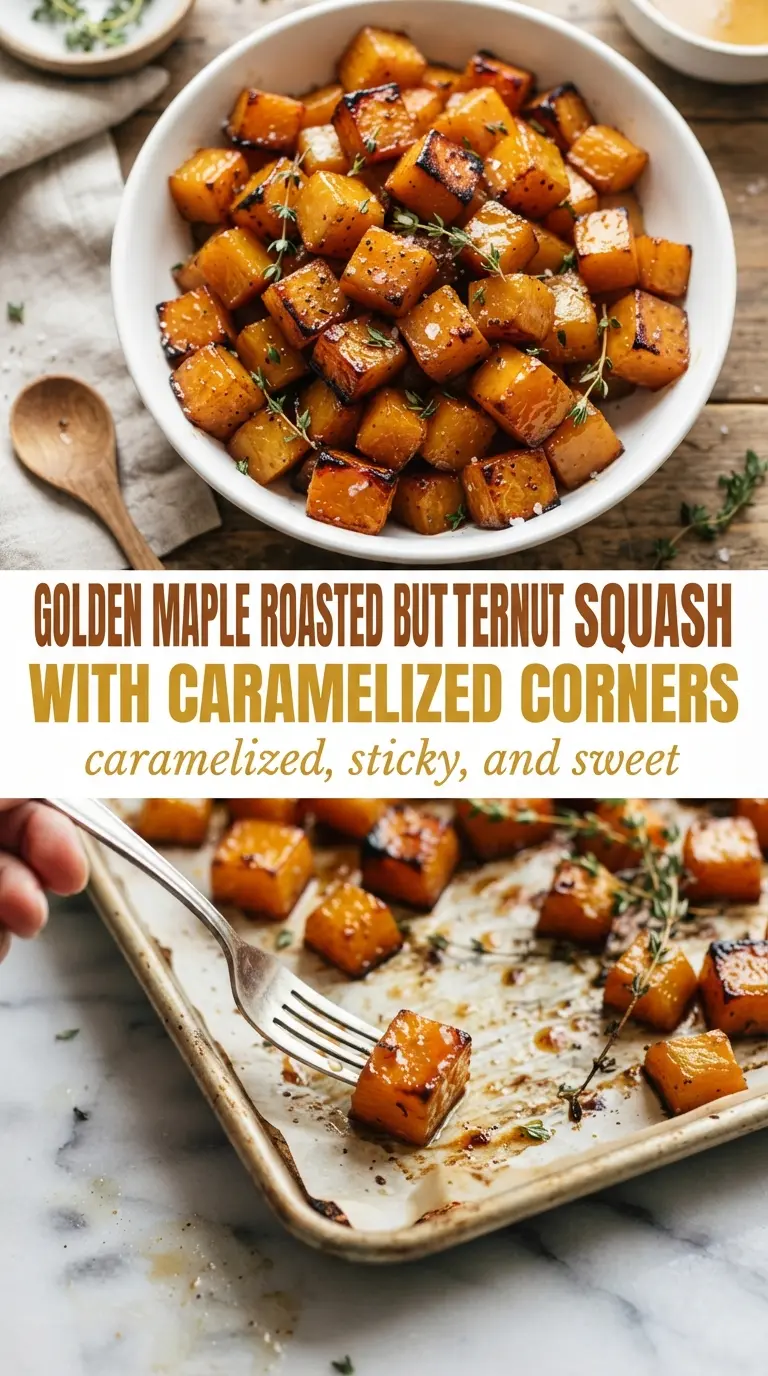
- Butternut squash — This is the whole dish, so cut it into even cubes. Bigger pieces need longer to soften, and smaller pieces can burn at the edges before the center turns creamy. Pre-cut squash from the store works if you’re short on time, but check for pieces that are similar in size.
- Olive oil — The oil helps the seasoning cling and gives the squash enough fat to brown instead of dry out. You don’t need a fancy bottle here; a regular olive oil is fine. If you swap in melted butter, the flavor gets richer but the edges can brown a touch faster.
- Maple syrup — Use real maple syrup, not pancake syrup, because you want clean sweetness and caramelization rather than a sticky, artificial glaze. It’s what gives the squash that shiny finish. If you reduce the amount, the squash will still roast well, but you’ll lose some of the lacquered look.
- Cinnamon — A small amount adds warmth without pushing the dish into pie-sweet territory. It works with the maple and squash instead of competing with them. Too much cinnamon can take over fast, so keep the measure light.
- Fresh thyme — Add it at the end so it stays fragrant. Dried thyme can work in a pinch, but fresh thyme gives the squash a cleaner, brighter finish. If you don’t have thyme, chopped sage is the closest swap for a more savory edge.
The 30 Minutes That Matter Most
Coating the Squash Evenly
Toss the cubed squash with the oil, maple syrup, cinnamon, salt, and pepper until every surface looks lightly coated. The pieces should glisten, not sit in a puddle. If the bowl looks too wet, the squash was probably cut too small or the syrup was measured heavy, and the roast will lean sticky instead of caramelized. A quick, thorough toss is enough; overmixing just breaks the cubes down.
Roasting for Color, Not Just Softness
Spread the squash in a single layer on a sheet pan. Leave space between pieces so the hot air can move around them. Halfway through roasting, flip the cubes so the sides in contact with the pan can pick up color too. If you wait until the end to check, you’ll miss the point where the edges are deep golden and the centers are tender with a little bite left at the core.
Finishing with Fresh Thyme
Pull the pan when the squash is browned on the edges and easily pierced with a fork. The syrup will look glossy and a little sticky in the pan, which is exactly what you want. Scatter the thyme over the hot squash right before serving so the herbs stay bright. If you add them too early, they wilt and disappear into the glaze.
Three Ways to Make This Recipe Fit the Table
Dairy-Free and Naturally Vegetarian
This recipe is already dairy-free and vegetarian, which is part of why it slides into so many menus without adjustments. Keep it as written if you want a side that works next to roasted chicken, pork, or a plant-based main. The flavor stays balanced because the maple and olive oil carry the dish without needing butter.
Less Sweet, More Savory
Cut the maple syrup back to 2 tablespoons and add a little extra thyme. The squash will still caramelize, but the result tastes more like a roasted vegetable side and less like a glazed one. This is the version to use when the rest of the meal already leans rich.
For a Bigger Crowd
Double the recipe, but split it across two sheet pans instead of crowding everything onto one. If you stack the squash or pack it tight, it steams and loses the browned edges that make it worth serving. Rotate the pans halfway through if your oven has hot spots.
Storage and Reheating
- Refrigerator: Store leftovers in an airtight container for up to 4 days. The edges soften a bit, but the flavor stays good.
- Freezer: It freezes, but the texture turns softer after thawing. Freeze in a single layer first, then move to a bag or container if you want the best chance of keeping the cubes intact.
- Reheating: Reheat on a sheet pan in a 400°F oven until hot and the edges start to dry back out. The microwave works in a pinch, but it turns the glaze loose and the squash softer than it should be.
Answers to the Questions Worth Asking
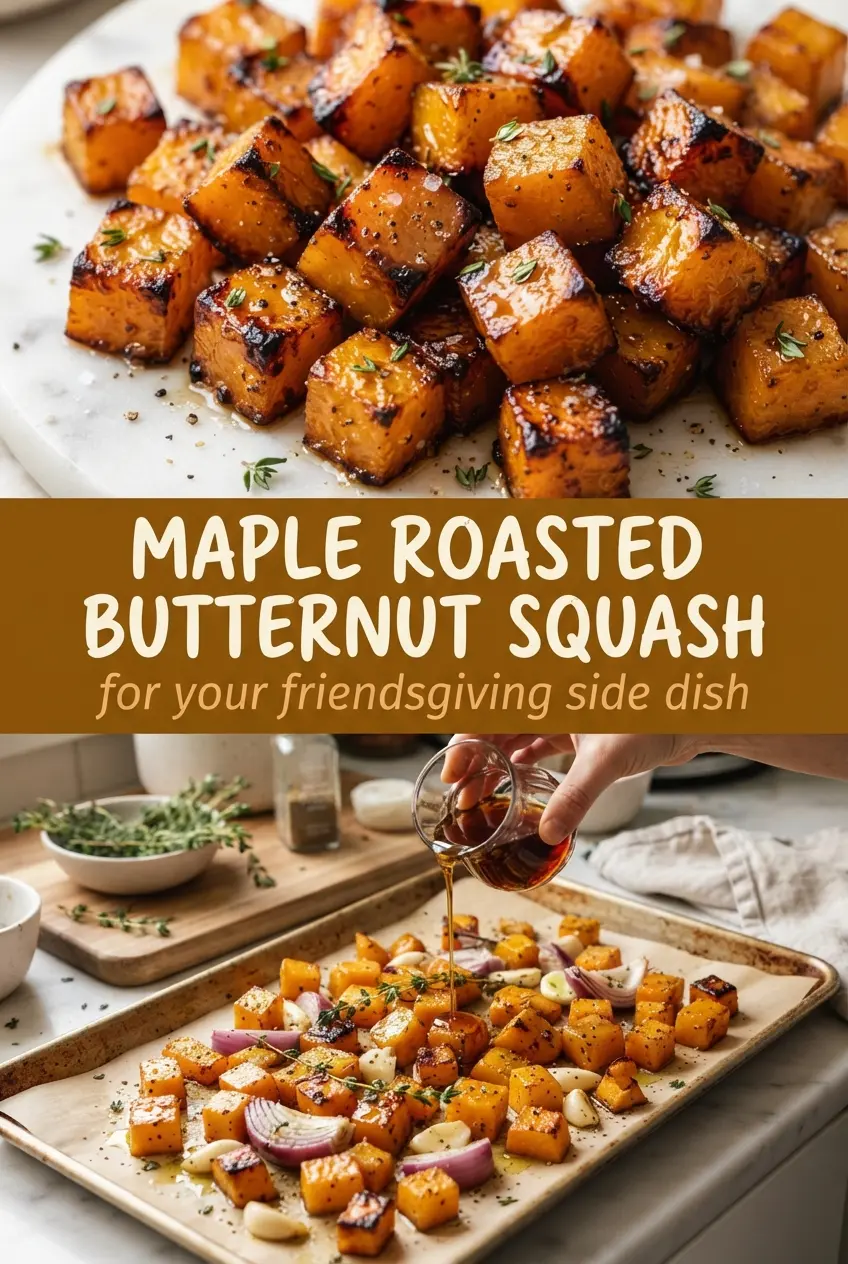
Maple Roasted Butternut Squash
Ingredients
Equipment
Method
- Preheat the oven to 425°F and place a sheet pan inside to warm up slightly for better browning.
- Toss the butternut squash with the olive oil, maple syrup, ground cinnamon, salt, and black pepper until every cube looks glossy.
- Spread the squash on the sheet pan in a single layer with space between pieces so you get caramelized edges.
- Roast for 30 minutes total, flipping halfway, until the squash is tender and browned around the edges.
- Top with fresh thyme right before serving for an herbal finish.