
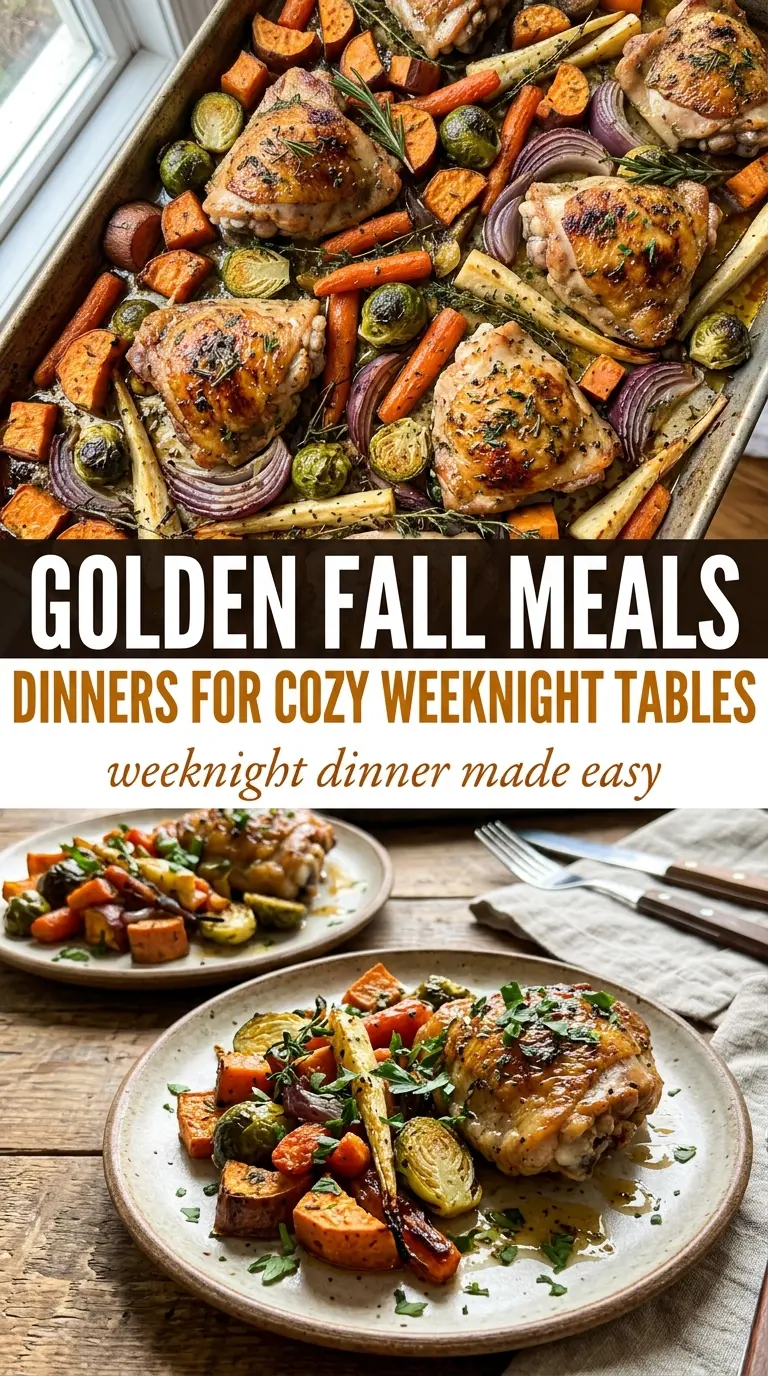
Roasted sweet potatoes, caramelized Brussels sprouts, and juicy chicken thighs or sausage make the kind of dinner that lands on the table with almost no drama and still feels like you put in real effort. The vegetables soften at the edges, the pan drippings coat everything underneath, and the whole tray comes out with enough browning to keep each bite interesting. This is the sort of meal that earns a permanent spot in the rotation because it solves the weeknight problem without tasting like a shortcut.
The trick here is giving the vegetables a head start in flavor, not just heat. Olive oil, smoked paprika, and thyme do more than season the pan; they help the sweet potatoes and Brussels sprouts roast instead of steam, which is where a lot of sheet pan dinners go wrong. Cut the vegetables evenly and spread them out with space around each piece, and you’ll get those crisp edges instead of a soft, crowded tray.
Below, I’ve included the small choices that matter most, from the protein swap that changes the cooking time to the one detail that keeps the vegetables caramelized. If you’ve had sheet pan dinners come out bland or soggy before, this version fixes both problems without adding extra work.
The sweet potatoes browned up on the edges and the Brussels sprouts went crisp instead of soggy. I used sausage, and the whole pan was done right at 30 minutes with barely any cleanup.
Save these one-pan fall sheet pan dinners for a night when you want caramelized vegetables and dinner done in about 30 minutes.
The Reason the Vegetables Roast Instead of Turn Mushy
Sheet pan dinners fail for one main reason: the pan gets crowded. When the vegetables sit on top of each other, they steam in their own moisture instead of browning, and you lose the sweet, savory edges that make this kind of dinner worth eating. Spacing matters here more than almost anything else.
The other mistake is putting everything on the tray at once when the protein and vegetables need slightly different treatment. Sweet potatoes and Brussels sprouts both like high heat, but they need enough room and enough oil to develop color. If the pan looks overloaded, use two pans. A crowded tray gives you pale vegetables and soft bottoms.
- Chicken thighs — Thighs stay juicy at 400°F and forgive a little extra roasting time. If you use sausage, choose a fully cooked version or a link that browns well, since it needs less time than raw chicken.
- Sweet potatoes — Dice them into even pieces so they finish at the same time as the sprouts. Larger chunks will stay firm in the center while the smaller ones go soft, so keep the cut size consistent.
- Brussels sprouts — Halved sprouts give you cut sides that caramelize against the pan. If yours are large, quarter them so the pieces cook through before the leaves burn.
- Smoked paprika and thyme — These do the heavy lifting on flavor without needing a long marinade. If you don’t have smoked paprika, regular paprika works, but you’ll lose that deeper roasted note.
What Each Ingredient Is Actually Doing in This Pan
- Olive oil — This is what helps the vegetables brown instead of dry out. A cheaper olive oil is fine here because it’s going into a hot oven, but use enough to lightly coat every piece.
- Chicken thighs or sausage — Chicken thighs give you the juiciest result and pick up the seasoning well. Sausage is the fastest route if you want dinner on the table in a hurry, but it changes the dish into something saltier and richer.
- Sweet potatoes — They bring sweetness that balances the savory meat and the slight bitterness of the sprouts. Peel them if the skins are tough, but the real key is the cut size, not the peel.
- Brussels sprouts — Their best texture comes from direct contact with the pan. If you need a substitute, broccoli florets will roast in a similar way, though they’ll finish a little faster.
The 25 Minutes That Actually Matter
Getting the Pan Hot and the Vegetables Coated
Preheat the oven fully before the pan goes in. If the oven is still climbing to temperature, the vegetables start releasing moisture before they ever get a chance to brown. Toss the sweet potatoes and Brussels sprouts until every cut surface looks slick with oil and spices, with no dry patches left behind. That coating is what carries the seasoning and helps the edges darken.
Arranging Everything for Browning
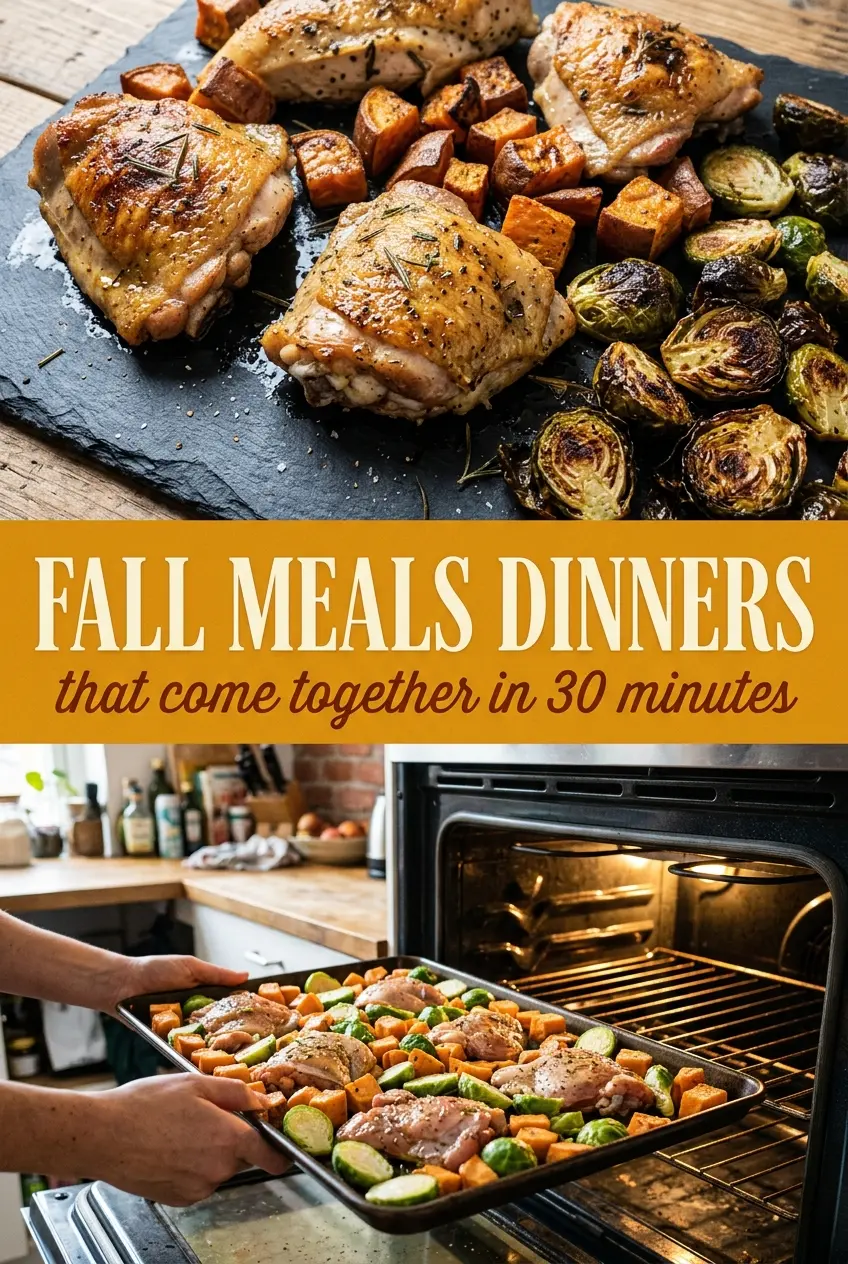
Spread the vegetables out in a single layer and leave a little breathing room between pieces. Nestle the chicken thighs or sausage in among them without stacking anything on top of anything else. If the tray looks packed, use a second sheet pan; once the vegetables touch too much, they steam and lose their edge. Flip the vegetables halfway through roasting so the browned side doesn’t get lost under the pan juices.
Knowing When It’s Done
The sweet potatoes should be tender when pierced with a fork, and the Brussels sprouts should have browned, crisp cut sides. Chicken thighs are done when the juices run clear and the thickest part reaches 165°F. Sausage should be hot through and deeply browned in spots. Pull the pan before the vegetables look collapsed, because carryover heat keeps them cooking for a few minutes after they leave the oven.
What to Change When You Want a Different Pan Dinner
Make it dairy-free and gluten-free without changing the method
This recipe is already naturally dairy-free and gluten-free as written, which is part of why it works so well. Keep an eye on the sausage label if you use that option, since some brands add fillers or seasoning blends that contain gluten.
Swap the protein for a faster weeknight version
Use fully cooked sausage links or sliced sausage for the quickest path to dinner. The vegetables still need the full roasting time, but the sausage mostly needs time to brown and heat through, which keeps the whole pan moving faster than raw chicken thighs.
Trade the vegetables for what’s in your fridge
Broccoli, cauliflower, or carrots all roast well in this format. Just keep the pieces similar in size and expect softer vegetables like broccoli to finish sooner than sweet potatoes, so check the pan early if you swap them in.
Storage and Reheating
- Refrigerator: Store leftovers in an airtight container for up to 4 days. The vegetables soften a little, but the flavor stays strong.
- Freezer: The chicken freezes well, but the Brussels sprouts and sweet potatoes lose some texture after thawing. Freeze only if you’re okay with softer vegetables later.
- Reheating: Warm leftovers on a sheet pan in a 375°F oven until hot, which brings back some of the edges better than the microwave. If you use the microwave, stop as soon as the chicken is heated through so the vegetables don’t turn watery.
Answers to the Questions Worth Asking
Fall Meals Skillet Roasted Chicken Thighs with Sweet Potatoes & Brussels Sprouts
Ingredients
Equipment
Method
- Preheat the oven to 400°F and position a rack in the middle for even browning.
- Toss the diced sweet potato and halved Brussels sprouts with olive oil, smoked paprika, dried thyme, salt, and pepper until evenly coated, with visible seasoning on the vegetables.
- Arrange the seasoned sweet potato and Brussels sprouts on a sheet pan, then nestle the chicken thighs or sausage among the vegetables for direct heat.
- Roast for 25-30 minutes at 400°F, flipping the vegetables halfway, until the protein is cooked through and the vegetables are caramelized at the edges.
- Serve warm straight from the pan so the caramelized edges and hot pan juices taste fresh.