
Rotini pasta salad earns its place at the table because it stays bright, sturdy, and satisfying long after it leaves the stove. The best versions don’t turn heavy or watery; they hold onto the dressing, keep their bite, and taste even better after the flavors have had time to settle in. That’s what makes a good pasta salad worth repeating for cookouts, lunches, and the kind of dinners where you want one bowl to cover half the meal.
The trick is in the texture. Al dente pasta matters here because it firms up a little as it chills, and that prevents the salad from going soft by the time you serve it. The dressing also needs enough acid to wake up the pasta and vegetables, but enough oil to coat everything without pooling at the bottom. Salami, mozzarella, olives, and roasted peppers give you salt, creaminess, and a little richness so every bite feels complete instead of like plain pasta with vegetables scattered through it.
Below, I’ll show you how to keep the pasta from getting mushy, how to dress it so the flavor reaches every twist, and which swaps work when you want to change up the bowl without losing the balance that makes it good.
The pasta stayed perfectly firm after chilling, and the dressing soaked into every little rotini twist. I made it in the morning for dinner and it was even better after sitting in the fridge all day.
Pasta salad that stays crisp, tangy, and loaded with rotini, mozzarella, and salami — save it for the next cookout or make-ahead lunch.
The reason pasta salad gets mushy before it gets better
Most pasta salad problems start with the pasta itself. If it’s cooked past al dente, the noodles keep absorbing dressing in the fridge and end up soft, swollen, and a little tired by the time you serve them. Rotini and penne are both smart choices here because their shape catches the dressing, but they still need a firm center when they go into the bowl.
The other mistake is dressing the salad while everything is still warm. Warm pasta drinks in the vinaigrette and can make the vegetables limp. Rinsing the pasta under cold water stops the cooking fast and cools the surface so the dressing clings instead of disappearing. Let the drained pasta sit for a minute or two after rinsing, too. If it goes into the bowl dripping wet, the extra water thins the dressing and dulls the flavor.
- Cook the pasta one minute shy of the package time, then taste it. It should still have a firm bite in the middle.
- Rinse in cold water until the pasta is fully cool, then drain it well so the dressing doesn’t get watered down.
- Chill at least an hour before serving. The flavor gets better as the dressing settles into the pasta and vegetables.
What each ingredient is actually doing in this bowl
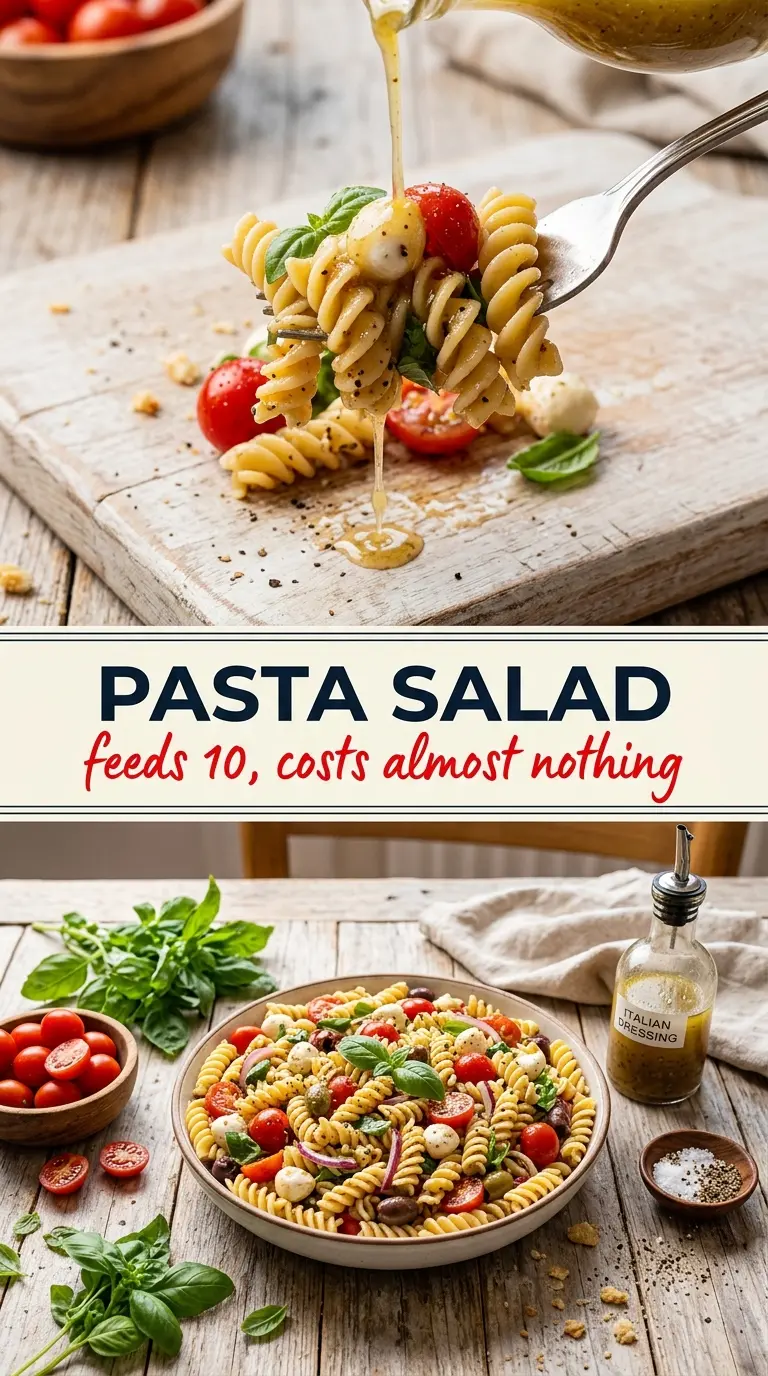
- Rotini or penne — Rotini is the best grabber for dressing because the spirals catch the vinaigrette in every groove. Penne works too, especially if that’s what you have. Use a sturdy dried pasta rather than fresh; fresh pasta gets too soft once it chills.
- Red wine vinegar and olive oil — This dressing needs both. The vinegar brings the sharpness that keeps the salad from tasting flat, and the oil carries that flavor across the bowl. A good olive oil is worth using here because it’s one of the main flavors, not just a background ingredient.
- Honey — Just a small amount smooths out the vinegar and keeps the dressing from tasting harsh. If you skip it, the salad can read a little too sharp once it’s cold. Maple syrup works in a pinch, but honey has a cleaner finish for this kind of dressing.
- Mozzarella pearls — These add creamy bites without turning the salad heavy. If you can’t find pearls, cube fresh mozzarella into small pieces so you still get little pockets of softness throughout the bowl.
- Salami — Salami brings salt and savory depth, which helps the salad feel complete enough for lunch or a light dinner. If you leave it out, add a handful more olives and a little extra seasoning so the bowl doesn’t taste one-note.
- Fresh basil — Add it at the end. If it sits in the dressing too long, the leaves darken and lose that fresh, peppery lift. Tear the leaves if they’re large so you get better distribution without bruising them.
Building the salad so every bite gets dressed
Cooking the pasta with a little restraint
Boil the pasta in well-salted water and stop when it still has a firm center. It should taste done, but not soft. That extra firmness matters because cold pasta tightens slightly in the fridge, and overcooked pasta turns dull and mushy after chilling. Drain it, rinse it cold, and let it sit long enough to stop dripping before you mix anything in.
Mixing the bowl while the dressing is ready
Combine the tomatoes, olives, cucumber, onion, peppers, salami, and mozzarella in a large bowl first, then add the pasta. This keeps the heavier ingredients from getting buried at the bottom when you toss. Whisk the dressing until it looks unified and glossy; if the honey sits on the bottom, the first bites won’t taste balanced.
Letting the fridge do the last bit of work
Pour the dressing over everything and toss until the pasta looks evenly coated, then fold in the basil. Chill the salad for at least an hour, longer if you have it. The dressing won’t just sit on top after that rest time — it settles into the pasta and pulls the whole bowl together. Give it one more toss before serving, because the dressing will collect a little at the bottom while it chills.
How to adapt this pasta salad without losing the balance
Make it vegetarian without making it bland
Leave out the salami and add extra olives, more mozzarella, or chopped pepperoncini for bite. The key is replacing the salty, savory element so the salad still tastes complete and not just like cold pasta and vegetables.
Gluten-free pasta that still holds up
Use a gluten-free short pasta made from corn or rice, but cook it carefully and stop before it gets too soft. Some gluten-free pastas go from firm to fragile fast, so taste early and cool it immediately.
How to make it ahead for a crowd
This salad gets better after a few hours in the fridge. If you’re making it more than a day ahead, hold back a little dressing and the basil, then stir them in just before serving so the herbs stay bright and the pasta doesn’t soak up every last drop.
Storage and Reheating
- Refrigerator: 3 to 4 days. The pasta will absorb more dressing as it sits, so it may taste a little less tangy on day two.
- Freezer: Don’t freeze this one. The cucumber, mozzarella, and dressing all change in a bad way once thawed.
- Reheating: Not needed. Serve it cold, straight from the fridge, and stir in a spoonful of extra dressing if it tastes dry after chilling.
The things that trip people up with this pasta salad
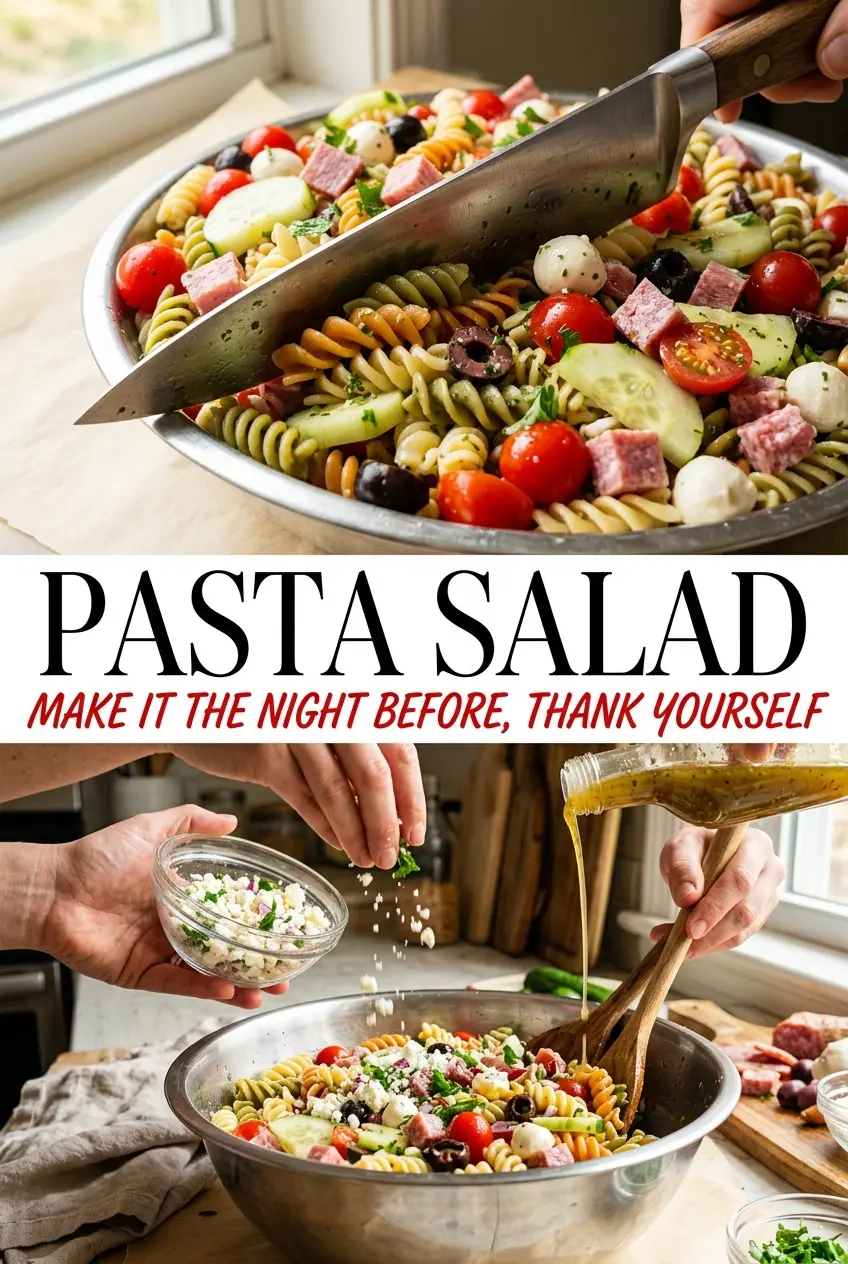
Pasta Salad
Ingredients
Equipment
Method
- Bring a large pot of water to a boil, then cook the rotini or penne until al dente for 8 to 10 minutes. Rinse the pasta under cold water and drain well so it stays firm in the salad.
- In a large bowl, combine the cooled pasta with the cherry tomatoes, black olives, cucumber, red onion, roasted red peppers, diced salami, and mozzarella pearls. Toss until everything is evenly distributed.
- Whisk olive oil, red wine vinegar, Italian seasoning, garlic powder, honey, and salt and pepper until the dressing looks evenly blended. Pour over the pasta mixture and toss thoroughly so every twist is coated.
- Fold in the fresh basil, using gentle turns to keep it from bruising. Stop mixing as soon as the basil is evenly scattered.
- Refrigerate the pasta salad for at least 1 hour (up to 4 hours for stronger flavor). Cover it so it doesn’t dry out.
- Before serving, toss again to re-distribute the dressing and toppings. Taste and add a pinch of salt and pepper if needed.