
Golden peach bread with a soft, moist crumb has a way of disappearing fast, but the cream cheese frosting turns it into the loaf people remember. The bread stays tender and full of fresh peach pieces, while the drizzle sets into pale ribbons that add just enough tang to keep each slice from tasting plain or one-note. It still eats like a quick bread, but it looks and tastes a step more special.
The balance matters here. Sour cream keeps the crumb plush without making it heavy, and the diced peaches go in at the end so they stay scattered through the batter instead of sinking into the pan. The frosting is thin on purpose. It clings to the top, seeps into a few cracks, and leaves that bakery-style finish without burying the fruit flavor under a thick layer of sweetness.
Below, I’ve included the small details that keep peach bread from turning dense or gummy, plus the one frosting mistake that can undo the whole loaf. If you’ve ever had quick bread bake up well but still taste a little flat, this version fixes that.
The loaf came out incredibly moist with peach pieces in every slice, and the cream cheese drizzle set up perfectly once it cooled. I’ve made a lot of quick breads, but this one stayed tender for days and didn’t get soggy on the bottom.
Love a loaf that slices cleanly and finishes with that tangy cream cheese drizzle? Save this peach bread for the days when you want something soft, fruity, and bakery-style without extra fuss.
The Trick to Keeping Peach Bread from Baking Up Dense at the Bottom
Peach bread goes wrong in two common ways: the fruit sinks, or the center turns heavy and damp while the edges bake through. Both problems usually come from batter that’s too wet or from peaches that were stirred in too early and too aggressively. This version handles both by building a sturdy batter first, then folding in the fruit at the very end so the loaf has enough structure to hold everything evenly.
The other piece that matters is the fruit itself. Fresh peaches bring bright flavor, but they also carry a lot of juice, so dice them small and drain off any obvious excess liquid before adding them. You want juicy pockets in the crumb, not streaks of raw batter around wet fruit. The loaf also needs a full cool-down before frosting, because even a slightly warm pan will melt the drizzle right off the top.
What Each Ingredient Is Doing in This Peach Bread
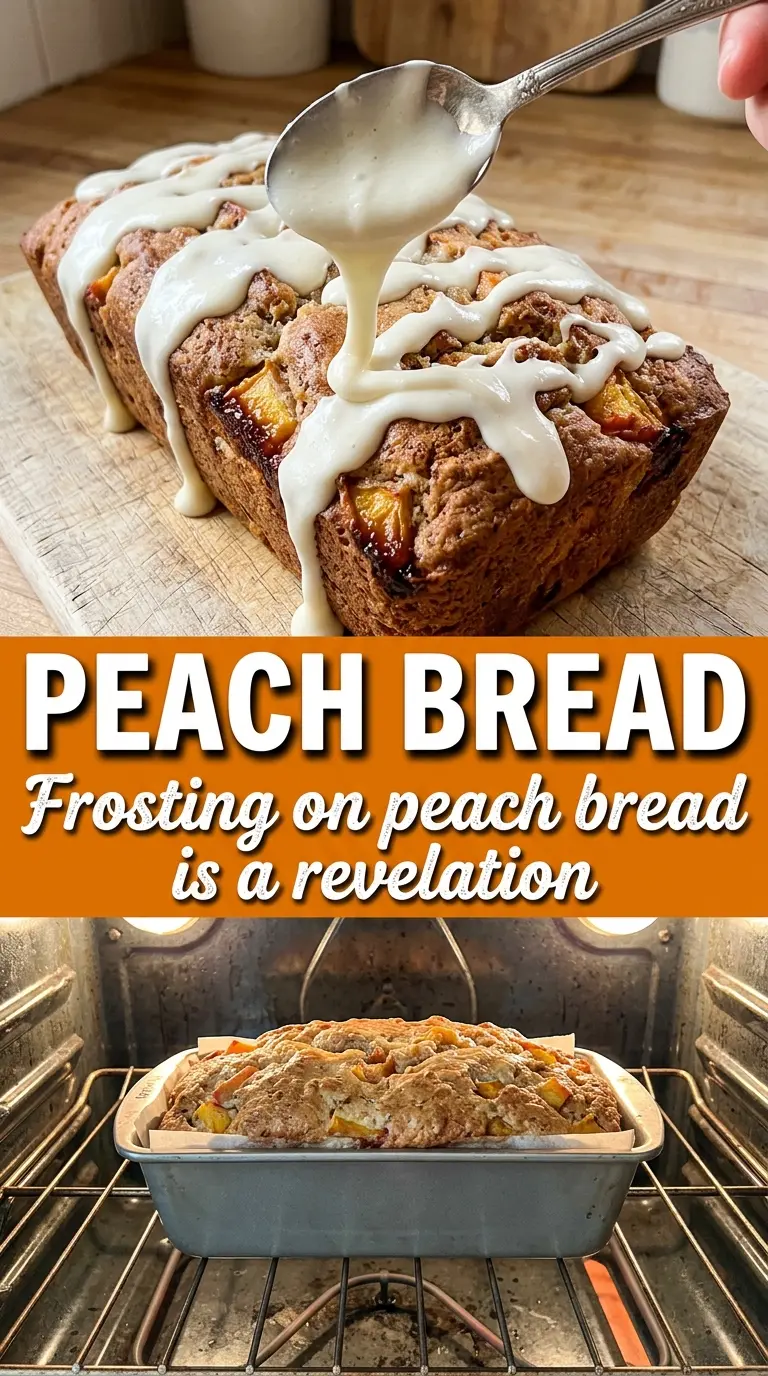
The peaches are the point, so use ripe fruit with good aroma and actual flavor. If they’re under-ripe, the loaf tastes flat no matter how good the frosting is. Dice them small so they distribute through the batter and don’t tear the bread apart when you slice it.
- Sour cream — This is what keeps the crumb soft and rich. Plain Greek yogurt can stand in if that’s what you have, but the loaf will taste a little sharper and slightly less plush.
- Butter and sugar — Beating these together creates the light base that helps the loaf rise evenly. If the butter is too cold, the batter stays thick and bakes up tighter, so let it soften until a finger leaves a clean dent.
- All-purpose flour — Regular flour gives the bread enough structure to support the peaches. Cake flour makes it too fragile here, and bread flour adds more chew than this loaf needs.
- Baking powder and baking soda — The two leaveners work together because the batter has both acid from sour cream and enough weight from fruit to need extra lift. If you’re missing one, don’t just skip it; the texture changes noticeably and the loaf will sit lower in the pan.
- Cream cheese frosting — This is thin enough to drizzle, not spread, which keeps the peach bread from turning into dessert cake. The cream cheese needs to be fully softened so the frosting turns smooth instead of grainy.
Building the Batter So the Peaches Stay Suspended
Start with the butter and sugar
Beat the softened butter and sugar until the mixture looks pale and fluffy, not just mixed. That air matters because it gives the loaf some lift before the fruit goes in. If the mixture still looks dense and greasy, keep beating for another minute or two. Once the eggs and sour cream are added, the batter may look slightly curdled, and that’s fine.
Fold the dry ingredients in gently
Add the flour mixture and stir only until the last streaks disappear. Overmixing is what makes quick bread tough, and it also builds enough gluten to push the fruit downward as the loaf bakes. The batter should look thick and spoonable. If it seems loose, stop and check whether your peaches were especially juicy before adding anything else.
Add the peaches at the very end
Fold in the diced peaches with just a few turns of the spatula. You want them coated in batter, not crushed into it. Scrape the pan from the center outward so the fruit is evenly distributed, then stop. Too much stirring breaks up the fruit and makes the loaf streaky instead of studded.
Bake until the center is set, not sunken
The top should be golden and the loaf should spring back lightly when touched in the center. A toothpick can come out with a few moist crumbs, but not wet batter. If the top browns before the middle is done, tent it loosely with foil for the last stretch of baking. Let the loaf cool completely in the pan before moving it, or it can break while still tender.
Drizzle the frosting after the loaf is cool
Beat the frosting until smooth enough to pour slowly off a spoon. If it’s too thick, add the milk a teaspoon at a time; if it’s too thin, it will run straight off the loaf and pool at the base. A fully cooled bread is non-negotiable here. Warm bread melts the frosting on contact and leaves you with a sticky sheen instead of those neat white ribbons.
How to Adapt This Peach Bread for Different Kitchens and Preferences
Make it dairy-free without losing tenderness
Use a thick dairy-free yogurt in place of the sour cream and swap the butter for a baking stick that’s meant for baking. The loaf will still stay moist, but the flavor becomes a little cleaner and less rich, so the peaches and cinnamon stand out more. Use a dairy-free cream cheese alternative only if it whips smoothly; some brands stay gritty and won’t drizzle well.
Skip the frosting for a more breakfast-style loaf
Leave the bread plain or dust the top with powdered sugar once it’s cool. You lose the tangy finish, but the peach flavor reads more like a classic quick bread and it holds up better for slicing and packing. This version also freezes a little cleaner because there’s no frosting to crack.
Use frozen peaches when fresh ones aren’t in season
Thaw the peaches first, then pat them dry well before folding them in. Frozen fruit releases more water than fresh fruit, so skipping that step can make the loaf gummy in the center. The flavor is still good, but the pieces will be softer and less distinct than fresh diced peaches.
Storage and Reheating
- Refrigerator: Store frosted peach bread in an airtight container for up to 4 days. The crumb stays moist, but the frosting softens and may soak in a little after the first day.
- Freezer: Freeze the loaf unfrosted for the best texture. Wrap it tightly, then thaw at room temperature before adding the frosting so it looks fresh and doesn’t weep.
- Reheating: Warm individual slices briefly in the microwave or let them come to room temperature. If you heat a frosted slice too long, the drizzle melts and the bread can taste gummy instead of tender.
Answers to the Questions Worth Asking
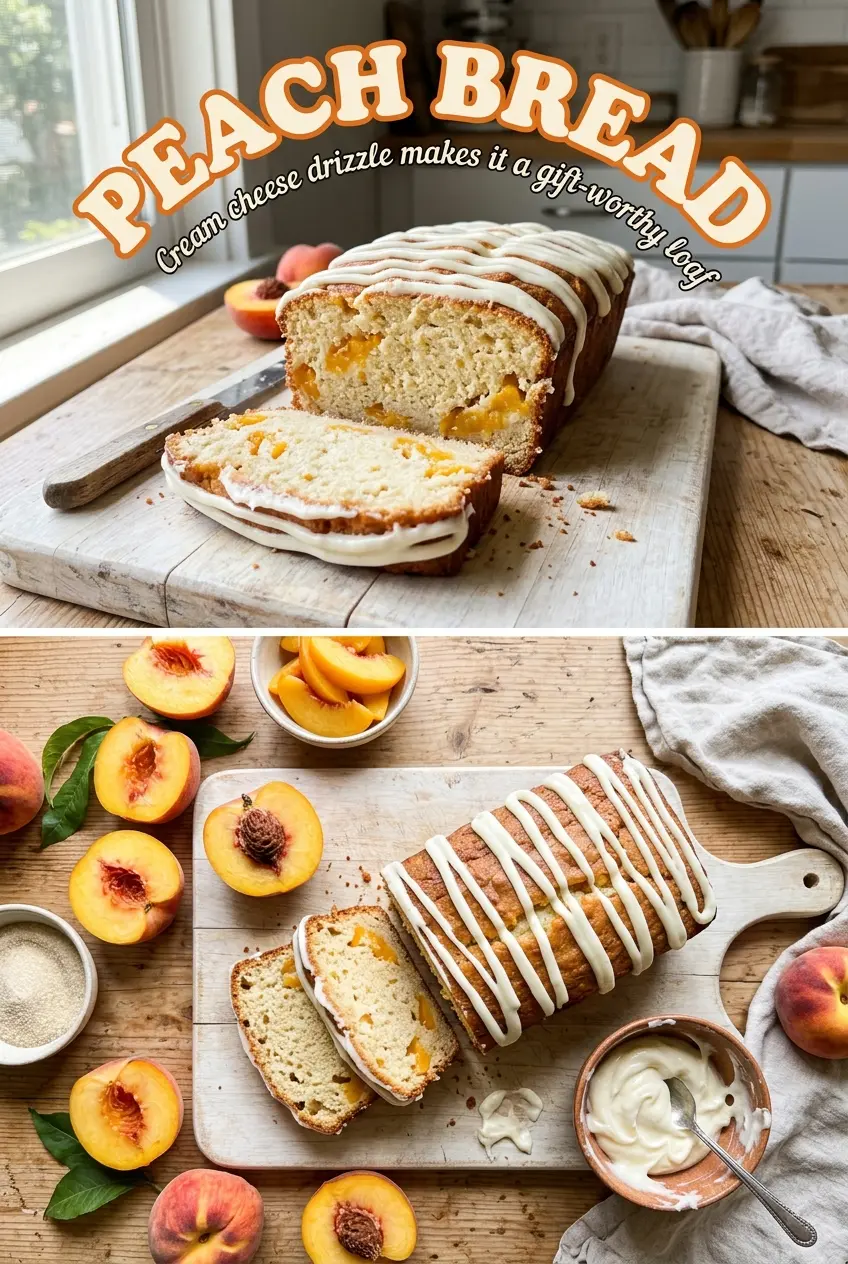
Peach Bread
Ingredients
Equipment
Method
- Preheat oven to 350°F and grease a 9x5 loaf pan.
- Beat the softened butter and granulated sugar until fluffy.
- Add the eggs, sour cream, and vanilla; mix until smooth.
- Incorporate the baking powder, baking soda, cinnamon, and salt into the flour, then fold the dry mixture into the wet batter.
- Fold the diced fresh peaches into the batter until evenly distributed.
- Pour batter into the pan and bake for 55-65 minutes, until the loaf is golden.
- Cool the loaf completely before frosting.
- Beat cream cheese, powdered sugar, milk, and vanilla until smooth.
- Drizzle the frosting over the completely cooled loaf.