
Peach cobbler earns its place when the fruit turns syrupy, the edges bubble up in thick amber pockets, and the topping bakes into a soft, buttery crust that catches just enough of the juice without dissolving into it. The best versions don’t try to be a biscuit or a crumble. They land somewhere more comforting: a cake-like layer on the bottom that rises up around the peaches and bakes into something golden at the top and tender underneath.
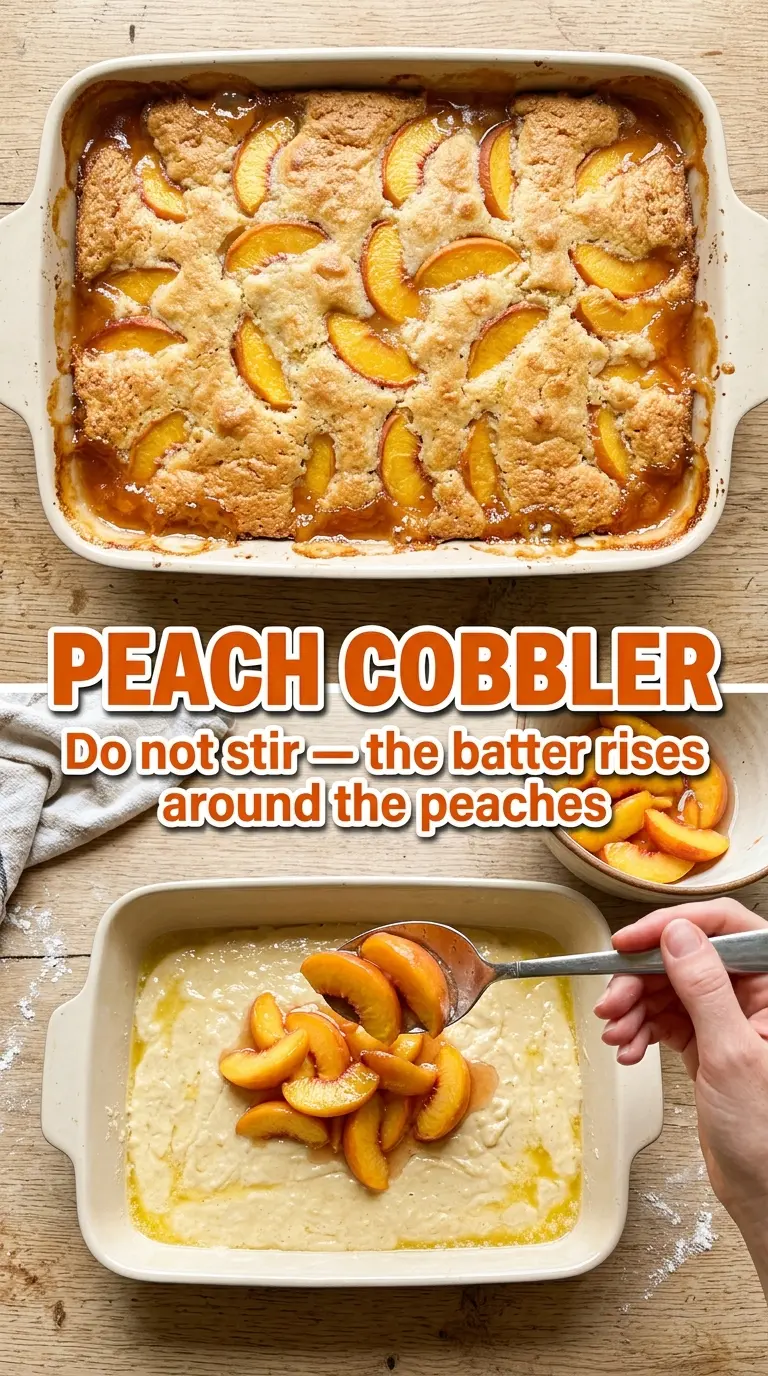
That odd-looking method — butter in the pan first, batter next, peaches on top, and no stirring — is what gives this cobbler its structure. The batter lifts itself around the fruit as it bakes, so you get distinct layers instead of a soggy mixed-up pan. Lemon keeps the peaches bright, and a little cinnamon in both the filling and the batter ties everything together without pushing it into pie-spice territory.
Below, I’ve included the one rule that matters most for this dessert, the ingredient swap that deepens the peach syrup, and the baking cues that tell you when it’s done even if the timer is still ticking.
The batter rose up around the peaches exactly like you said, and the syrup bubbled into the corners without making the top soggy. I used a little brown sugar in the fruit and it tasted like it had been simmering all afternoon.
Save this peach cobbler for the nights when you want bubbling fruit, a buttery cake-like crust, and vanilla ice cream melting into every spoonful.
The Reason Peach Cobbler Turns Soupy When You Stir It
The batter needs that clean separation from the fruit. Once you stir peaches into the batter, the flour starts absorbing juice too early and the whole thing bakes into a heavy, muddy layer instead of a cobbler with lift. The melted butter at the bottom is what fries the base a little as the batter hits the hot pan, which is why the edges come out crisp while the middle stays soft.
The other common mistake is overloading the pan with too much juice. Fresh peaches already bring plenty, and when they sit with sugar and lemon, they release even more. That’s a good thing as long as the fruit is spooned over the top and left alone, because the batter will rise through the liquid and set into the fruit as it bakes.
- Do not stir after layering — that’s the whole structure of the dessert.
- Use ripe but not collapsing peaches — they should slice cleanly and soften in the oven, not disappear into sauce.
- Let the pan bake long enough — the top should be deep golden and the center should no longer look wet and pale.
What Each Ingredient Is Actually Doing in This Peach Cobbler
Fresh peaches carry the whole dessert, so this is one place where quality matters. You want fruit that smells like peaches and gives slightly at the stem end. If your peaches are a little under-ripe, they’ll still work, but the filling will taste flatter; let them sit a day or two before baking if you can. Frozen peaches are the best backup. Thaw them first and drain off excess liquid so you don’t flood the pan.
The butter belongs in the dish before anything else because the batter bakes through it and picks up a rich, fried edge as it sets. Whole milk gives the topping enough body to rise into a soft cake-like layer. If you only have 2% milk, it’ll work, but the crust won’t be quite as plush. The flour-to-sugar ratio on the topping is what keeps it in cobbler territory rather than turning it into a breakfast cake.
In the filling, the sugar draws out juice and turns it into syrup. Brown sugar gives that syrup a darker, more caramel note if you want a deeper finish. The lemon juice keeps the peaches from tasting one-note sweet, and the cinnamon should stay in the background. Too much and you lose the fruit.
Building the Layers Without Breaking the Cobbler
Melting the Butter in the Pan
Pour the melted butter directly into the baking dish and leave it there. That layer protects the batter from sticking and gives you those crisp, buttery edges people always fight over. If the butter pools in one corner, tilt the pan briefly so it coats the bottom evenly before the batter goes in.
Mixing the Batter Just Until It Comes Together
Stir the flour, sugar, baking powder, salt, cinnamon, and milk until the dry streaks disappear, then stop. Overmixing makes the topping dense and tight instead of tender. The batter will look thin. That’s correct; it needs to be pourable so it can spread over the butter and rise during baking.
Layering the Peaches on Top
Spoon the peaches and all their juices over the batter without disturbing the layers underneath. The fruit will sink and the batter will rise in the oven, which is exactly what you want. If you dump the peaches in a heap in the center, the middle bakes slower and the edges can overcook before the whole pan sets.
Knowing When It’s Done
Watch for a deep golden top and bubbling syrup around the edges, then check the center for a set, cake-like bounce instead of a wet wobble. The cobbler should look puffed and uneven, with pockets of fruit breaking through. If the top browns too fast before the center is baked through, lay a loose piece of foil over it for the last 10 to 15 minutes.
How to Adapt This Peach Cobbler for Different Kitchens
Use brown sugar for a deeper peach syrup
Swap some or all of the granulated sugar in the filling for light brown sugar if you want a darker, more caramel-like syrup. The cobbler will taste a little richer and less bright, which works especially well if your peaches are very ripe.
Frozen peaches when fresh ones aren’t there yet
Frozen peaches work well if you thaw them first and drain the liquid. Skipping that step makes the cobbler watery, because the fruit will release extra moisture before the batter has a chance to set.
Dairy-free version that still bakes up tender
Use a neutral plant-based milk and a dairy-free butter substitute with a similar fat content. The texture will still work, but the flavor won’t be as rich, so choose a butter substitute that tastes clean rather than aggressively oily.
Make it ahead for easier serving
Bake the cobbler earlier in the day and warm it before serving. The texture is best the day it’s made, but the fruit stays flavorful and the topping softens back up nicely after a brief reheat.
Storage and Reheating
- Refrigerator: Store covered for up to 4 days. The topping softens as it sits, but the flavor stays good.
- Freezer: Freeze baked cobbler in a tightly wrapped dish or airtight container for up to 2 months. The texture gets softer after thawing, so this is best for convenience, not perfection.
- Reheating: Warm in a 325°F oven until hot in the center and the top firms back up a bit. The microwave works for a single serving, but it softens the crust more than the oven does.
Answers to the Questions Worth Asking

Peach Cobbler
Ingredients
Equipment
Method
- Preheat oven to 350°F. Pour melted butter into a 9x13 baking dish.
- Mix all-purpose flour, granulated sugar, baking powder, salt, and cinnamon in a bowl until evenly combined.
- Stir in whole milk until just combined, then pour batter over butter—do not stir.
- Toss sliced fresh peaches with granulated sugar for filling, lemon juice, and cinnamon until evenly coated.
- Spoon peach mixture over the batter—do not stir.
- Bake 45-55 min, until the topping is golden and the cobbler batter has risen up around the peaches.
- Let the cobbler cool slightly, then serve warm with vanilla ice cream.