
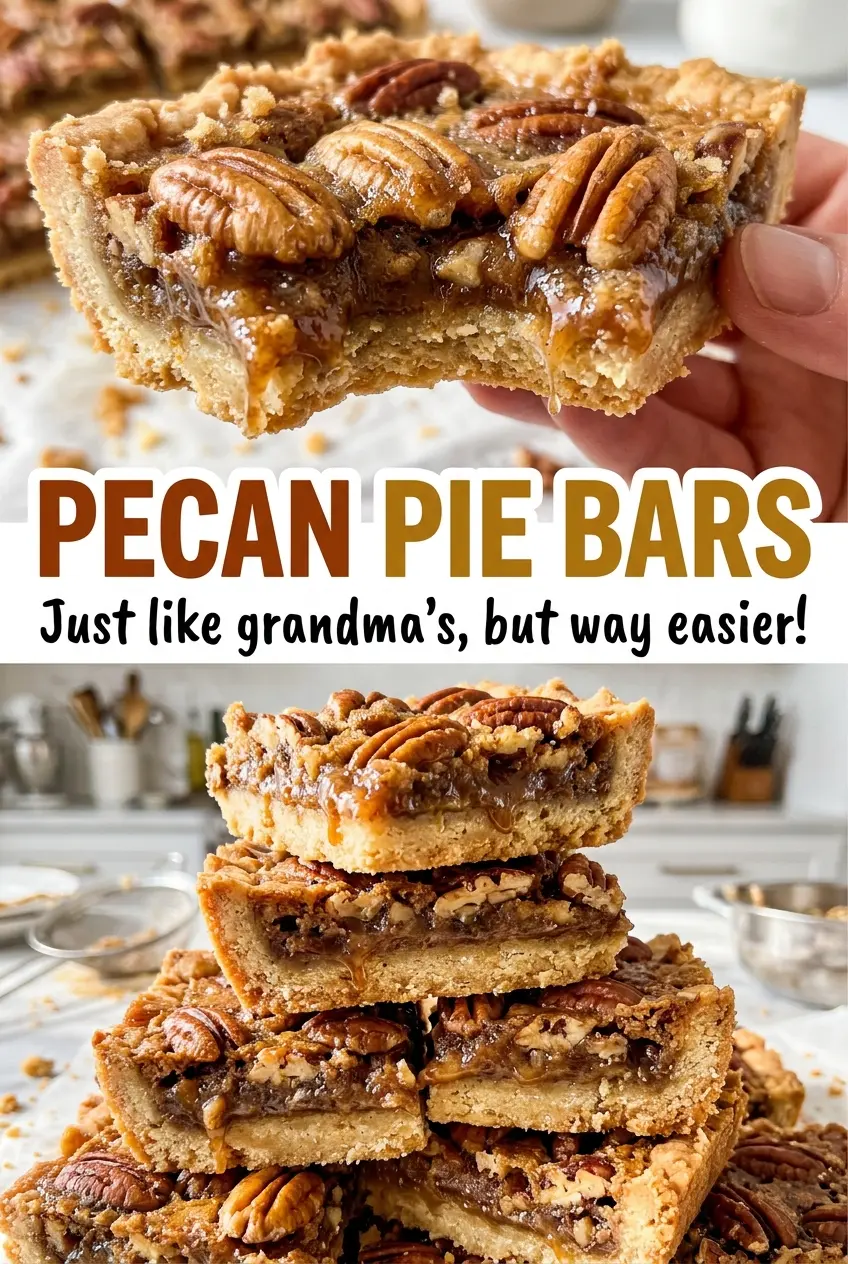
When the crust edges turn pale gold, the kitchen starts to smell buttery and sweet, and you can tell the base is ready for its filling. These pecan pie bars have that crisp, tender crust under a soft, nut-filled center, so every square gets both textures instead of a thick layer of filling alone.
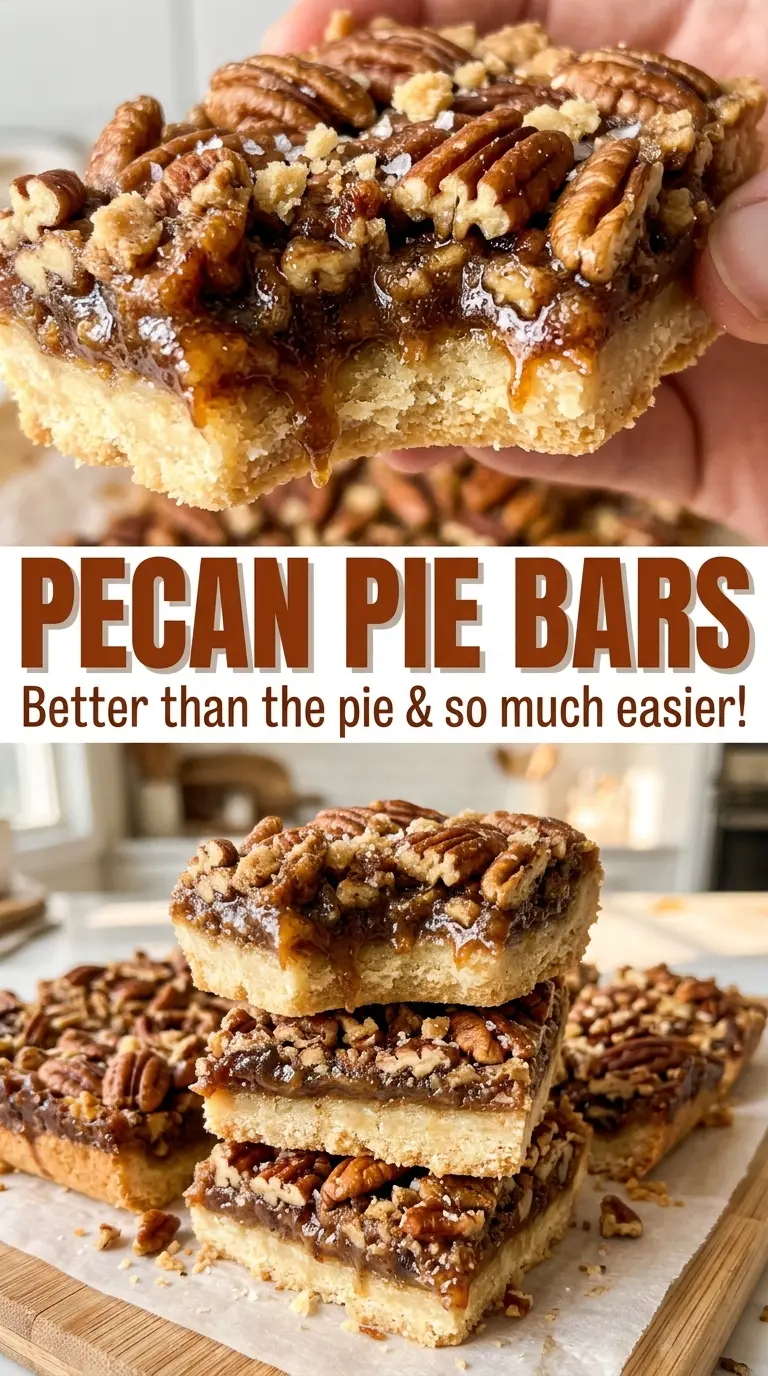
I like that the crust bakes by itself first. It has time to firm up before the egg-and-syrup filling goes on, and pouring the filling over the hot crust keeps the layers together as they bake. The pecans get stirred through the filling rather than sprinkled on top, which gives you a good amount in every bite. Let the pan cool completely and the bars slice into neat squares with a buttery base and a glossy pecan top.
Kitchen Note
Coat the bottom and corners of the 9×13-inch pan evenly before pressing in the crust. Those corners are easy to miss, and a well-greased pan makes the cooled bars easier to lift out cleanly.
Save these pecan pie bars for a bake with a crisp butter crust and a soft, packed-with-pecans center.
Why the Crust Gets Baked Before the Syrup Filling Goes On
A pecan pie bar has two very different layers to bake: a flour-and-butter crust that needs to become lightly golden, and an egg-and-syrup filling that needs enough time to set. Baking them together from the start would leave the crust waiting under a wet filling. Giving the crust its own turn in the oven means it begins to firm before the filling lands on top.
The timing matters, but the color is the useful cue. Take the crust out when the edges are lightly golden, not deeply browned; it will go back into the oven once the filling is added. The filling then bakes directly against that hot base. That sequence gives the bottom time to bake through while the center of the pecan layer sets.
There’s no need to cool the crust between bakes. Whisk the filling until smooth, stir in the pecans, and pour it over the hot crust. Since the center should be set and no longer liquid when the second bake is done, look at the middle rather than relying only on the surface color. The top can look ready before the filling has finished setting underneath.
What the Flour, Butter, and Syrup Each Do
- All-purpose flour — It gives the crust enough structure to hold the filling and cut into bars. Use ordinary all-purpose flour; a specialty flour isn’t needed for this base. There isn’t a simple swap that keeps the same texture, so measure it consistently and avoid packing extra into the cup.
- Cold butter for the crust — Cold pieces cut into the flour mixture make the coarse, crumbly base. Keep this portion cold until you work it in; softened butter smears into the flour and makes it harder to get the crumb texture. Unsalted butter lets the measured salt stay in balance.
- Melted butter for the filling — This is whisked with the eggs, sugars, corn syrup, and vanilla, so it blends evenly into the filling instead of forming bits in the crust mixture. Melt this separate portion before you start whisking the filling.
- Light corn syrup — It gives the pecan layer its characteristic smooth, cohesive set. Honey or maple syrup won’t behave exactly the same, so I stick with light corn syrup for bars that hold their shape once cool.
- Packed light brown sugar — The molasses in brown sugar rounds out the sweetness and gives the filling a deeper flavor than granulated sugar alone. Pack it into the measuring cup so the amount is consistent.
- Large eggs — Eggs help the filling set as it bakes. Whisk them with the other filling ingredients until smooth so you don’t end up with streaks of egg white in the finished bars.
- Chopped pecans — Fresh pecans bring the buttery, nutty bite that defines these bars. If your pecans smell stale or bitter, they’ll show through in a simple filling like this; otherwise, standard chopped pecans work well.
- Vanilla extract — It adds warmth behind the brown sugar and pecans. Use the extract you keep for baking; there’s no need for a premium bottle here.
Press the Crust First, Then Pour Filling While It’s Hot
Work the Cold Butter into Coarse Crumbs
Heat the oven to 350°F and grease a 9×13-inch baking pan. Whisk the flour, granulated sugar, and salt in a large bowl, then cut in the cold butter with a pastry cutter or your fingertips. Stop when the mixture looks like coarse crumbs; it shouldn’t become a smooth dough. Press it evenly across the bottom of the pan so the crust bakes to a consistent thickness.
Bake Until the Edges Turn Lightly Golden
Bake the crust for 18 to 20 minutes. Look for lightly golden edges rather than a dark brown top. If the crust is still pale at 18 minutes, let it continue to the end of the range and check again. Keep the center and edges even when pressing the crumbs into the pan so one area doesn’t bake noticeably faster.
Whisk the Filling Smooth and Fold in the Pecans
In a large bowl, whisk the eggs, corn syrup, brown sugar, melted butter, and vanilla until smooth. Break up any packed clumps of brown sugar as you whisk, since they can leave concentrated pockets in the filling. Stir in the chopped pecans once the mixture is smooth. Pour it over the hot crust, spreading the pecans across the pan rather than leaving them gathered in one spot.
Bake Until the Center Is No Longer Liquid
Return the pan to the oven for 25 to 30 minutes. The filling is ready when it has set and the center is no longer liquid; don’t judge it only by how golden the edges look. Let the pan cool completely before cutting. The filling firms as it cools, which makes the bars much less likely to slump or smear when sliced.
Small Changes That Shift the Pecan Bars
A finer pecan layer
Chop the pecans more finely before stirring them into the filling. The smaller pieces distribute more evenly, giving each bar a less chunky bite while keeping the same pecan-rich filling.
A gluten-free crust
Replace the all-purpose flour in the crust with a measure-for-measure gluten-free baking blend, using its cup-for-cup equivalent. The crust may be more delicate when sliced, so let the pan cool fully before cutting and choose a blend intended for baking.
A deeper brown-sugar note
Use packed dark brown sugar in place of light brown sugar in the filling. The stronger molasses flavor makes the pecans taste more toasted and caramel-like, with a slightly less delicate sweetness.
Storage and Reheating
- Refrigerator: Store cooled bars in an airtight container for up to 4 days. The crust will soften a little in the refrigerator.
- Freezer: Freeze fully cooled bars in an airtight container, with parchment between layers, for up to 2 months. Thaw in the refrigerator before serving.
- Reheating: These bars are best served at room temperature; let a chilled bar sit out briefly before eating. Microwaving for too long can soften the crust and heat the filling unevenly.
Questions That Come Up While These Bars Bake
Pecan Pie Bars
Ingredients
Equipment
Method
- Heat the oven to 350°F.
- Grease a 9x13-inch baking pan.
- Whisk the flour, granulated sugar, and salt in a large bowl.
- Cut in 3/4 cup cold butter with a pastry cutter or your fingertips until the mixture resembles coarse crumbs.
- Press the mixture evenly into the bottom of the prepared pan.
- Bake for 18 to 20 minutes, until the edges are lightly golden.
- Whisk the eggs, corn syrup, brown sugar, melted butter, and vanilla in a large bowl until smooth.
- Stir in the pecans.
- Pour the filling over the hot crust.
- Bake for 25 to 30 minutes, until the filling is set and no longer liquid in the center.
- Cool completely in the pan.
- Cut into bars.