
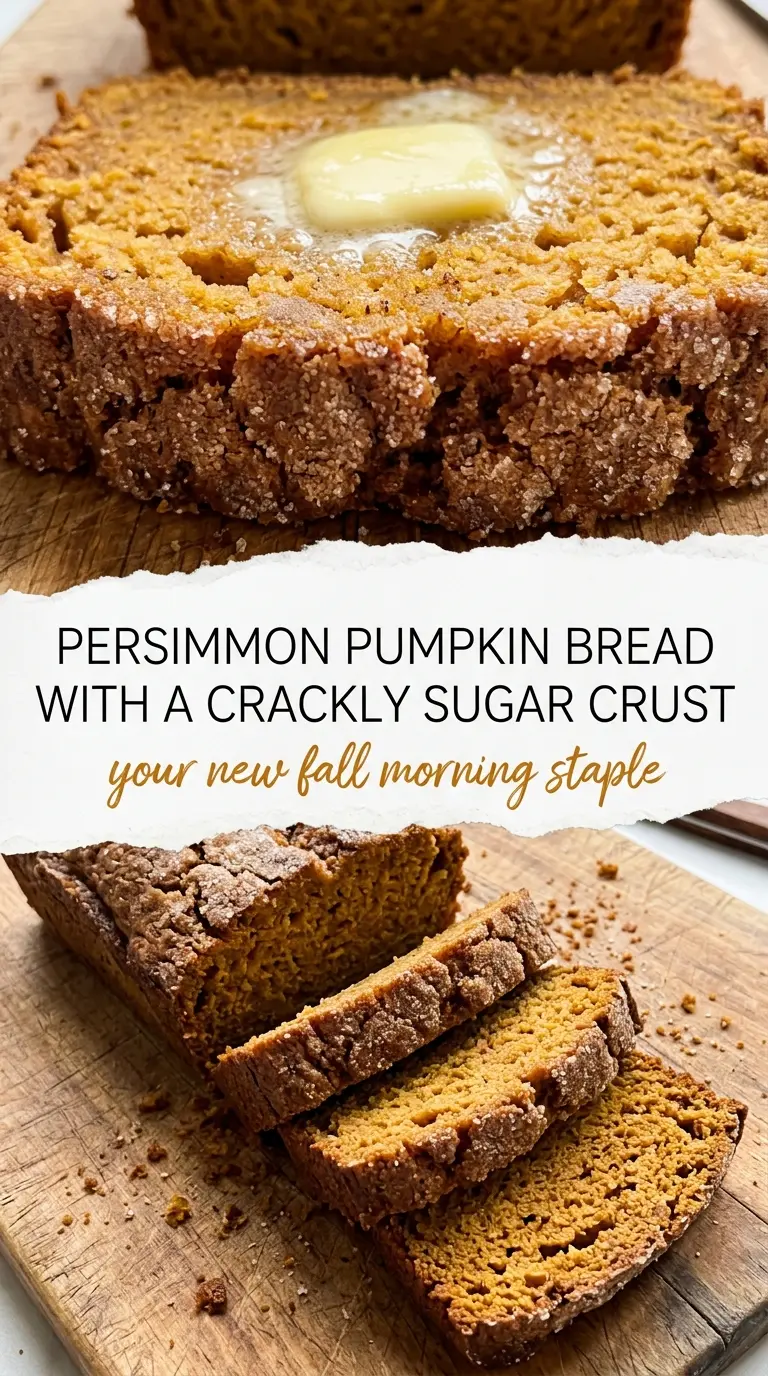
Moist pumpkin bread with a crackly sugar top and a tender, spiced crumb earns its place fast. The loaf stays soft for days, slices cleanly, and has that deep pumpkin-cinnamon aroma that makes people wander into the kitchen before it even comes out of the oven. The coarse sugar on top is the detail that separates a good loaf from a forgettable one. It bakes into a thin, crisp shell that gives each slice a little crunch before you hit the soft center.
This version keeps the batter simple, but the method matters. Pumpkin puree brings moisture, oil keeps the crumb plush, and brown sugar adds a little depth without making the loaf heavy. The trick is stopping as soon as the flour disappears. Overmixing turns quick bread dense and gummy, and pumpkin batter hides that mistake until the middle stays tacky long after the edges are done.
Below, I’m walking through the part that keeps the top from baking too dark before the center sets, plus the small swaps that still give you a reliable loaf when you need to work with what’s in the pantry.
The sugar top baked up crisp and the loaf stayed moist for days. I added a loose piece of foil at 40 minutes and the center finished perfectly without the crust getting too dark.
Save this pumpkin bread for the mornings when you want a soft, spiced loaf with that crisp sugar crust on top.
The Reason Pumpkin Bread Stays Dry — and How This Loaf Avoids It
Pumpkin bread usually goes wrong in one of two ways: the crumb gets tight from too much mixing, or the loaf bakes up dry because the batter doesn’t have enough fat to stay tender. This version avoids both problems by leaning on oil instead of butter and keeping the mixing short. Oil coats the flour more evenly, so the loaf stays soft even after it cools.
The other thing that matters is balancing the pumpkin with enough sugar and spice to keep the flavor from tasting flat. Pumpkin puree brings moisture, not much sweetness, so the brown sugar adds depth while the pumpkin pie spice gives the loaf its warmth. If your loaf ever turns out pale and muted, it usually means the batter was underseasoned, not underbaked.
What Each Ingredient Is Actually Doing in This Loaf
- All-purpose flour — Gives the loaf enough structure to slice cleanly without turning heavy. Spoon and level it if you can; packing the cup adds extra flour and makes quick bread bake up dense.
- Brown sugar — Brings moisture and a deeper caramel note that works with pumpkin better than white sugar alone. If you only have white sugar, the loaf still works, but the flavor lands a little flatter.
- Pumpkin puree — This is the backbone of the bread’s texture and flavor. Use plain pumpkin puree, not pumpkin pie filling, or you’ll end up with a sweetened, spiced batter that’s hard to control.
- Vegetable oil — Keeps the crumb soft for days. Melted butter can be used, but the loaf won’t stay as tender and it sets a little firmer once cooled.
- Pumpkin pie spice — This is where the warm, bakery-style flavor comes from. If you’re mixing your own, use cinnamon-heavy spice with a little nutmeg and ginger so it doesn’t taste like plain sweet bread.
- Coarse sugar — The topping gives the crust a light crunch and a glossy finish. Skip it if you need to, but you’ll lose the crackly top that makes this loaf stand out.
Mixing the Batter Only Until It Comes Together
Dry Ingredients First
Whisk the flour, baking soda, salt, and pumpkin pie spice together before anything wet goes in. That keeps the leavening and spice evenly distributed, which matters in a quick bread because you won’t be stirring much later. If you see pockets of spice in the finished loaf, the dry ingredients weren’t mixed well enough at the start.
Building the Wet Base
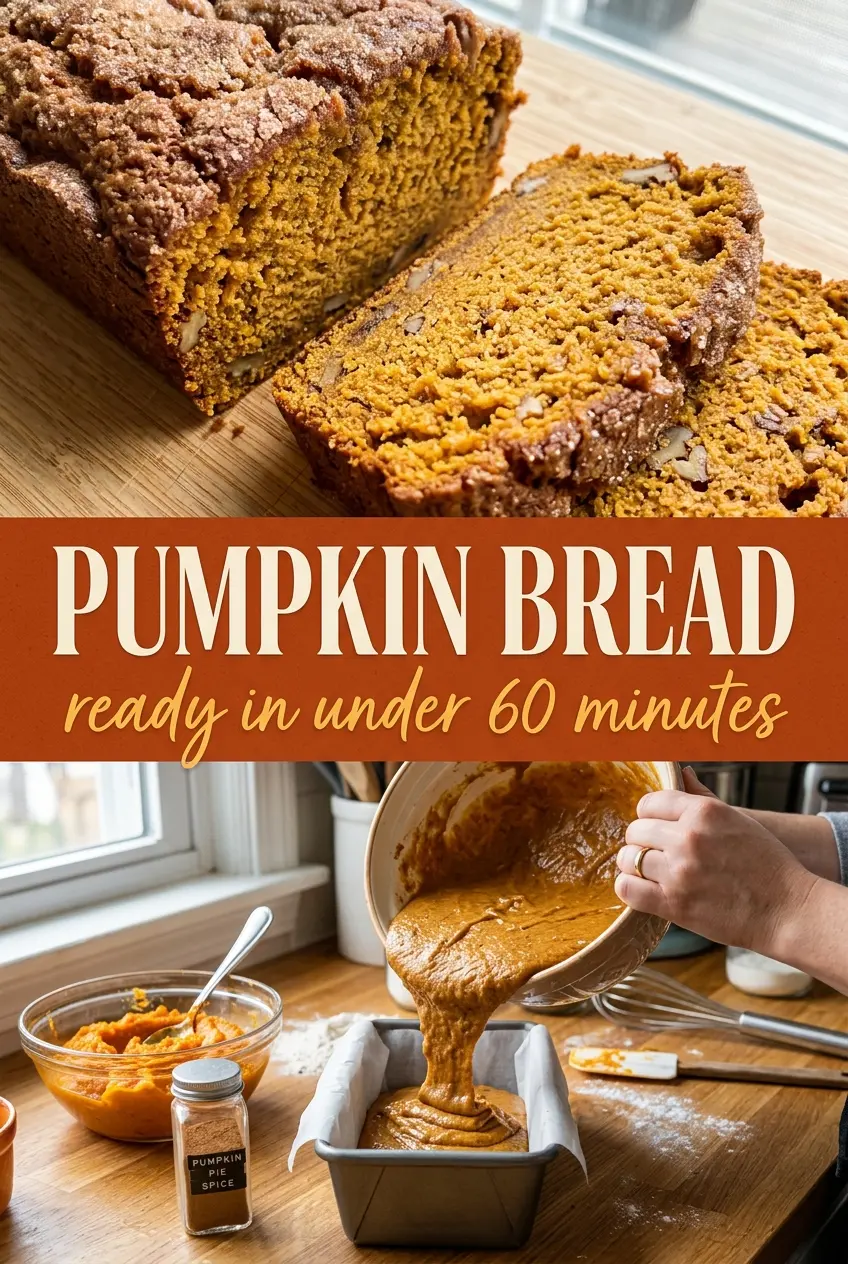
Beat the sugars, eggs, and oil until the mixture looks thick and glossy, then stir in the pumpkin puree and water. The batter should look smooth and loose, not fluffy like cake batter. Water may seem thin here, but it helps the loaf stay soft and keeps the crumb from becoming pasty.
Stopping Before the Flour Disappears Too Late
Add the dry ingredients to the wet bowl and fold just until you no longer see streaks of flour. A few small lumps are fine. If you keep stirring until the batter looks perfectly smooth, the gluten tightens and the loaf bakes up tough instead of tender.
Watching the Top as It Bakes
Pour the batter into the pan, scatter the coarse sugar over the top, and bake until a toothpick comes out clean from the center. If the top is getting dark before the middle finishes, lay a loose piece of foil over the loaf for the last 10 to 15 minutes. The foil protects the crust without trapping steam, so the center can finish baking properly.
Three Ways to Adjust This Pumpkin Bread Without Losing the Good Part
Gluten-Free Version With a Better Crumb
Use a 1:1 gluten-free baking blend that includes xanthan gum. The texture will be a touch more delicate, but the loaf still slices well if you let it cool completely before cutting.
Dairy-Free and Already There
This loaf is naturally dairy-free as written, which is one reason it bakes up so tender. Keep the oil, skip butter-based swaps, and the texture stays soft without any extra work.
Make It More Dessert-Like
Fold in chocolate chips or chopped toasted pecans after the dry ingredients go in. Chocolate makes the loaf richer and a little sweeter, while nuts add crunch and a more bakery-style slice.
How to Store and Reheat Pumpkin Bread
- Refrigerator: Up to 1 week, though the crumb can dry out a little faster in the fridge than on the counter.
- Freezer: Wrap the cooled loaf or individual slices tightly and freeze for up to 3 months. Thaw at room temperature with the wrapping still on so condensation doesn’t soften the crust too much.
- Reheating: Warm slices in the toaster oven or microwave for just a few seconds. Long reheating dries quick bread fast, so stop as soon as the center feels soft and warm.
Answers to the Questions Worth Asking
Pumpkin Bread
Ingredients
Equipment
Method
- Preheat the oven to 350°F and grease a 9x5-inch loaf pan.
- Whisk together the all-purpose flour, baking soda, salt, and pumpkin pie spice until evenly combined.
- Beat the granulated sugar, brown sugar, eggs, and vegetable oil until smooth and combined.
- Stir in the pumpkin puree and water until the batter looks uniform.
- Fold the dry ingredients into the wet mixture until just combined, avoiding overmixing.
- Pour the batter into the loaf pan and sprinkle coarse sugar on top.
- Bake at 350°F for 50-55 minutes, until a toothpick comes out clean.
- Cool in the pan for 10 minutes, then turn the loaf out onto a rack to finish cooling.