
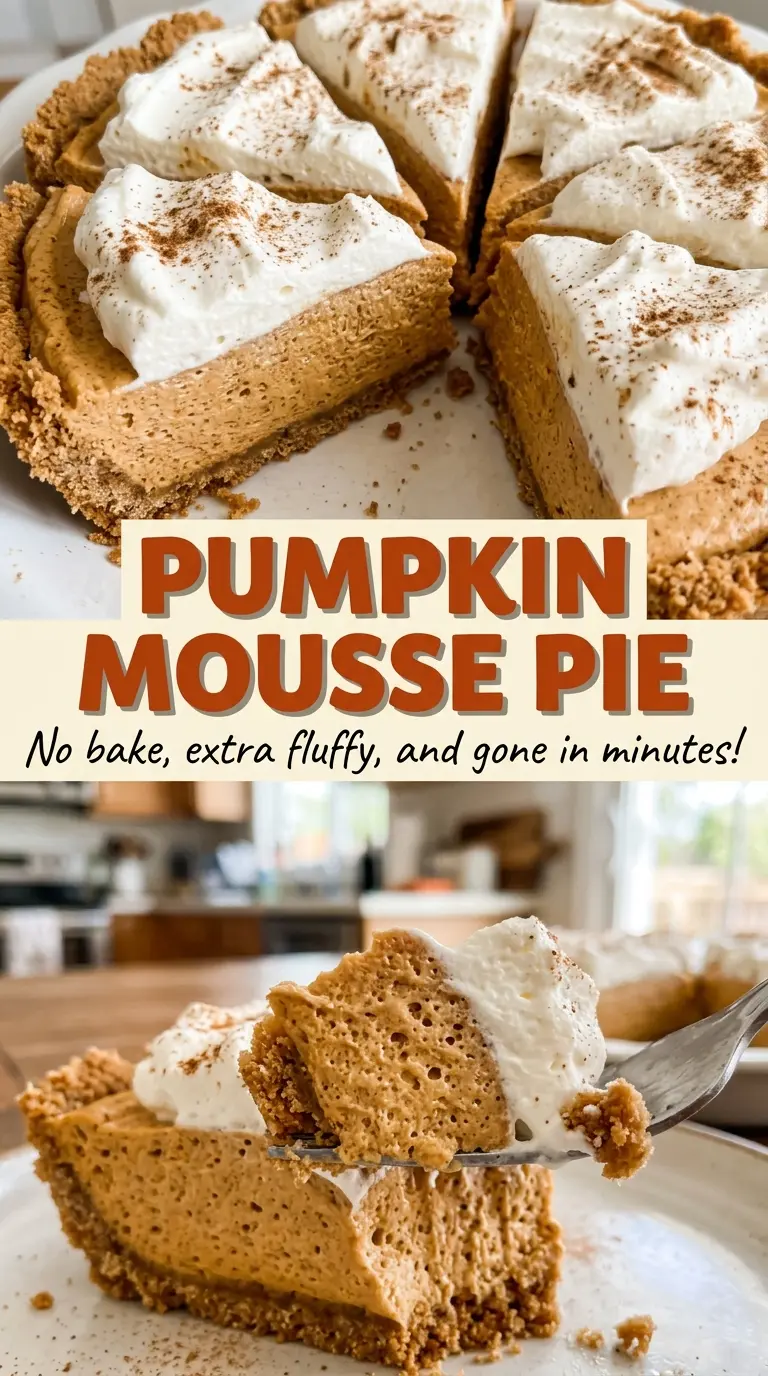
When the pumpkin mixture comes off the stove, it looks glossy and loose, more like warm puree than pie filling. That’s exactly right. This Pumpkin Mousse Pie gets its structure from the gelatin, then the whipped cream gives it a light, airy finish. I’ve learned that letting the pumpkin mixture cool before folding in the cream is what keeps the filling mousse-like instead of heavy.
I start with a graham cracker crust baked until fragrant and set, then let it cool completely while I make the filling. The mousse comes together in stages: soften the gelatin, warm it into the pumpkin, beat that mixture into cream cheese, and fold in stiffly whipped cream. Once chilled, the filling is smooth and softly spiced, with a buttery crumb crust underneath.

Kitchen Note
Let the graham cracker crust cool completely before adding the mousse. Filling a warm crust can soften the bottom before the pie has a chance to chill and set.
Save this Pumpkin Mousse Pie for its airy pumpkin filling and crisp graham cracker crust—a chilled dessert with a soft, creamy slice.
Why Pumpkin Mousse Needs a Cooling Pause Before the Cream Goes In
Pumpkin puree, sugar, and spice make a warm, dense base. The whipped cream is what lightens it, but that cream is delicate: if it meets a warm mixture, its air can collapse before it’s folded through. The result is still pumpkin-flavored, but it loses the soft, mousse-like texture that makes this pie different from a baked pumpkin pie.
There are two separate jobs happening in the filling. Gelatin gives the chilled mixture enough structure to hold a slice, while the whipped cream brings in air. The cream cheese helps the pumpkin base turn smooth and creamy, so it needs to be beaten before the warm pumpkin mixture is added. Give the pumpkin mixture time to cool until it no longer feels warm to the touch, stirring occasionally as it rests. That small pause protects the whipped cream later, without making the filling complicated.
Think of the mousse as a set filling that’s also been aerated. Handle it gently once the whipped cream goes in, and stop folding as soon as the color looks even, rather than stirring until every bit of air is gone.
Why Plain Pumpkin Puree and Cold Cream Matter Here
- Canned pumpkin puree — Choose plain puree, not pumpkin pie filling. Pie filling is already sweetened and spiced, so it would throw off the balance of the mousse. The plain canned version keeps the pumpkin flavor consistent without extra prep.
- Unflavored gelatin — This is what helps the filling set firmly enough to slice after chilling. It needs to soften in cold water before it goes into the hot pumpkin mixture; skipping that step risks undissolved bits. Agar or another setting agent isn’t a direct swap for this method.
- Cream cheese — Softened cream cheese beats into a smooth base with the vanilla. If it’s still cold and firm, small lumps can remain when the pumpkin is added. Full-fat cream cheese gives the filling its creamy body; a whipped or spreadable product won’t behave the same way.
- Heavy cream — Use it cold so it can be beaten to stiff peaks. Half-and-half doesn’t contain enough fat to whip into the same stable, airy cream, so it won’t give the mousse the same lift.
- Light brown sugar and pumpkin pie spice — The brown sugar brings a deeper sweetness than the granulated sugar in the crust, while the spice adds the familiar warm pumpkin-pie flavor. The recipe keeps these in separate parts for a reason: granulated sugar suits the crumb crust, and brown sugar dissolves into the pumpkin mixture.
- Graham cracker crumbs and unsalted butter — The crumbs form the crust, and melted butter binds them when pressed into the pie plate. Unsalted butter lets the measured salt in the filling stay in control; the butter’s quality matters less than mixing it evenly through the crumbs.
Building the Crust and Folding a Light Pumpkin Mousse
Press and Bake the Graham Cracker Crust
Heat the oven to 350°F. Stir the graham cracker crumbs, granulated sugar, and melted butter together in a medium bowl, then press the mixture firmly over the bottom and up the sides of a 9-inch pie plate. Pack it evenly so loose crumbs don’t remain around the edges. Bake for 8 to 10 minutes, until fragrant and set, then let it cool completely.
Soften the Gelatin and Warm the Pumpkin
Sprinkle the unflavored gelatin over the cold water in a small bowl and leave it for 5 minutes to soften. Meanwhile, stir the pumpkin puree, brown sugar, pumpkin pie spice, and salt together in a medium saucepan over medium heat. Keep stirring until the mixture is steaming; it doesn’t need to boil. Take the pan off the heat before adding the softened gelatin.
Dissolve the Gelatin Into the Pumpkin Base
Add the softened gelatin to the hot pumpkin mixture and stir until it’s fully dissolved. If you can still see or feel gelatin granules, keep stirring before moving on; undissolved gelatin can leave an uneven set. In a large bowl, beat the softened cream cheese and vanilla with an electric mixer until smooth. Gradually beat in the warm pumpkin mixture so the cream cheese blends in evenly.
Cool the Base, Then Fold in the Whipped Cream
Let the pumpkin mixture cool, stirring occasionally, until it’s no longer warm to the touch; this takes about 15 to 20 minutes. In a separate bowl, beat the cold heavy cream until stiff peaks form. Fold the whipped cream gently into the cooled pumpkin mixture, turning the mixture until no white streaks remain. If you stir vigorously, the filling will lose some of its airy texture.
Fill the Crust and Chill Until Set
Spoon the mousse into the cooled crust and smooth the top. Refrigerate for at least 4 hours, until the filling is set. The center should hold its shape when sliced rather than looking loose or flowing. Keep the pie chilled until you’re ready to serve it.
Two Ways to Serve the Pumpkin Mousse Without Changing Its Flavor
Make a Crustless Pumpkin Mousse
For a version without the graham cracker base, prepare the mousse filling and spoon it into a serving dish instead of the pie crust. Chill it until set just as you would the pie. You’ll get the same spiced, creamy filling, but without the buttery crumb beneath it.
Portion the Mousse Into Individual Dishes
Spoon the mousse into individual serving dishes instead of filling one pie crust. This format skips the pie slice and crust, but keeps the same soft pumpkin texture. Chill the portions until set before serving.
Storage and Reheating
- Refrigerator: Cover and refrigerate for 3 to 4 days. The crust gradually softens as it sits beneath the mousse.
- Freezer: Freezing isn’t recommended; thawing can make the whipped filling less airy and soften the crumb crust.
- Reheating: Serve this pie cold rather than reheating it. Heat can soften the gelatin-set filling and undo its mousse texture.
Questions That Come Up When Making Pumpkin Mousse Pie
Pumpkin Mousse Pie
Ingredients
Equipment
Method
- Heat the oven to 350°F.
- In a medium bowl, mix the graham cracker crumbs, granulated sugar, and melted butter.
- Press the mixture firmly over the bottom and up the sides of a 9-inch pie plate.
- Bake for 8 to 10 minutes, until fragrant and set.
- Cool the crust completely.
- Sprinkle the gelatin over the cold water in a small bowl and let it stand for 5 minutes to soften.
- In a medium saucepan, stir together the pumpkin, brown sugar, pumpkin pie spice, and salt over medium heat until steaming.
- Remove the saucepan from the heat, add the softened gelatin, and stir until fully dissolved.
- In a large bowl, beat the cream cheese and vanilla with an electric mixer until smooth.
- Gradually beat in the warm pumpkin mixture.
- Let the mixture cool, stirring occasionally, until it is no longer warm to the touch, about 15 to 20 minutes.
- In a separate bowl, beat the heavy cream until stiff peaks form.
- Gently fold the whipped cream into the cooled pumpkin mixture.
- Spoon the mousse into the cooled crust and smooth the top.
- Refrigerate for at least 4 hours, until set.