
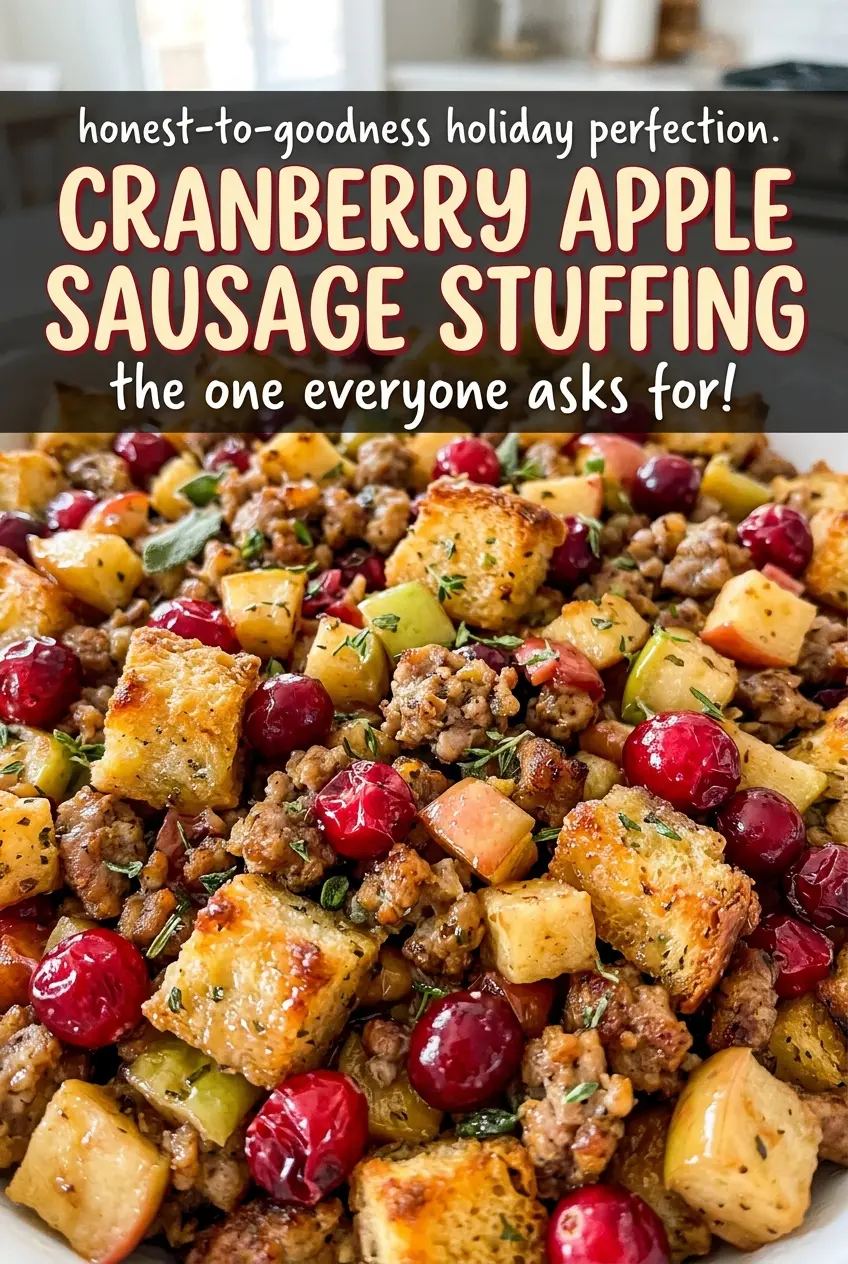
When the bread cubes come out of the oven dry all the way through, they can take on broth without collapsing into a heavy, wet layer. I learned to give them that low, slow bake before building the rest of the pan; skipping it can leave the center too soft while the top gets brown. In this Cranberry Apple Sausage Stuffing, pork sausage and buttery vegetables keep each forkful savory, while apples and dried cranberries bring little sweet-tart bites. It bakes in a 9-by-13-inch dish, so the middle stays tender under foil before the top has time to turn golden.
The covered bake gives the middle time to heat through before you uncover it for the browned top. I keep the bread pieces intact when I toss in the broth rather than stirring hard; the goal is evenly damp bread, not paste. That balance gives you a moist center and a golden top, with sausage and fruit spread through the dish.
Kitchen Note
Let the baked stuffing rest for the full 10 minutes before serving. That short pause helps the hot, broth-bound bread settle, so scoops hold together instead of slumping.
Save this Cranberry Apple Sausage Stuffing for a savory, golden-topped side with sweet-tart fruit in every scoop.
Why the Apples and Cranberries Don’t Make This Stuffing Taste Sweet
Fruit can make a stuffing read sweet if it takes over the whole bite. Here, the fruit sits alongside browned pork sausage, onion, celery, and herbs, so its sweetness comes in small, distinct pops instead of turning the casserole into a fruit bake. The apples soften as they cook with the vegetables, while dried cranberries bring a more concentrated sweet-tart note. That contrast gives the dish a little lift without pushing the savory base into the background.
The balance also depends on keeping the pieces evenly distributed through the bread. You want a little of everything in each serving, not a pocket of cranberries at one end and plain bread at the other. The sausage and herbs carry the deeper, savory notes; the fruit gives those bites contrast. It’s a useful distinction when you’re choosing apples: a firm apple that holds its shape matters more here than choosing the sweetest one you can find.
What Each Ingredient Brings to This Sausage Stuffing
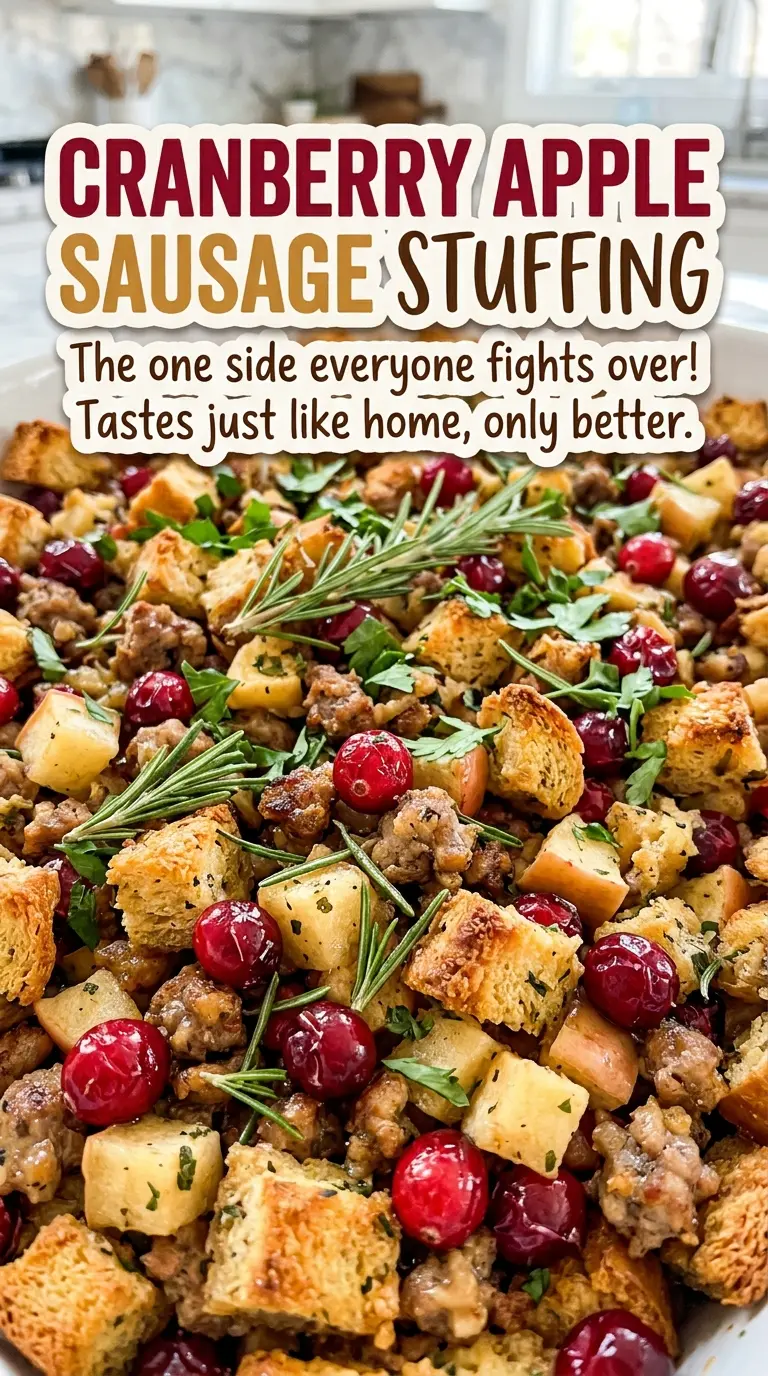
- Sturdy white bread — The stronger crumb holds its shape when moistened, while very soft bread can break down more easily. A basic sturdy loaf is fine; cut the cubes evenly so they dry at a similar rate. Day-old bread works too, but still dry it in the oven.
- Bulk pork sausage — Choose a mild or savory sausage if you want the sage and thyme to come through clearly; a hot sausage makes the whole pan spicier. Bulk sausage is convenient because it browns in small pieces without removing casings.
- Unsalted butter — It carries the flavor of the onion, celery, and herbs as they soften. If salted butter is what you have, leave out the listed kosher salt so the seasoning doesn’t become too assertive.
- Apples — A firm apple keeps a little shape after cooking, rather than disappearing into the vegetables. Sweet or tart varieties both work; choose one you like eating fresh.
- Dried cranberries — Their chewy texture and concentrated tart-sweet flavor suit the soft bread. Raisins can stand in if that’s what’s in your pantry, though they’ll taste sweeter and less tart.
- Eggs and chicken broth — Whisking them together gives the liquid an even consistency before it goes over the bread. Low-sodium broth leaves room to season the dish with the listed salt; vegetable broth is a useful swap if you’re making the vegetarian variation below.
Building the Stuffing Without Crushing the Bread
Dry the Bread Before Anything Else
Heat the oven to 300°F and spread the bread cubes in a single layer across two rimmed baking sheets. Bake for 20 to 25 minutes, rotating the sheets halfway through, until the cubes feel dry rather than soft in the middle. If the pieces are crowded, they won’t dry as evenly, so give them space across both pans. Take them out and raise the oven to 350°F, then grease a 9-by-13-inch baking dish with butter or cooking spray.
Brown the Sausage in Small Pieces
Cook the bulk sausage in a 12-inch skillet over medium heat for 8 to 10 minutes, breaking it into small pieces as it browns. Don’t rush the browning or leave large clumps; smaller pieces spread through the stuffing more evenly. The sausage should have no pink remaining and reach 160°F. Transfer it to an 8-quart mixing bowl so there’s room to toss in the bread later.
Soften the Vegetables in the Sausage Skillet
Melt the butter in the same skillet, then add the onion, celery, apples, sage, thyme, salt, and pepper. Cook for 6 to 8 minutes, stirring now and then, until the vegetables soften. If the onion and celery still feel firm, give them a little longer rather than moving on while they’re raw-crisp. Add the softened mixture to the bowl with the sausage.
Moisten Evenly, Then Bake in Two Stages
Whisk the eggs and chicken broth together in a separate bowl. Add the dried bread and cranberries to the sausage mixture, pour the broth mixture over everything, and toss gently until the bread is evenly moistened; stirring aggressively can break up the cubes. Transfer the mixture to the prepared dish, cover tightly with foil, and bake for 30 minutes. Uncover and bake for another 20 to 25 minutes, until the center reaches 165°F and the top is golden.
Three Practical Ways to Adapt This Stuffing
Make It Vegetarian
Replace the pork sausage with an equal amount of plant-based bulk sausage and use vegetable broth instead of chicken broth. Keep the eggs and butter; the dish remains vegetarian, with a milder, less pork-forward flavor and a slightly different crumble.
Use Gluten-Free Bread
Swap in the same volume of sturdy gluten-free white bread cubes and dry them in the oven as usual. Gluten-free bread can have a more delicate texture, so toss gently and stop as soon as the pieces are evenly moistened.
Trade the Apples for Pears
Replace the apples with two firm pears, cored and diced the same way. Pears give the stuffing a softer, floral sweetness, so choose fruit that’s ripe but still firm enough to hold its shape while the vegetables cook.
Storage and Reheating
- Refrigerator: Refrigerate leftovers within 2 hours and store them covered or in an airtight container for 3 to 4 days. The top softens as it sits.
- Freezer: Freeze cooled portions in airtight containers for up to 2 months for the best texture. Thaw overnight in the refrigerator before reheating.
- Reheating: Cover with foil and warm in a 350°F oven until hot throughout; uncover near the end if you’d like to bring back some color on top. Reheating uncovered the whole time can dry out the bread.
Questions That Come Up When Making This Stuffing
Cranberry Apple Sausage Stuffing
Ingredients
Equipment
Method
- Preheat the oven to 300°F.
- Arrange the bread cubes in a single layer on 2 rimmed baking sheets.
- Bake the bread for 20 to 25 minutes, rotating the sheets halfway through, until the cubes are dry.
- Remove the bread from the oven and raise the temperature to 350°F.
- Grease a 9x13-inch baking dish with butter.
- Cook the sausage in a 12-inch skillet over medium heat for 8 to 10 minutes, breaking it into small pieces, until browned with no pink remaining and it reaches 160°F.
- Transfer the sausage to a large mixing bowl.
- Melt the butter in the skillet.
- Add the onion, celery, apples, sage, thyme, salt, and pepper, and cook for 6 to 8 minutes until the vegetables soften.
- Add the vegetables to the bowl with the sausage.
- Whisk the eggs and chicken broth together in a separate bowl.
- Add the dried bread and cranberries to the large bowl.
- Pour in the broth mixture and toss gently until the bread is evenly moistened.
- Transfer the mixture to the prepared baking dish and cover tightly with foil.
- Bake for 30 minutes.
- Uncover and bake for 20 to 25 minutes more, until the center reaches 165°F and the top is golden.
- Rest the stuffing for 10 minutes before serving.