
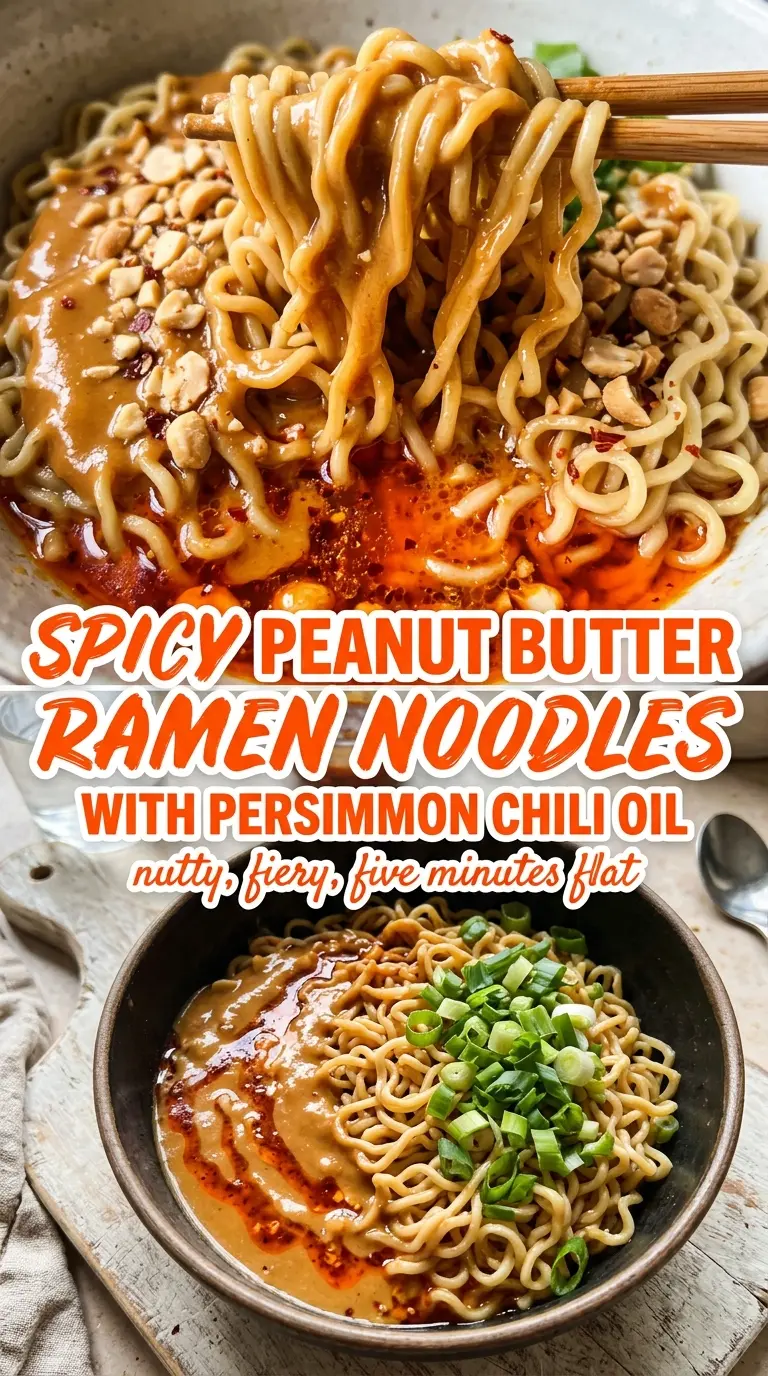
Glossy, spicy peanut noodles are one of those dinners that disappear fast because every strand gets coated in a sauce that tastes far bigger than the ingredient list looks. The peanut butter turns silky, the chili garlic sauce brings heat without flattening the flavor, and the brown sugar rounds everything out so the sauce lands somewhere between savory, nutty, and a little sticky in the best way. It’s the kind of bowl that fixes a hungry night with almost no effort.
What makes this version work is the hot noodle water. Peanut butter alone can seize up and turn pasty, but a splash of starchy cooking water loosens it into a glossy sauce that clings instead of puddling. The ramen noodles also help here because their thin shape catches the sauce in every twist, which is exactly why this feels satisfying even though it comes together in minutes. Don’t toss the seasoning packet into the bowl; the soy sauce and chili garlic paste do the heavy lifting much more cleanly.
Below you’ll find the one move that keeps the sauce smooth, a few smart swaps, and the answers to the questions that usually come up when people make ramen this way for the first time.
The sauce turned out silky instead of clumpy, and the chili garlic sauce gave it a little kick without drowning out the peanut flavor. I added extra green onions on top and my roommate asked for the recipe before I finished eating.
Save these spicy peanut butter ramen noodles for the nights when you want a fast bowl with a glossy sauce and a real kick.
The Reason the Sauce Stays Creamy Instead of Turning Gluey
The trap with peanut noodles is adding thick peanut butter to hot noodles and expecting it to behave on its own. It won’t. Peanut butter needs two things to stay smooth: enough salt and acid from the soy and chili garlic sauce to balance the richness, and enough hot water to loosen the texture before it hits the noodles. Once it tightens up, you can still rescue it with more noodle water, but the best texture happens when you whisk the sauce first, then thin it gradually until it looks shiny and pourable.
Another thing that matters here is heat control. The noodles should be hot when they go into the bowl, but the sauce doesn’t need to cook hard once it’s mixed. If you boil peanut sauce after it’s assembled, it can get grainy or overly thick. Keep the process gentle and use the starch in the noodle water as part of the sauce, not just as a rinse step.
What Each Ingredient Is Actually Doing in This Dish
- Instant ramen noodles — These cook fast and have enough surface area to grab the sauce. Toss the seasoning packet unless you want a salt bomb layered on top of soy sauce and chili paste.
- Creamy peanut butter — Creamy gives you the smoothest sauce. Natural peanut butter can work, but stir it first and expect a looser, sometimes slightly oily sauce that still tastes good.
- Chili garlic sauce — This brings heat, garlic, and a little tang in one spoonful. If you swap in plain hot sauce, the bowl gets sharper and less rounded, so add a little minced garlic or a pinch of sugar to bring back balance.
- Soy sauce — This is the salt and umami backbone. Use regular soy sauce for the cleanest result; low-sodium works too, just taste before adding extra.
- Brown sugar — A small amount smooths the heat and keeps the sauce from tasting flat. Honey works in a pinch, but brown sugar gives a darker, more caramel-like finish.
- Reserved noodle water — This is the ingredient that makes the sauce glossy and clingy. Plain water won’t give you the same body, so save a little before you drain the noodles.
How to Build the Sauce So It Clings to Every Noodle
Whisk the base before the noodles finish cooking
Stir the peanut butter, chili garlic sauce, soy sauce, and brown sugar together in a bowl while the noodles boil. It will look thick and stubborn at first, and that’s fine. The sauce should be fully combined before any liquid goes in so the noodle water can loosen it evenly instead of leaving streaks of peanut butter behind.
Use the hot noodle water as the texture adjustment
Reserve about a quarter cup of the cooking water, then add it a little at a time while whisking. The sauce should turn smooth, shiny, and loose enough to pour, but not thin like broth. If it looks greasy or clumpy, it needs more hot water and more whisking, not more peanut butter.
Toss the noodles while everything is still warm
Drain the ramen and add it straight to the bowl of sauce. Toss until every strand is coated and the sauce disappears into a glossy glaze. If the noodles sit too long before mixing, they cool off and the sauce stops clinging as well, so this part happens fast.
Finish with crunch and freshness
Sliced green onions and crushed peanuts give the bowl contrast, which matters because the noodles themselves are soft and rich. The peanuts echo the sauce instead of fighting it, and the green onions keep the final bites from tasting heavy. Add them right before serving so the toppings stay crisp.
Three Ways to Make This Bowl Work for Different Kitchens
Make it gluten-free
Use gluten-free noodles and swap the soy sauce for tamari or coconut aminos. Tamari keeps the same deep savory edge, while coconut aminos tastes a little sweeter and softer, so you may want a touch less brown sugar.
Make it dairy-free and vegetarian
This bowl is already dairy-free and vegetarian as written, which is part of why it works so well for a fast pantry dinner. If you want to bulk it up, add shelled edamame, sautéed mushrooms, or shredded cabbage for more body without changing the sauce.
Turn down the heat without losing the point
Cut the chili garlic sauce back to 1 tablespoon and add a small splash of rice vinegar or lime juice for brightness. You’ll lose some heat, but the bowl still tastes lively instead of just sweet and nutty.
Add a protein without changing the sauce
Top the finished noodles with leftover chicken, tofu, or a fried egg. The sauce is bold enough to handle it, and the yolk from a fried egg makes the bowl even silkier if you like a richer finish.
Storage and Reheating
- Refrigerator: Keep leftovers in an airtight container for up to 3 days. The sauce tightens as it chills, so the noodles will look a little drier the next day.
- Freezer: I don’t recommend freezing this. Peanut sauce can separate after thawing, and the noodles turn soft in a way that doesn’t come back well.
- Reheating: Warm it in a skillet over low heat with a splash of water until the sauce loosens again. The common mistake is blasting it in the microwave without adding liquid, which leaves you with sticky noodles and a clumpy sauce.
Answers to the Questions Worth Asking
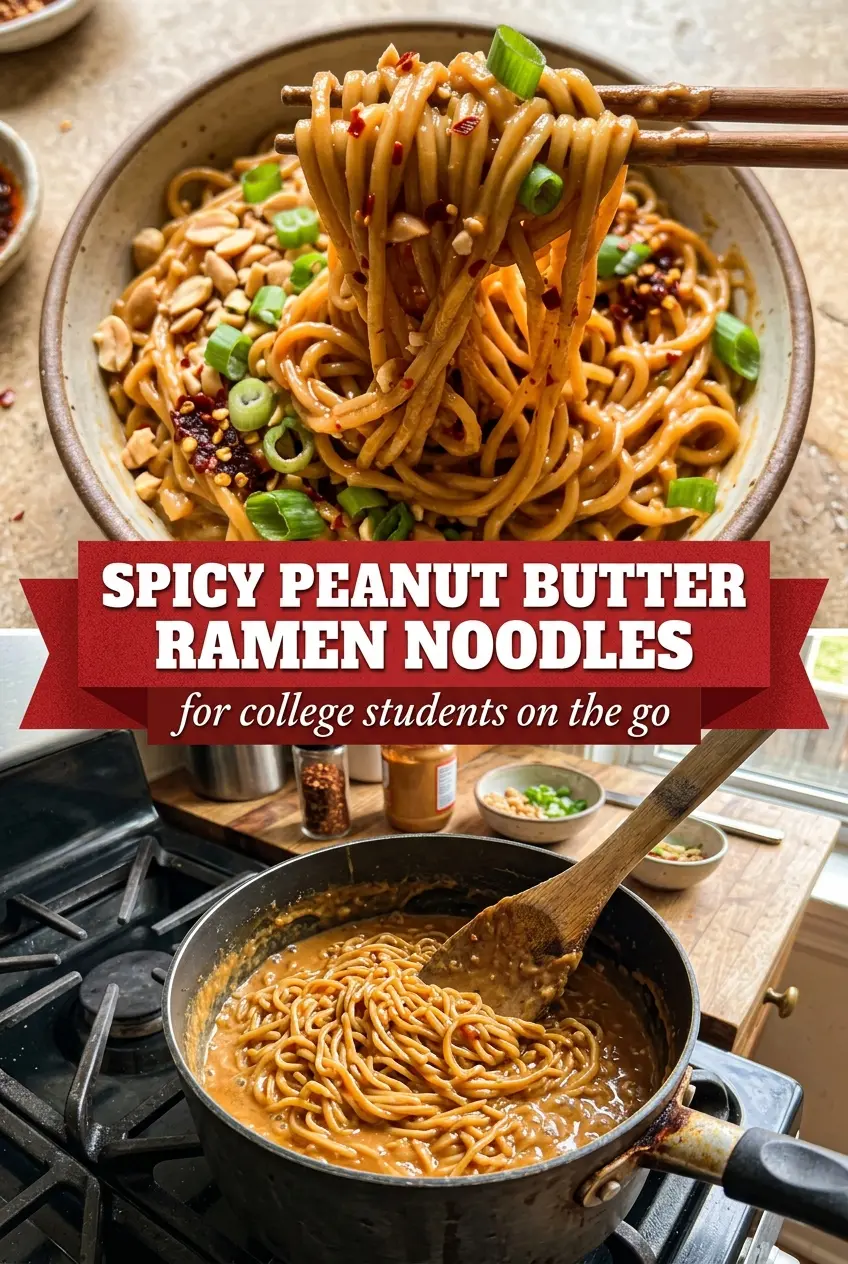
Spicy Peanut Butter Ramen Noodles
Ingredients
Method
- Bring a pot of water to a boil, then cook the instant ramen noodles until tender, about 2 to 3 minutes.
- While the noodles cook, whisk together the creamy peanut butter, chili garlic sauce, soy sauce, and brown sugar until smooth.
- Reserve 1/4 cup of the noodle cooking water, then drain the noodles.
- Stir the hot reserved noodle water into the peanut sauce until smooth and glossy.
- Toss the drained noodles with the sauce until fully coated.
- Top with sliced green onions and crushed peanuts before serving.