
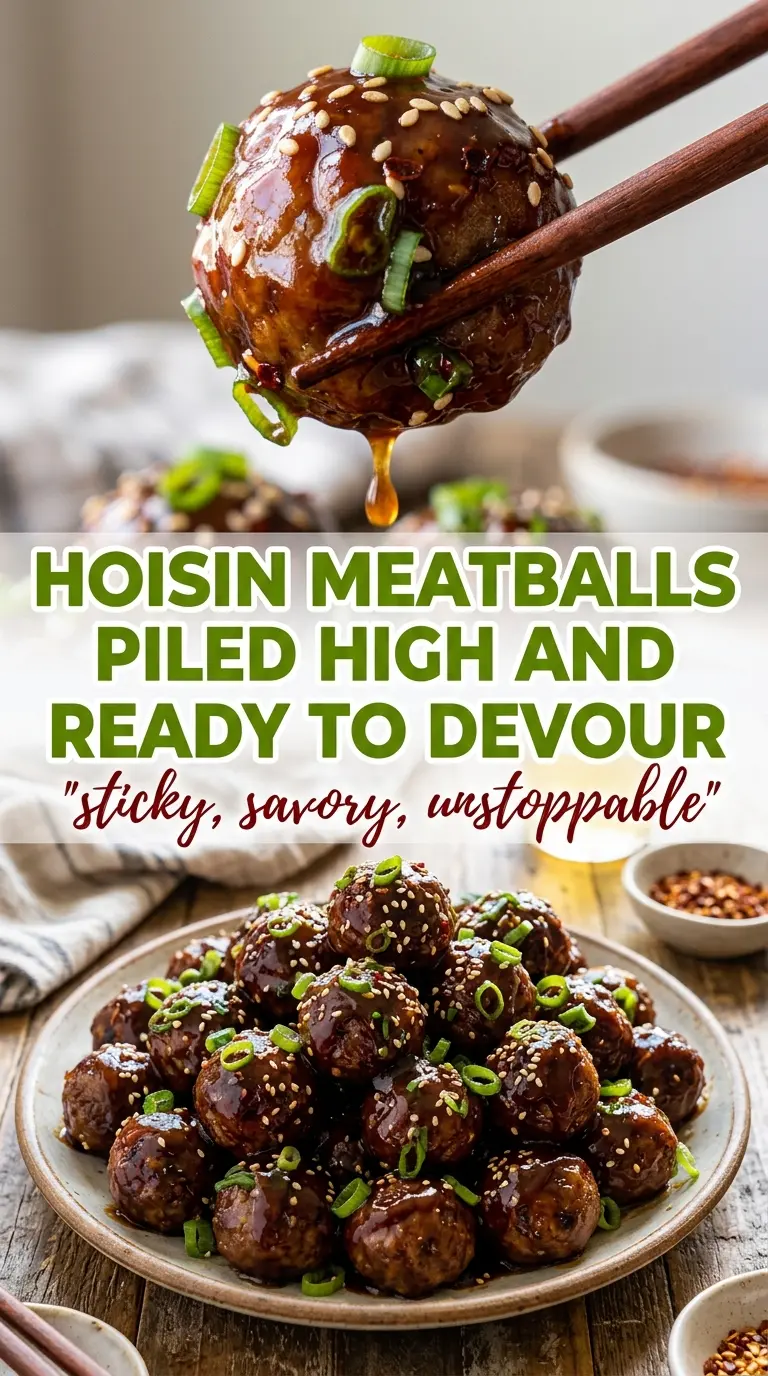
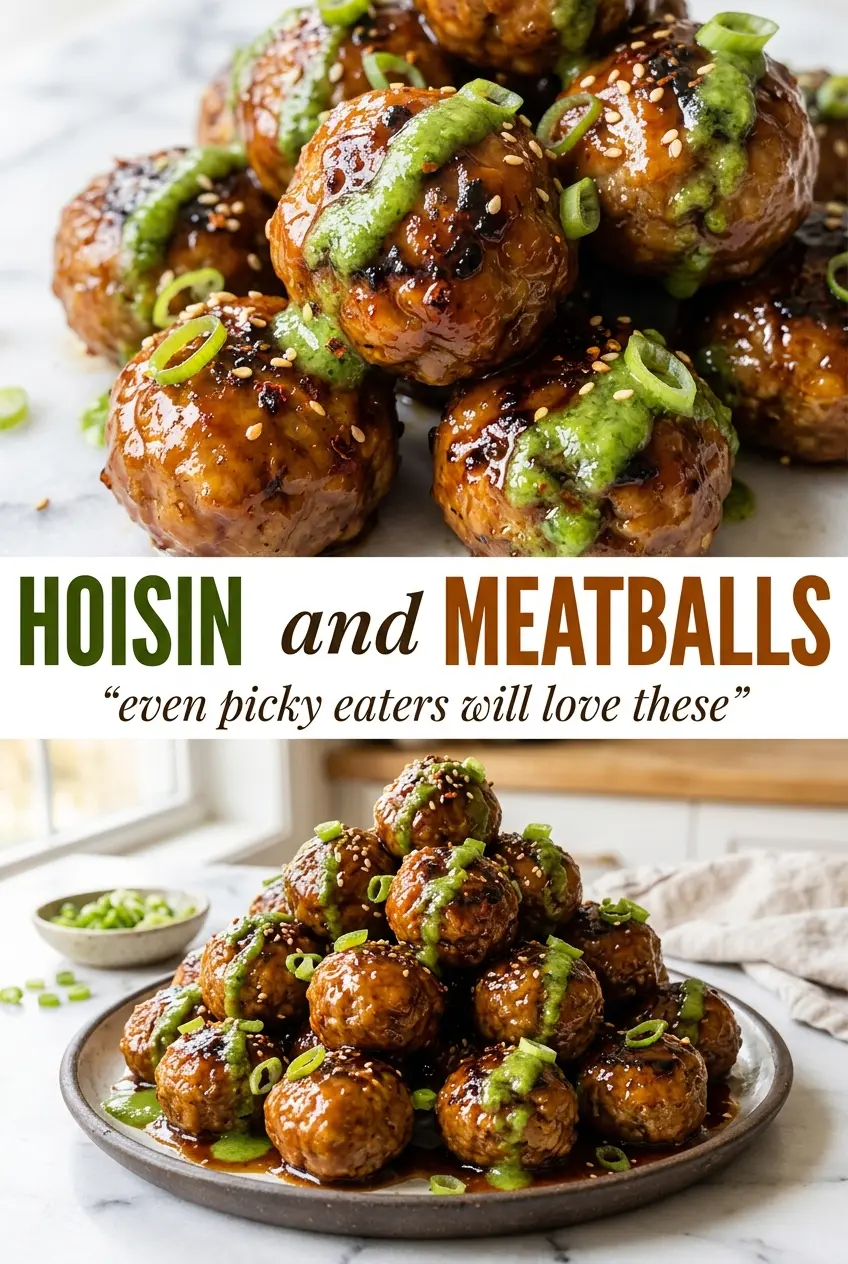
Sticky hoisin meatballs earn their place in the weeknight rotation fast. The outside turns browned and glossy, the inside stays tender, and the sauce clings in that lacquered way that makes every bite taste bigger than the ingredient list suggests. The scallion drizzle matters just as much as the glaze; it cuts through the sweet-salty hoisin and keeps the whole dish from feeling heavy.
The trick is using just enough breadcrumbs and egg to hold the pork together without turning the meatballs dense. Hoisin goes into the meatball mixture and back in again as a glaze, which builds layers of flavor instead of leaving the coating thin and one-note. A short second bake helps the sauce tighten up and stick instead of sliding off the pan.
Below, I’ve laid out the part that keeps these meatballs juicy, the best swap if you don’t keep hoisin on hand, and a few ways to serve them that still let the scallion sauce shine.
The glaze got shiny and sticky on the second bake, and the scallions on top kept the meatballs from tasting too sweet. I served them over rice and my husband went back for the last few before I could even sit down.
Sticky hoisin meatballs with scallion sauce belong on your Pinterest board for fast dinners with a glossy finish and a bright, savory kick.
The Reason These Meatballs Stay Tender Instead of Turning Dense
The most common mistake with pork meatballs is packing them too tightly. Once that happens, they bake up springy and heavy instead of soft and juicy. Breadcrumbs and egg are there to bind, not to create structure you can bounce a ball off. Mix until the ingredients are evenly distributed, then stop. The pork should still look loose when you shape it.
The second place people lose texture is in the glaze. If the sauce goes on once and never gets another minute in the oven, it stays thin and runs to the pan. The second coating in this recipe is what creates that sticky finish, because the first layer has already started to set and catch on the meatballs.
What Each Ingredient Is Doing in This Dish
- Ground pork — This is the backbone of the recipe. Pork brings enough fat to keep the meatballs moist while still letting the hoisin and scallions stand out. You can swap in ground chicken or turkey, but the meatballs will be leaner and need gentler mixing so they don’t dry out.
- Breadcrumbs — They hold onto the meatball juices and keep the texture soft. Plain dried breadcrumbs work fine. If you only have panko, crush it a bit first so the mixture doesn’t feel coarse.
- Egg — This helps the meatballs hold their shape in the oven. One large egg is enough here. Too much egg makes the mixture bouncy instead of tender.
- Hoisin sauce — This is what gives the meatballs their deep sweet-salty base. Good hoisin has enough body to help the glaze cling, so this is one place where a thin substitute won’t behave the same. If you’re in a pinch, use a mix of soy sauce, a little honey, and a touch of five-spice, but the flavor will be sharper and less rounded.
- Soy sauce — It sharpens the pork and balances the sweetness of the hoisin. Regular soy sauce is perfect here. Use low-sodium if you like a softer salt level, especially if you’re serving the meatballs over rice.
- Garlic and ginger — These give the meatballs a clean, aromatic base that keeps them from tasting flat. Fresh is worth using here. Powdered versions work in a pinch, but they won’t give the same bright finish under the glaze.
- Scallions — These are more than a garnish. Mixed with a splash of soy sauce, they add a fresh, savory bite that cuts through the sticky glaze. Chop them finely so they spoon over the meatballs evenly.
- Rice vinegar and sesame oil — The vinegar brightens the sauce and the sesame oil rounds it out. Don’t skip either one. Together they keep the glaze from reading as only sweet.
Baking, Glazing, and Getting That Lacquered Finish
Mix the Meatballs Just Until Combined
Stir the pork, breadcrumbs, egg, hoisin, soy sauce, garlic, and ginger together until the mixture looks even, then stop. If you keep working it, the meatballs get tight and bouncy. The mixture should still feel soft and a little sticky when you roll it. Wet your hands lightly if the dough clings too much; that keeps the shaping clean without adding extra crumbs.
Give the Meatballs Room on the Pan
Space the meatballs out on the baking sheet so hot air can move around them. Crowding traps steam, and steamed meatballs won’t brown on the outside. You’re looking for browned spots and a set surface after the first bake, not full stickiness yet. If they all touch, they’ll glaze unevenly.
Build the Glaze in Two Passes
Whisk the remaining hoisin with rice vinegar and sesame oil, then toss the meatballs in that mixture after the first bake. Slide them back into the oven for the final five minutes so the glaze tightens and turns shiny. That second bake is where the coating goes from saucy to sticky. If the glaze looks thin at first, don’t panic — it thickens as it heats and clings better once the meatballs have already browned.
Finish With the Scallion Drizzle
Combine the scallions with a splash of soy sauce right before serving. The salt draws out their bite and turns them glossy without wilting them into mush. Spoon them over the meatballs while they’re still hot so the aroma blooms immediately. That’s the contrast that keeps the dish lively against the sweet glaze.
How to Adapt These Meatballs for Different Nights
Gluten-Free Version
Use gluten-free breadcrumbs and check that your hoisin sauce is labeled gluten-free, since many brands contain wheat. The texture stays nearly the same, though the meatballs may feel a touch softer when they’re hot from the oven. Let them rest for a couple of minutes before glazing so they hold together better.
Ground Turkey or Chicken Swap
Swap the pork for ground turkey or chicken if you want a lighter version. Add a teaspoon of neutral oil to the mixture if the meat looks especially lean, because pork fat is part of what makes the original so juicy. The flavor will be a little cleaner and less rich, but the glaze and scallions still carry the dish.
Lower-Sugar Balance
If you want the glaze less sweet, cut the hoisin in the finishing sauce with an extra teaspoon of rice vinegar and a splash more soy sauce. That keeps the coating savory and glossy without losing the sticky texture. Don’t reduce the hoisin too much in the meatball mixture itself, or the flavor gets thin.
Storage and Reheating
- Refrigerator: Store the meatballs in an airtight container for up to 4 days. The glaze thickens as it chills, and the scallions soften a bit, but the flavor holds up well.
- Freezer: These freeze well after baking, before adding the scallion topping. Freeze on a tray, then transfer to a bag or container for up to 2 months. Thaw overnight in the fridge before reheating.
- Reheating: Warm them in a 325°F oven, covered loosely with foil, until hot through. The biggest mistake is blasting them in the microwave, which makes the pork rubbery and the glaze split.
Questions I Get Asked About This Recipe
Sticky Hoisin Meatballs With Scallion Sauce
Ingredients
Equipment
Method
- Preheat the oven to 400°F, and line a sheet pan for easy release.
- Mix ground pork, breadcrumbs, egg, 1 tbsp hoisin sauce, soy sauce, minced garlic, and grated ginger until evenly combined.
- Roll the mixture into meatballs, then space them on the sheet pan.
- Bake for 15 minutes until the meatballs are browned on the outside.
- Whisk the remaining hoisin sauce with rice vinegar and sesame oil until smooth.
- Toss the meatballs in the hoisin glaze to coat, aiming for an even, sticky layer.
- Return to the oven for 5 minutes at 400°F until sticky and glossy.
- Combine scallions with a splash of soy sauce, then drizzle over the meatballs before serving.