
Plump shrimp, silky coconut broth, and a sharp hit of lime make this soup feel light and satisfying at the same time. The broth stays clean and aromatic instead of heavy, and the crushed peanuts on top give each spoonful a little crunch that keeps it interesting from the first bite to the last.
What makes this version work is the order. Lemongrass and kaffir lime leaves simmer in the broth long enough to perfume the coconut milk, but they come out before the shrimp go in so the texture stays smooth and the flavor stays bright. Shrimp need only a few minutes in the hot liquid, and pulling them early keeps them tender instead of tight and rubbery.
Below, I’ve included the one timing detail that matters most, plus a few swaps and storage notes that help this soup hold onto its best texture.
The coconut broth was silky and the shrimp stayed perfectly tender. I let it simmer with the lemongrass a full 10 minutes like you said, and the lime at the end made the whole bowl taste fresh instead of heavy.
Save this Paleo Thai Shrimp Soup for a fast coconut broth with bright lime and tender shrimp.
The Secret to Keeping the Shrimp Tender in Coconut Soup
Shrimp go from perfect to overcooked fast, especially in a hot coconut broth. The biggest mistake is simmering them too long because the soup looks like it needs more time to “come together.” It doesn’t. The broth is already built before the shrimp go in, so the final cook is only about getting the shrimp just opaque and curled.
That also means the broth should stay at a gentle simmer, not a hard boil. A rolling boil can make the coconut milk taste rough and push the shrimp past their sweet spot before you notice. If you see the shrimp turning pink at the edges and curling into loose C-shapes, they’re ready to come off the heat.
What Each Ingredient Is Actually Doing in This Soup
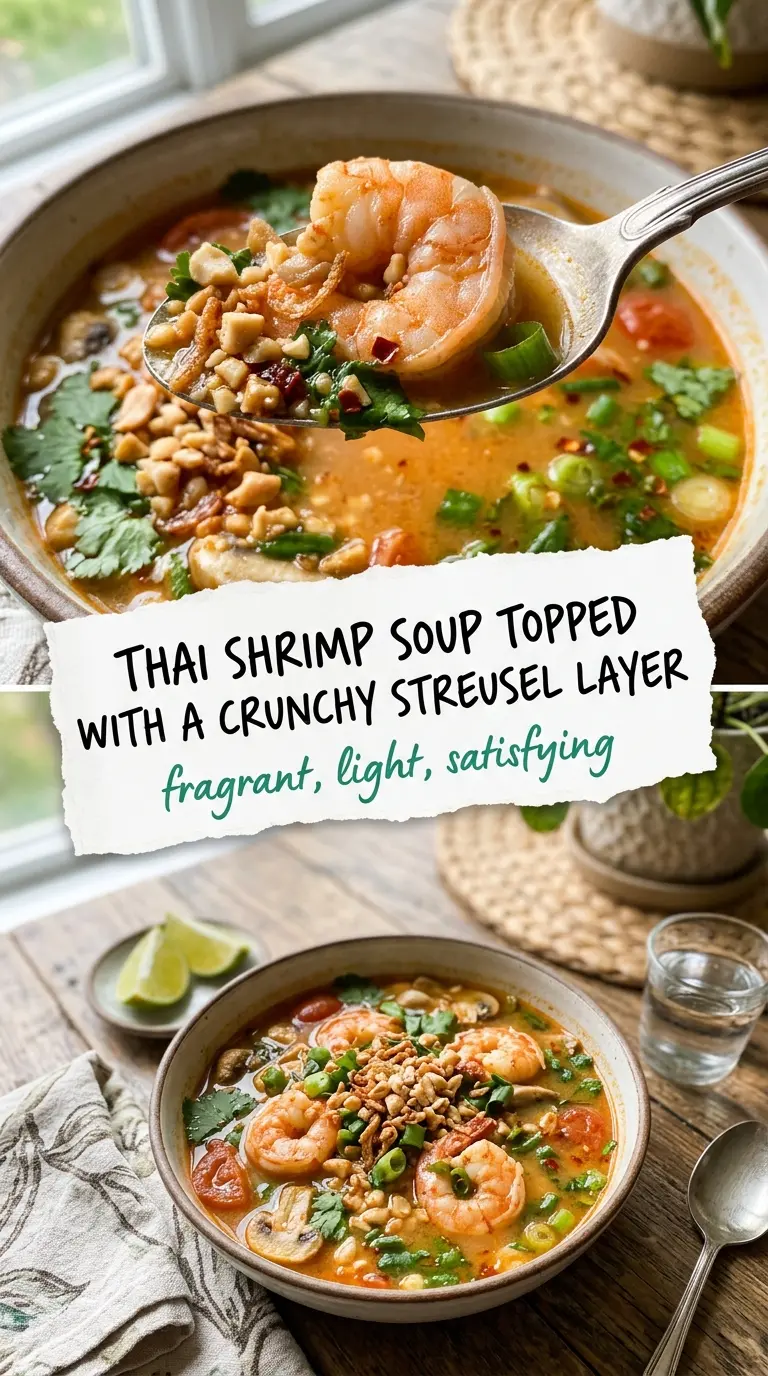
- Shrimp — Peeled shrimp cook fast and keep the soup light. Buy the best size you can find; larger shrimp are easier to pull at the right moment and stay juicy. If you use frozen shrimp, thaw them completely and pat them dry so they don’t water down the broth.
- Coconut milk — This is the body of the soup, so full-fat coconut milk gives you the creamiest result. Light coconut milk will work, but the broth will be thinner and less plush. Stir the can well before measuring if it has separated.
- Lemongrass and kaffir lime leaves — These are the aromatic backbone. They give the broth its Thai character in a way lime juice alone can’t replace. If you can’t find kaffir lime leaves, use a little extra lime zest at the end, but the fragrance won’t be quite the same.
- Fish sauce and lime juice — Fish sauce adds salt and depth, while lime juice wakes everything up at the end. Add both after the shrimp are cooked so the broth stays bright and the lime doesn’t turn muted from too much heat.
- Crushed peanuts and cilantro — The peanuts bring crunch and a nutty finish that keeps the soup from feeling one-note. Cilantro adds freshness right before serving. If you want a smoother bowl, skip the peanuts, but you’ll lose the contrast that makes the garnish worth it.
The 10-Minute Broth Build That Makes This Soup Taste Finished
Infusing the Coconut Base
Start by combining the chicken broth, coconut milk, smashed lemongrass, and kaffir lime leaves in a pot over medium heat. Bring it to a gentle simmer and let it go for about 10 minutes so the aromatics have time to perfume the broth. If you rush this part, the soup tastes flat and the coconut milk just feels like a liquid instead of a base.
Straining Out the Aromatics
Remove the lemongrass and lime leaves before the shrimp go in. Lemongrass stays tough and stringy, and kaffir lime leaves never soften enough to eat comfortably. At this point the broth should smell bright and floral; if it still seems muted, the heat was too low or the aromatics were too old.
Cooking the Shrimp at the Last Possible Moment
Add the shrimp and watch for the exact moment they turn pink and opaque, usually 3 to 4 minutes depending on size. Pull the pot off the heat as soon as they curl into loose C-shapes. If they tighten into O-shapes, they’ve gone too far and will eat rubbery.
Finishing With Salt and Acid
Stir in the fish sauce and lime juice after the shrimp are cooked. This keeps the lime sharp and the fish sauce round instead of cooked out. Taste the broth before serving; if it needs more brightness, add a little more lime rather than more salt.
Three Ways to Adapt This Thai Shrimp Soup Without Losing the Point
Make It Dairy-Free and Paleo-Friendly
This version already fits both of those needs as written, which is part of why it works so well. The coconut milk gives the soup its body without cream, and the fish sauce plus lime keep the broth layered instead of heavy. If you use a store-bought broth, check that it doesn’t include sugar or dairy-based additives.
Swap the Shrimp for Chicken
Thin slices of cooked chicken or bite-size raw chicken breast can stand in if shrimp isn’t available. Raw chicken needs a longer simmer in the broth before the finishing ingredients go in, and the texture will be heartier rather than delicate. Cook it fully before adding lime juice so the broth doesn’t go cloudy and the acid doesn’t interfere with the meat turning tender.
Skip the Peanuts for a Nut-Free Bowl
Leave off the peanuts and add sliced scallions or crispy shallots for a different kind of finish. You lose the rich, toasty crunch, but the soup still lands well because the broth carries enough aroma on its own. If nut allergies are the reason, check your broth and fish sauce labels too, since packaged versions sometimes include unexpected additives.
Stretch It Into a Bigger Meal
Add mushrooms, baby spinach, or thin rice noodles if you want the soup to serve more people. Mushrooms bring more savoriness, spinach wilts in at the end, and noodles make the bowl more filling without changing the broth. Just don’t overload it so much that the coconut base gets diluted.
Storage and Reheating
- Refrigerator: Store in an airtight container for up to 3 days. The shrimp will firm up a little, and the coconut broth may thicken as it chills.
- Freezer: The broth freezes well, but shrimp turn a little softer after thawing. For best texture, freeze the broth without the shrimp and add fresh shrimp when reheating.
- Reheating: Warm gently over low heat until just hot. Don’t boil it, or the shrimp will tighten and the coconut milk can separate.
Answers to the Questions Worth Asking

Paleo Thai Shrimp Soup
Ingredients
Equipment
Method
- In a Dutch oven, simmer the chicken broth and coconut milk with the smashed lemongrass and kaffir lime leaves for 10 minutes over medium-low heat, until fragrant. Keep the mixture at a steady simmer (small bubbles around the edges), and watch for aroma from the lime leaves.
- Remove the lemongrass and kaffir lime leaves from the pot and discard them. Continue simmering the broth while you prepare the shrimp.
- Add the shrimp and simmer for 3-4 minutes, stirring occasionally, until pink and opaque. Do not extend the simmer time once shrimp turn pink through.
- Stir in the fish sauce and lime juice, then simmer for 1 minute to blend flavors. Taste briefly and keep the broth hot but not boiling.
- Ladle the soup into bowls and top each with crushed peanuts for crunch. Spoon over evenly so every bowl gets a good peanut layer.
- Garnish with fresh cilantro right before serving for fresh herbal notes. Serve immediately while the shrimp are still tender.