
Strawberry rhubarb pie earns its place in the rotation because the filling lands right in that sweet spot between jammy and sharp. The strawberries soften into glossy pockets while the rhubarb keeps enough backbone to stop the pie from tasting flat or one-note. When it’s baked properly, the filling slices instead of spilling, and the crust stays flaky under a thick, ruby-red layer that smells like butter, fruit, and sugar all at once.
The trick is getting the balance and texture right before the pie even goes into the oven. Rhubarb throws off a lot of water, and strawberries do too, so the cornstarch has to be enough to hold the juices without turning the filling gluey. A little lemon juice wakes up the fruit, vanilla rounds out the edges, and a top crust brushed with egg wash plus turbinado sugar gives you that golden finish with a little crunch.
Below, I’ve laid out the part that matters most for this pie: how to keep the bottom crust from going soggy, how to tell when the filling has actually thickened, and the small changes that make this work whether you prefer a lattice top or a full crust.
The filling set up beautifully and didn’t run all over the plate. I let it cool the full two hours and got clean slices with that perfect sweet-tart bite.
Save this strawberry rhubarb pie for the kind of dessert that needs a flaky crust, a thick fruit filling, and clean slices.
The Reason Strawberry Rhubarb Pie Turns Watery, and How to Stop It
Most strawberry rhubarb pies fail before the crust even browns. The fruit releases juices fast, and if the filling goes in the oven loose and unchecked, those juices never get a chance to thicken before the crust is done. That’s how you end up with a slice that looks perfect until it hits the plate.
This version leans on enough cornstarch to catch the fruit juices without making the filling dull or pasty. The other key is cooling time. The pie has to set while it’s still warm, which sounds simple, but cutting into it early guarantees a runny center even if the bake looked perfect.
- Strawberries — Use ripe berries, but not the soft, collapsing kind. They should hold their shape long enough to keep the filling from turning into sauce.
- Rhubarb — Fresh rhubarb gives the cleanest tart flavor and the best texture. Cut it into even pieces so it softens at the same rate as the strawberries.
- Cornstarch — This is what turns the fruit juice into a sliceable filling. Flour won’t thicken as cleanly here, and tapioca changes the texture more than you want for this pie.
- Lemon juice — It sharpens the filling and keeps the strawberries tasting bright. The amount is small, but it keeps the pie from leaning too sweet.
- Prepared pie crusts — A good store-bought crust works here because the filling is the focus. If you’re using homemade dough, keep it cold and don’t overwork it or the bottom crust turns tough instead of flaky.
What the Fruit Mix Is Doing Before It Hits the Oven
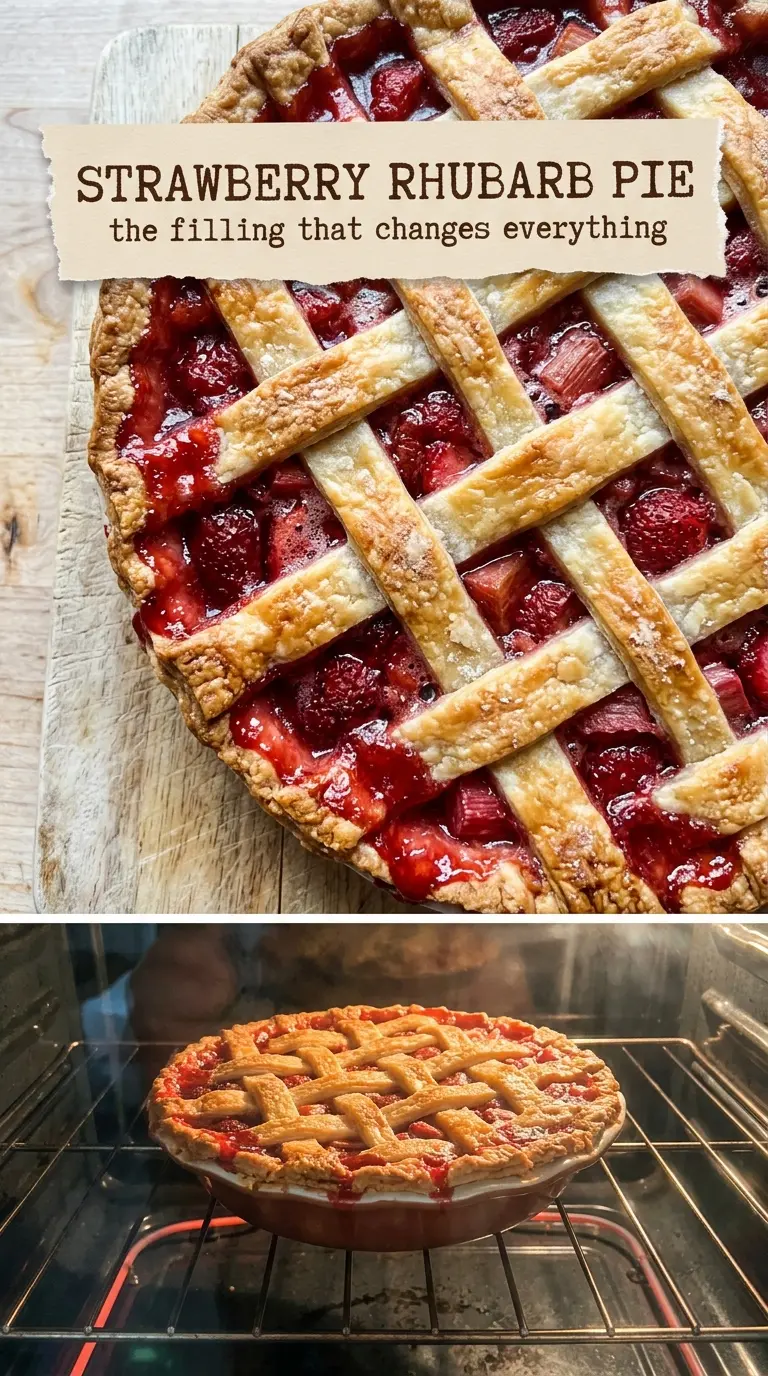
The sugar draws moisture out of the fruit, which helps the cornstarch do its job, but it also means the filling can get soupy if it sits too long. That’s why the fruit mixture should be combined and then used promptly, or chilled briefly if you want to reduce excess juice before baking.
- Turbinado sugar — This gives the top crust a crisp, sparkly finish. Regular sugar won’t give the same texture.
- Butter — Those small cubes melt into the filling and add richness. They’re not there just for flavor; they also help the fruit juices taste rounder instead of sharp.
- Egg wash — It gives the top crust that deep golden color. If your crust often looks pale, the egg wash is the difference between baked and finished.
Building the Pie So the Crust Stays Flaky
Mixing the Filling
Stir the strawberries, rhubarb, sugar, cornstarch, lemon juice, and vanilla just until the fruit is coated. The mixture should look juicy, but not wet and soupy. If you see a puddle starting to form right away, let it sit for a few minutes, then give it one last stir before filling the crust.
Filling the Bottom Crust
Line the pie dish with the bottom crust and press it in without stretching it. Stretching the dough causes shrinkage in the oven, which leaves you with a thinner edge and sometimes a gap between crust and filling. Add the fruit in an even mound, then dot the top with butter so it melts down through the fruit as it bakes.
Finishing the Top
Use a lattice or cut slits in the top crust so steam can escape. If the crust stays sealed, the filling has to fight to release moisture and the top can turn heavy before the center thickens. Brush with egg wash and sprinkle turbinado sugar over the top for color and crunch.
Baking Until the Center Bubbles
Start the pie hot at 425°F to set the crust quickly, then lower the temperature so the filling can cook through without burning the top. You’re looking for active bubbling in the center, not just along the edges. That bubbling tells you the cornstarch has fully thickened the juices.
Make It More Tart or More Jammy
Use a little less sugar if you like the rhubarb bite to come through harder, or add another tablespoon if your strawberries are on the sharp side. The filling will still set either way, but the flavor shifts from bright and tangy to softer and more dessert-like.
Gluten-Free Version
Use a reliable gluten-free pie crust that bakes up firm enough to hold a wet filling. The fruit mixture itself is naturally gluten-free, so the crust is the only part that needs changing, but watch the bake time because some GF crusts brown faster at the edges.
Frozen Fruit Swap
Frozen strawberries and rhubarb work when fresh isn’t available, but thaw and drain them first or the filling will flood the crust. Expect a slightly softer texture and add a few extra minutes of bake time if the fruit is still cold when it goes in.
Storage and Reheating
- Refrigerator: Store covered for up to 4 days. The crust softens a bit after the first day, but the filling stays set.
- Freezer: Freezes well as a baked pie. Cool completely, wrap tightly, and freeze for up to 2 months. Thaw in the fridge overnight before reheating.
- Reheating: Warm slices in a 300°F oven until the crust crisps back up. The common mistake is microwaving it, which makes the bottom crust soggy and the filling loose again.
Questions I Get Asked About This Recipe
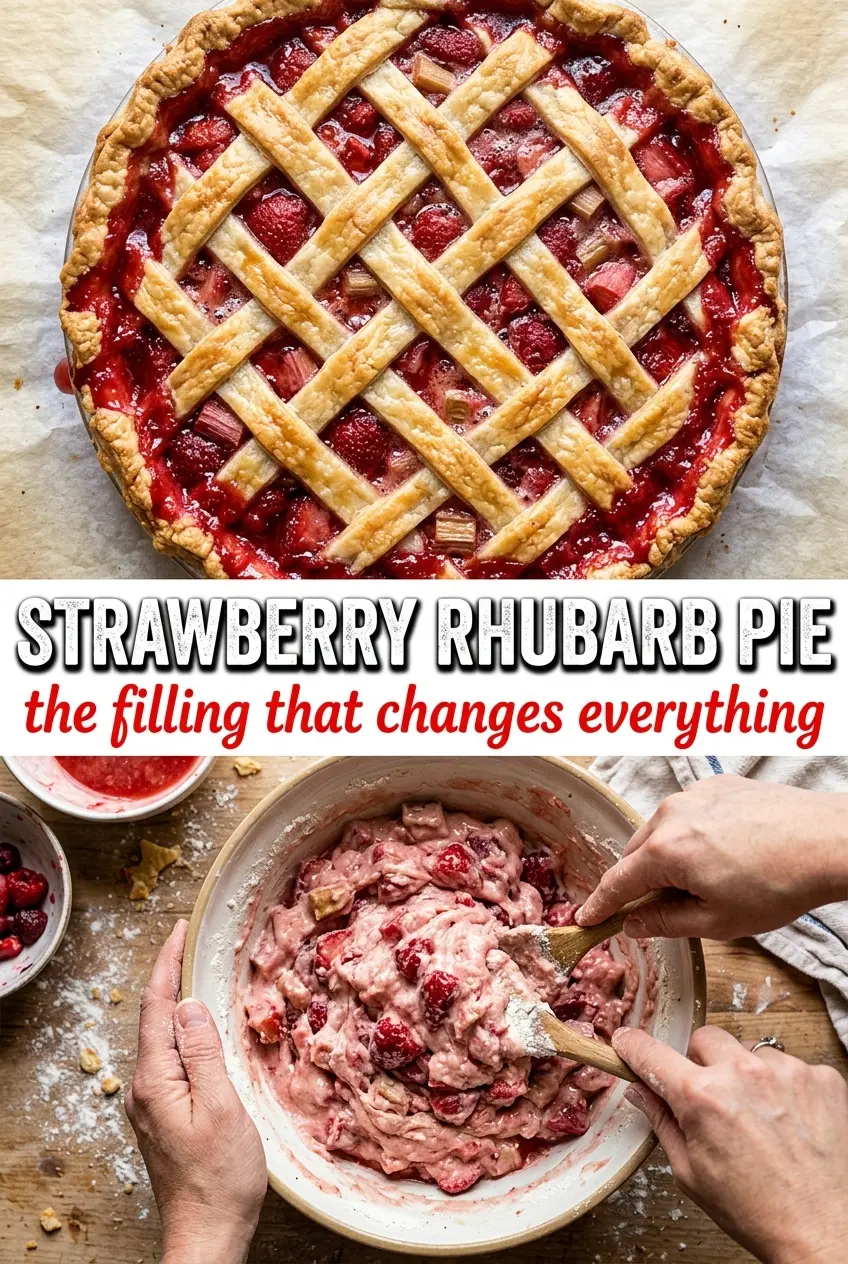
Strawberry Rhubarb Pie
Ingredients
Equipment
Method
- Preheat oven to 425°F, positioning a rack in the middle of the oven so the pie bakes evenly.
- In a mixing bowl, combine sliced strawberries, sliced rhubarb (½ inch thick), granulated sugar, cornstarch, lemon juice, and vanilla extract until the fruit is evenly coated.
- Line a 9-inch pie dish with the bottom prepared pie crust, leaving overhang for a neat edge.
- Add the filling to the crust, then dot the top with cubed unsalted butter.
- Lay the top crust over the filling as a lattice or with slits so steam can escape during baking.
- Brush the top crust with egg wash and sprinkle turbinado sugar over the surface for a sparkling finish.
- Bake at 425°F for 20 minutes with a visual cue of an actively bubbling filling around the edges.
- Reduce oven to 375°F and bake 35–40 more minutes until the crust is golden and the filling is bubbling steadily.
- Cool the pie at least 2 hours before slicing so the cornstarch-thickened filling sets into thick, jewel-bright pools.