
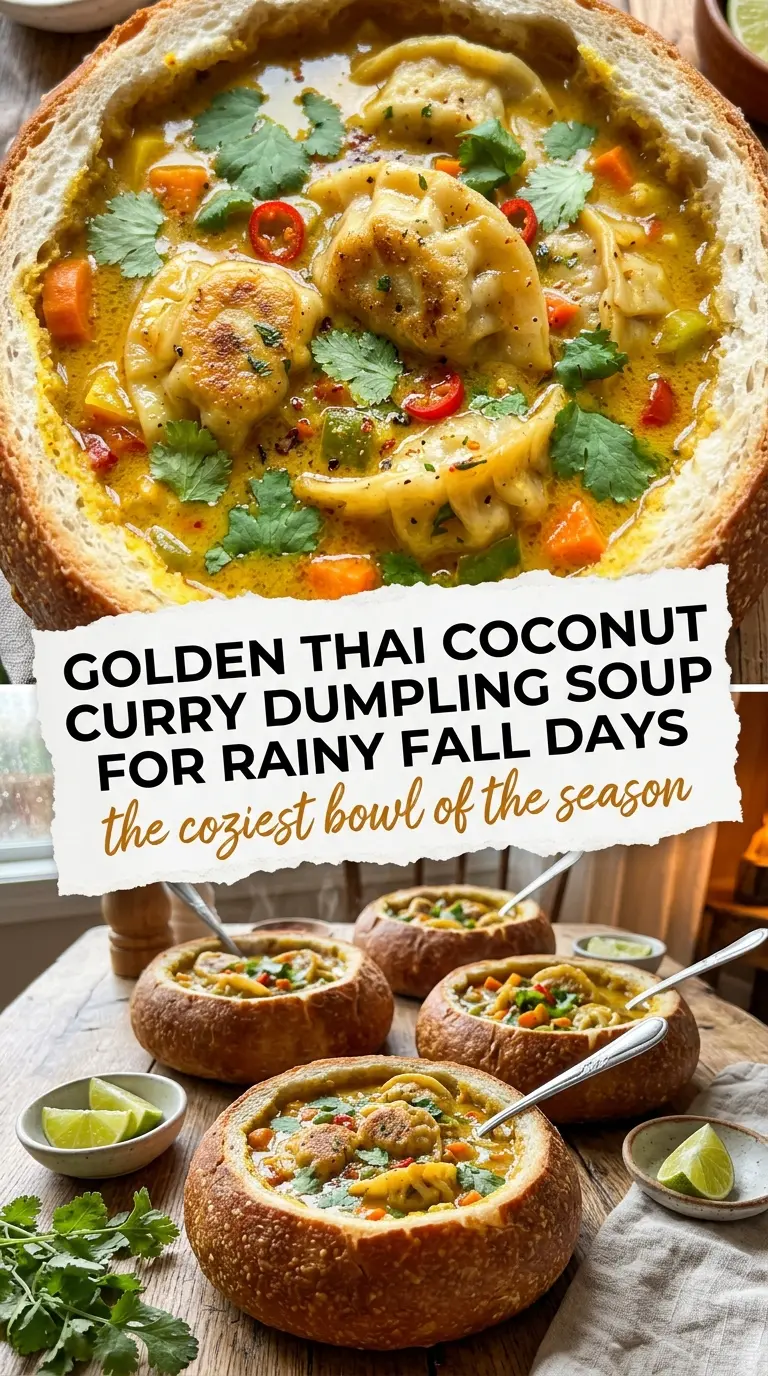
Plump dumplings in a coconut curry broth are the kind of dinner that disappears fast. The broth turns silky and fragrant from red curry paste and coconut milk, and the dumplings stay tender without soaking up all the liquid. Serving it in a bread bowl makes the whole thing feel extra cozy, but the real draw is how much flavor you get from such a short ingredient list.
The trick here is blooming the curry paste with ginger and garlic before any liquid goes in. That step wakes up the spices and gives the broth a deeper, rounder flavor than just simmering everything together. A little brown sugar smooths out the heat, while lime juice at the end keeps the coconut from tasting flat. Fish sauce adds real depth, but soy sauce works well if you want to keep it vegetarian.
Below, I’ve included the exact timing that keeps the dumplings intact, plus a few swaps that still preserve the creamy, tangy broth. If you’ve ever ended up with mushy dumplings or a curry soup that tasted one-note, this version fixes both problems.
The broth had so much flavor after just a few minutes, and the dumplings stayed perfectly tender instead of falling apart. I added the lime at the end like you said and it made the whole bowl taste brighter.
Love the creamy Thai coconut curry broth and tender dumplings? Save this one for a fast bread-bowl dinner that tastes like it simmered all afternoon.
The reason the dumplings stay tender instead of turning soggy
Frozen dumplings can go wrong fast if the broth is boiling hard. A hard boil makes the wrappers burst before the centers heat through, and then the soup turns cloudy and the filling leaks out. A gentle simmer keeps everything intact while still bringing the dumplings up to temperature.
The other place people lose the texture is timing. Dumplings only need a few minutes in the broth, just until they float and feel hot all the way through. If you’re using larger dumplings, give them a minute or two more, but keep the heat controlled so the coconut milk stays smooth instead of separating.
What each ingredient is doing in the bowl
- Coconut oil — Gives the curry paste a little fat to bloom in. You can use neutral oil, but coconut oil adds a faint sweetness that fits the broth.
- Red curry paste — This is the backbone of the soup, so use one you like the taste of on its own. Different brands vary a lot in salt and heat, so start with less if yours is aggressive, then add more after simmering.
- Fresh ginger and garlic — They sharpen the broth and keep the coconut milk from tasting heavy. Grating the ginger helps it disappear into the soup instead of leaving stringy bits behind.
- Vegetable broth — Use a broth with enough body to stand up to the coconut milk. If yours is weak, the soup will taste thin, so this is one place where a good boxed broth matters.
- Coconut milk — Full-fat coconut milk gives the soup its creamy body. Light coconut milk will work, but the broth won’t have the same richness or cling to the dumplings as nicely.
- Fish sauce or soy sauce — This is the salty, savory piece that makes the broth taste complete. Soy sauce keeps the recipe vegetarian; fish sauce gives a deeper umami note.
- Brown sugar and lime juice — The sugar rounds out the curry paste, and the lime wakes everything up at the end. Add the lime after the heat is off or very low so it stays bright.
- Frozen dumplings — Store-bought dumplings keep this weeknight-fast. Don’t thaw them first; they hold their shape better when they go in frozen.
Building the curry broth without breaking it
Blooming the curry paste
Set the pot over medium heat and cook the curry paste, ginger, and garlic in coconut oil until the mixture smells loud and toasted, about a minute or two. The paste should darken slightly and look glossy, not dry or scorched. If the garlic starts browning fast, the heat is too high and the broth will taste sharp instead of rounded.
Adding the liquids
Pour in the broth and coconut milk and stir until the curry paste disappears into the liquid. Keep the heat at a gentle simmer, not a boil. Coconut milk is stable, but aggressive boiling can still make the broth look grainy around the edges.
Cooking the dumplings
Slide the frozen dumplings into the simmering soup and leave them alone for a few minutes before stirring lightly. They should float when they’re close to done, and the wrappers should look smooth and slightly translucent at the seams. If you stir too hard, the dumplings can tear, especially if they’re delicate or thin-skinned.
Finishing with balance
Turn off the heat or lower it to almost nothing before adding the fish sauce, brown sugar, and lime juice. Taste the broth after each addition if needed. The finished soup should be creamy first, then savory, then bright at the end; if the lime tastes flat, it usually means it went in too early or the soup needed a touch more salt.
How to adapt this soup for different diets and different nights
Make it vegetarian
Use soy sauce instead of fish sauce and check that your dumplings are meatless. The broth stays rich because the coconut milk and curry paste carry most of the flavor, so you won’t lose much by skipping the fish sauce.
Make it gluten-free
Use gluten-free dumplings and swap in tamari or a certified gluten-free soy sauce. The curry broth itself is naturally gluten-free as long as the curry paste and broth are made without wheat-based additives.
Make it richer and more filling
Add wilted spinach, sliced mushrooms, or shredded cabbage before the dumplings go in. These vegetables soak up the curry broth and turn the soup into a fuller meal without changing the base flavor.
Storage and Reheating
- Refrigerator: Store leftovers up to 3 days. The dumplings will soften a bit as they sit, but the broth holds up well.
- Freezer: The broth freezes well on its own, but cooked dumplings get soft after freezing. If you want to freeze it, freeze the soup base separately and add fresh dumplings when reheating.
- Reheating: Warm it gently over low heat until steaming, never at a full boil. A hard boil can split the coconut milk and wreck the dumpling texture, so use patience here.
Answers to the questions worth asking
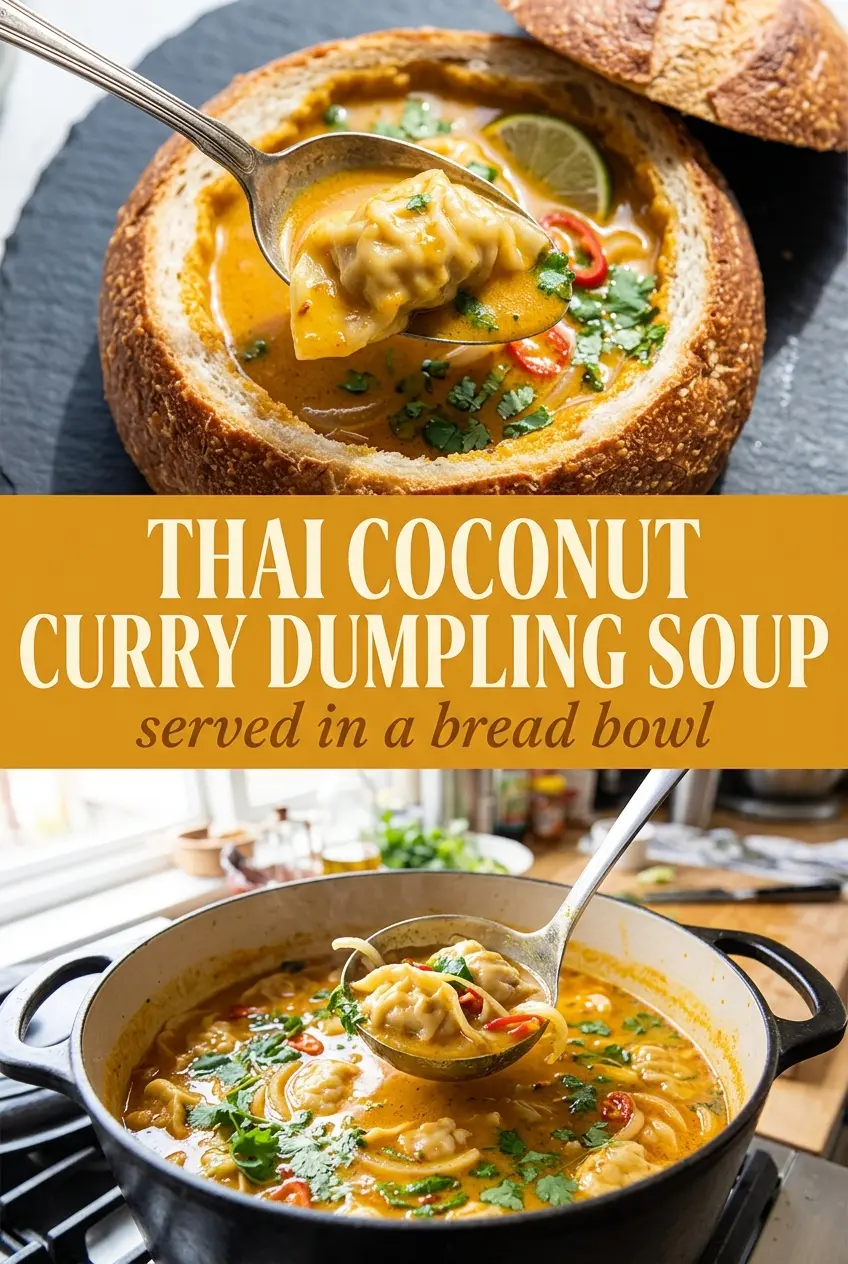
Thai Coconut Curry Dumpling Soup
Ingredients
Equipment
Method
- Heat the coconut oil in a large pot over medium heat. Sauté the curry paste, ginger, and garlic until fragrant, about 2 minutes, stirring constantly so it doesn’t burn.
- Pour in the vegetable broth and coconut milk, stirring to combine. Bring the mixture to a gentle simmer, 1–2 minutes, with small bubbles around the edges.
- Add the frozen dumplings to the simmering broth. Cook for 6-8 minutes until the dumplings float and are heated through, skimming foam if needed.
- Stir in the fish sauce, brown sugar, and lime juice. Taste and adjust balance, simmering for 1 minute so the flavors meld.
- Ladle the soup into bread bowls. Garnish each with fresh cilantro and lime wedges and serve hot.