
Ruby-red Thanksgiving sangria brings the best parts of a holiday table into one chilled pitcher: tart pomegranate, crisp apples, cranberries, and enough wine warmth to keep every sip from tasting flat. The fruit softens as it sits, the cinnamon rounds out the edges, and the final splash of bubbles gives the whole drink a lift right before serving. It’s the kind of make-ahead pitcher that takes pressure off the host and still feels thoughtful when it hits the table.
The trick is building the base early and holding back the sparkling water or ginger ale until the last minute. That keeps the drink lively instead of dull and over-diluted. I also like using a wine that’s fruit-forward but not sweet, since the pomegranate juice and berries already bring plenty of sweetness. A dry red with a little structure keeps the finished sangria balanced, especially once the ice starts to melt.
Below, you’ll find the simple timing that keeps the fruit from tasting raw, the best swap if you want a sweeter finish, and a few serving notes that make this sangria easier to pour for a crowd.
I made the base the night before and the fruit soaked up the wine and pomegranate beautifully. Adding the sparkling water at the end kept it bright, and the cinnamon wasn’t overpowering at all. Everyone went back for seconds.
Save this ruby-red Thanksgiving sangria for easy holiday hosting when you want a make-ahead drink with apples, cranberries, and a sparkling finish.
The Real Secret to Thanksgiving Sangria That Still Tastes Bright
The biggest mistake with sangria is serving it too soon after adding the fruit or too late after adding the fizz. You need time for the apples, cranberries, and cinnamon to infuse the wine, but you don’t want to lose the sparkle that makes the drink feel fresh. Four hours in the fridge is the sweet spot here. Long enough for the fruit to season the pitcher, short enough that the apples still have a little bite.
The other thing that matters is balance. Pomegranate juice can push a sangria into syrupy territory fast, especially if the wine is already on the softer side. That’s why a dry red works best. It gives the drink structure and keeps the fruit from taking over. If you use a sweeter wine, the result can taste heavy instead of bright.
What Each Ingredient Is Doing in This Pitcher
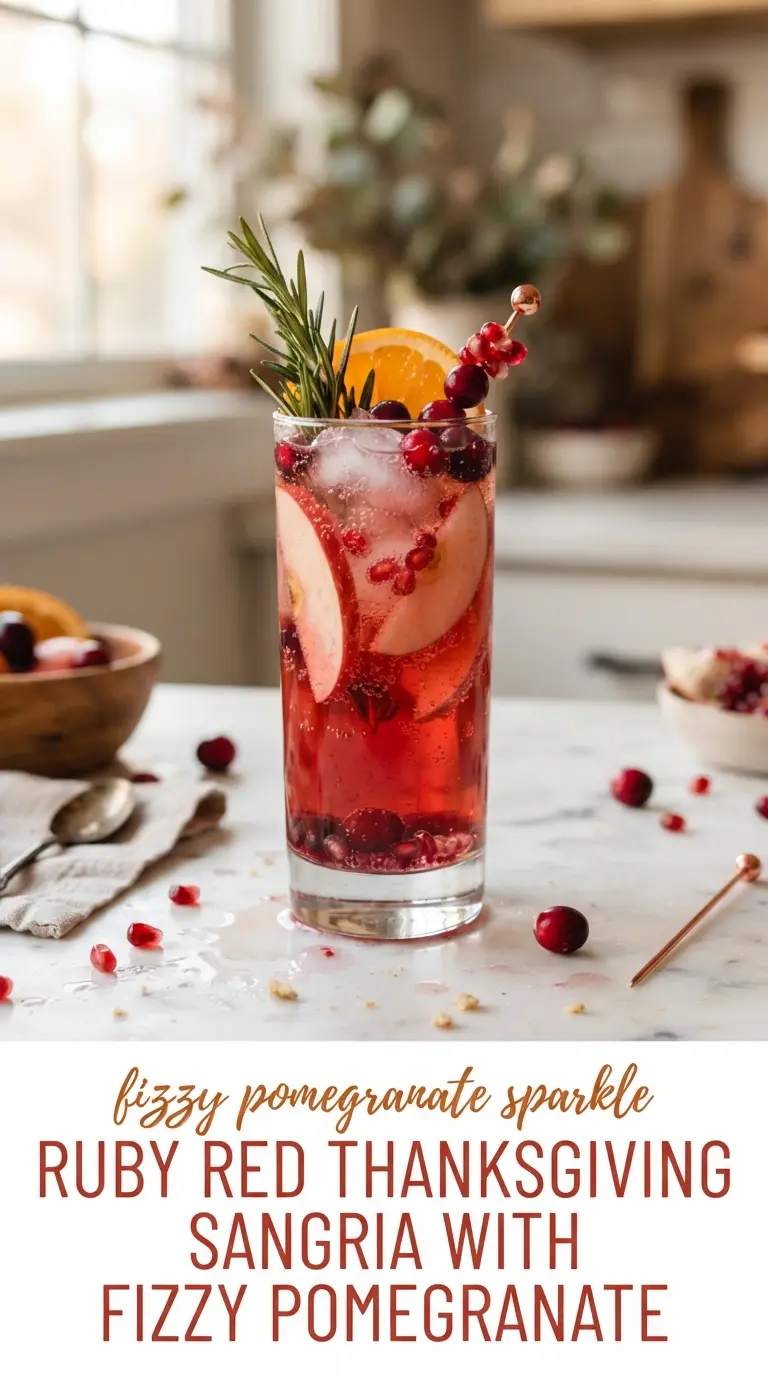
- Red wine — This is the backbone of the drink, so choose something dry and fruit-forward rather than oaky or expensive. A light-bodied cabernet, merlot, or garnacha works well. Don’t use a wine you wouldn’t drink on its own.
- Pomegranate juice — It gives the sangria that deep color and tart berry note that reads immediately as holiday-worthy. Pure juice is best here because cocktails don’t need added sugar from a juice blend. If yours is very tart, the finished drink will still be balanced once the fruit and bubbles go in.
- Brandy — This adds warmth and depth that plain wine can’t give you. It doesn’t need to be top-shelf, but it should taste clean, not harsh. If you want a lighter version, cut it back slightly rather than swapping it out completely.
- Apples and cranberries — The apples soften just enough to taste infused, and the cranberries add sharp pops of color and tartness. Slice or dice the apples small so the wine can reach more surface area. Fresh cranberries are best for their bite, but frozen will work in a pinch.
- Cinnamon stick — Whole cinnamon gives gentle spice without turning the drink cloudy or gritty. Ground cinnamon will settle and make the pitcher muddy, so skip it. If you want more spice, add a second stick instead of powder.
- Sparkling water or ginger ale — This is the finish that wakes the whole drink up. Sparkling water keeps it crisp and less sweet, while ginger ale makes it softer and a little sweeter. Add it only right before serving or the fizz disappears.
Building the Base So the Fruit Actually Infuses
Mixing the wine, juice, and brandy
Pour the wine, pomegranate juice, and brandy into a pitcher first and stir them together before adding anything else. That gives you an even base, so every glass tastes the same instead of being boozy at the bottom and flat at the top. If you dump the fruit in first, the liquid won’t circulate as evenly while it chills.
Adding the fruit and cinnamon
Once the base is mixed, add the apples, cranberries, and cinnamon stick. The fruit should look suspended in the liquid, not crowded into one corner. If your apples are cut too large, they won’t release much flavor in just a few hours, so keep the pieces small enough to drink around comfortably.
Chilling for the right amount of time
Let the pitcher chill for about 4 hours. That’s long enough for the cinnamon to come through and for the apples to take on the wine, but not so long that everything starts tasting muddled. If you leave it overnight, the cranberries can turn the drink a little too sharp and the apples lose their fresh bite.
Finishing with bubbles
Stir in the sparkling water or ginger ale just before serving, then pour over ice. This is the step that keeps the sangria lively. If you add the bubbles too early, they flatten in the fridge and the drink ends up tasting heavier than it should.
How to Adapt This for a Sweeter Crowd or a Bigger Pitcher
Use ginger ale for a softer, sweeter finish
If you want a rounder, more crowd-friendly sangria, swap the sparkling water for ginger ale. It adds sweetness and a little spice, which softens the tart edge from the pomegranate and cranberries. The tradeoff is a heavier drink, so serve it cold and don’t overdo the ice.
Make it lower-alcohol
For a lighter version, cut the brandy in half and use more sparkling water at the end. You’ll still get the fruit and cinnamon flavor, but the drink will stay more refreshing and less boozy. This is the version I’d pour for a brunch-style gathering.
Make it fruit-forward without adding sugar
Add a few orange slices or pear slices if you want the pitcher to feel fuller without making it sweeter. Pear softens into the wine quickly and gives a gentler texture than apples alone. Keep the base dry so the extra fruit doesn’t turn the sangria syrupy.
Storage and Reheating
- Refrigerator: The base keeps for up to 2 days, but the apples soften as it sits. Add the sparkling water only when you’re ready to serve.
- Freezer: Don’t freeze this sangria. The fruit texture turns mushy and the wine base loses its clean balance when thawed.
- Reheating: Not applicable. Serve it cold over ice and stir before pouring so the fruit and wine stay evenly mixed.
Answers to the Questions Worth Asking
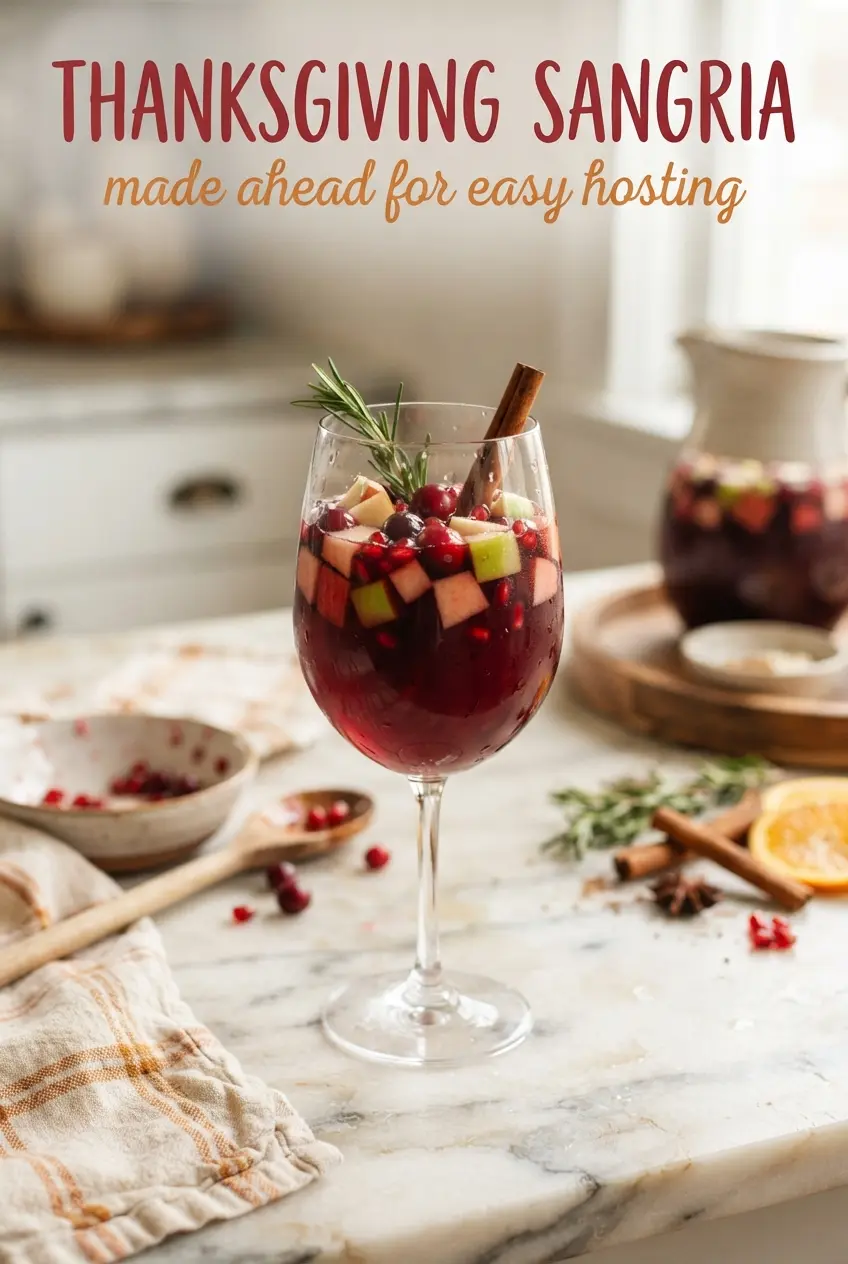
Thanksgiving Sangria
Ingredients
Equipment
Method
- Combine the red wine, pomegranate juice, and brandy in a pitcher.
- Add the apples, cranberries, and cinnamon stick to the pitcher and stir to combine.
- Chill the sangria base for 4 hours so the fruit flavors mingle, keeping it refrigerated (below 40°F) until ready to serve.
- Stir in the sparkling water or ginger ale just before serving to add fizz.
- Serve over ice for a cold, ruby-red presentation.