
Roasted acorn squash turns silky and sweet in the oven, and when you pack those tender halves with savory ground turkey, herbs, and tart cranberries, the whole dish lands somewhere between cozy dinner and holiday centerpiece. The squash holds its shape, the filling stays juicy, and every bite gives you that mix of browned meat, soft onion, and a little pop of cranberry that keeps it from tasting heavy.
What makes this version work is the balance. The squash roasts cut-side down first, so it steams and softens without drying out, then the turkey filling gets a quick simmer with broth to keep it from going crumbly. Sage and thyme bring the classic Thanksgiving note, but the cranberries and the squash’s natural sweetness keep the savory parts in check instead of letting the dish turn flat.
Below, I’ll walk through the one step that matters most for flavor — getting a good brown on the turkey — plus a few smart swaps if you need to work with what’s in your kitchen.
The squash came out tender but still held its shape, and the turkey filling had so much more flavor than I expected. Browning the meat first made a huge difference, and the cranberries gave it the perfect little sweet-tart bite.
Save this Turkey Stuffed Acorn Squash for a cozy dinner with browned turkey, sage, and tart cranberries.
The Reason the Filling Stays Juicy Instead of Drying Out in the Squash
The biggest mistake with stuffed squash is treating the filling like it needs to be fully finished before it goes into the oven. It doesn’t. If you cook the turkey until it’s dry in the skillet and then bake it again inside the squash, you end up with a filling that tastes like leftovers. This version keeps the turkey a little glossy with broth so the final bake finishes the job without sucking all the moisture out.
The other thing that matters is the squash itself. Roasting it cut-side down first traps steam against the flesh, which gives you that soft, spoonable texture without turning the edges leathery. Flip it only after it’s tender enough to pierce easily with a knife; if it still feels firm, it won’t hold the filling cleanly.
What Each Ingredient Is Actually Doing in This Dish

- Acorn squash — This is the vessel and the sweet counterpoint to the turkey. Look for squash with deep green skin and a heavy feel for its size. If your halves wobble on the pan, trim a thin slice from the rounded side so they sit flat.
- Ground turkey — Lean turkey works because the broth and squash keep the filling from feeling dry, but it needs a good brown in the pan. That browning is where the flavor comes from. Ground chicken works too, though it tastes a little milder and benefits from an extra pinch of salt.
- Onion and celery — These build the savory base and keep the filling from tasting one-note. Dice them small so they soften at the same pace as the turkey. If you skip the celery, the dish still works, but you lose some of that familiar stuffing-like backbone.
- Sage and thyme — These are the herbs that make the whole dish read as cozy instead of just “turkey in squash.” Dried herbs are fine here because they bloom in the fat and broth. Fresh sage works beautifully if you have it; use about three times as much as dried.
- Dried cranberries — They add sweetness and a sharp little chew that cuts through the richness. They also plump slightly in the broth, which keeps them from tasting dusty or hard. If you don’t have them, chopped dried cherries are the closest swap.
- Chicken broth — This loosens the filling and helps the flavors marry in the pan before baking. Use a broth you’d actually drink, since it gets concentrated as it simmers. Stock works too, but very salty broth can overwhelm the squash, so taste before adding extra salt.
Roasting the Squash, Browning the Turkey, and Bringing It All Together
Softening the Squash First
Set the acorn squash cut-side down on a baking sheet and roast until the flesh gives easily to a knife. That first roast is what keeps the squash tender instead of stringy. If you flip it too soon, the filling will sit on top of a hard shell and the whole dish feels undercooked even when the turkey is done. A little browning on the cut edges is fine; you want the flesh soft, not collapsed.
Building Flavor in the Pan
Cook the turkey with the onion and celery until the meat is no longer pink and the pan has browned bits stuck to the bottom. Those bits matter, so don’t rush to add the broth before the meat has taken on color. Stir in the sage, thyme, and cranberries, then add the broth and scrape the pan clean. The mixture should look moist but not soupy.
Finishing Inside the Squash
Turn the squash cut-side up and fill each half generously with the turkey mixture. The final bake just needs to heat everything through and let the flavors settle together. If the filling looks dry before it goes in, add another splash of broth. If it looks wet enough to pool, it will still tighten up in the oven.
How to Adapt This for a Smaller Dinner or a Different Pantry
Make It Dairy-Free Without Changing the Texture
This recipe is already naturally dairy-free, which is part of why it works so well for a weeknight dinner. The filling gets its richness from the browned turkey and broth, not from cream or cheese, so you don’t lose anything by keeping it as written.
Swap the Turkey for Chicken or Pork
Ground chicken gives you a lighter filling with a similar texture, while ground pork adds more richness and a little extra savoriness. If you use pork, cut back slightly on the added oil since it brings more fat to the pan. Both swaps still work with the cranberry-sage combination.
Make It Vegetarian
Use cooked lentils, chopped mushrooms, or a plant-based ground in place of the turkey. The key is keeping enough browning in the pan so the filling tastes deep and savory instead of soft and bland. If the mixture seems loose, simmer a little longer so the liquid cooks down before stuffing the squash.
Storage and Reheating
- Refrigerator: Store leftovers in an airtight container for up to 4 days. The squash softens a little more as it sits, but the flavor holds up well.
- Freezer: It freezes, but the squash texture turns softer after thawing. Freeze the filling separately for the best result, then roast fresh squash when you’re ready to serve.
- Reheating: Warm in a 350°F oven, covered loosely with foil, until hot in the center. The oven keeps the squash from drying out, while the microwave tends to make the edges watery and the filling unevenly heated.
Answers to the Questions Worth Asking
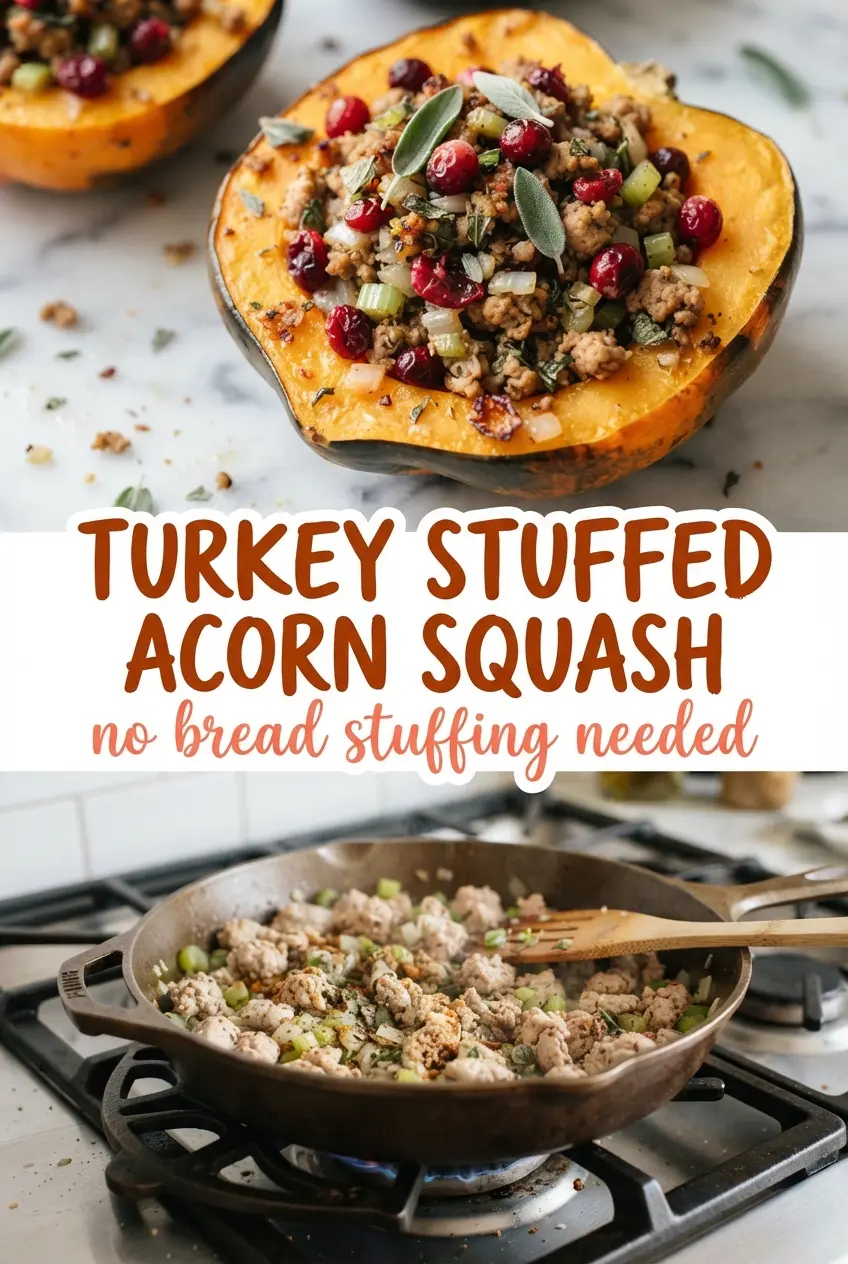
Turkey Stuffed Acorn Squash
Ingredients
Equipment
Method
- Heat oven to 400°F and place squash cut-side down on a sheet pan. Roast for 30 minutes until tender around the edges (visual cue: flesh looks softened and slightly glossy).
- Flip the squash and return to the pan to prep for filling. Roast briefly while you warm the turkey mixture so the squash stays hot and ready to be filled (visual cue: cut sides look steamy and hot).
- Heat olive oil in a cast iron skillet over medium-high heat. Brown the ground turkey with the diced onion and celery until the turkey is cooked through and the vegetables soften (visual cue: turkey develops browned bits).
- Add dried sage, dried thyme, dried cranberries, and chicken broth to the skillet. Simmer for 5 minutes to thicken slightly and meld flavors (visual cue: cranberries look plump and liquid reduces).
- Spoon the turkey mixture into the roasted squash halves. Make sure each half is generously filled so the top stays mound-like (visual cue: filling reaches near the rim of each squash).
- Bake until hot, about 10 minutes. Rest for 2 minutes before serving (visual cue: filling is bubbling at the edges and the squash is hot throughout).