
Apricot jam gets a brighter, deeper personality when fresh ginger goes into the pot. The fruit stays sunny and fragrant, but the ginger gives it a warm edge that keeps the sweetness from flattening out. What you end up with is a jam that tastes like ripe apricots first, then leaves a gentle heat behind on the finish.
The trick here is letting the apricots sit with the sugar and lemon before you cook them. That rest pulls out juice, starts dissolving the sugar, and gives you a head start on a glossy jam instead of a rushed, grainy one. Fresh lemon juice keeps the flavor sharp and helps the set, while the zest adds a little extra citrus oil that makes the whole jar smell alive.
Below, I’ll walk you through the cold-plate test, the one point where most homemade jam gets overcooked, and a few ways to use this up fast once the jars are cooled.
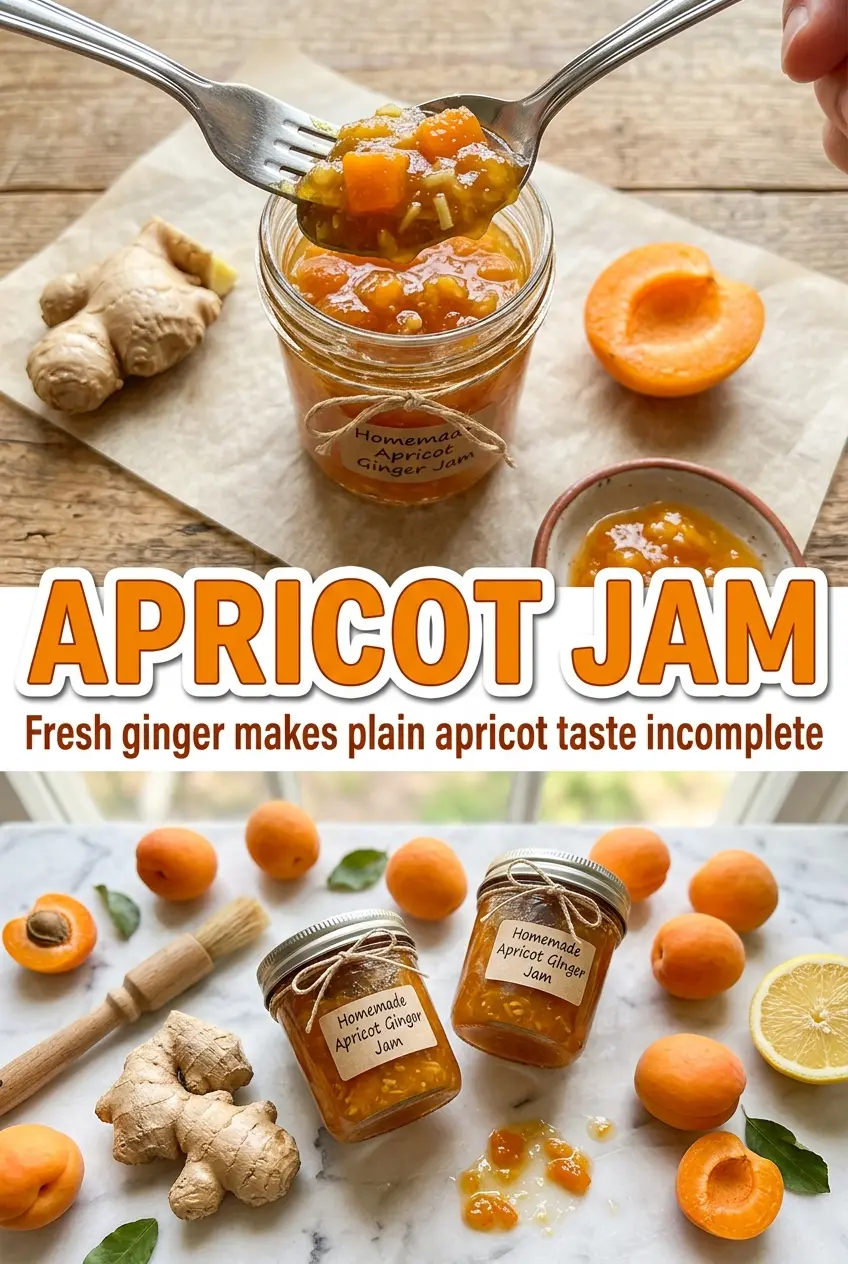
The ginger kept this from tasting like plain apricot jam. Mine set up in about 25 minutes, and the texture was glossy instead of sticky or cooked down too far.
Love how the ginger brightens this apricot jam? Save it to Pinterest for toast, glazing salmon, or filling thumbprint cookies.
The Set Happens Before the Boil
Most jam problems start with impatience. If you dump the fruit straight into the heat, the sugar takes longer to dissolve and the apricots break down unevenly, which can leave you with a loose syrup at the end instead of a proper spread. Letting the fruit sit with sugar, lemon juice, and zest gives the mixture time to turn juicy on its own, and that head start makes the final texture cleaner.
The other place people get tripped up is overcooking. Apricot jam can go from perfect to stiff faster than you expect because apricots don’t have much natural pectin compared with some other fruit. Pull it when it thickens enough to coat a spoon and wrinkles on a chilled plate, because it firms up more as it cools.
What Each Ingredient Is Actually Doing in This Jam
- Fresh apricots — Use ripe fruit with a little give at the stem end. Under-ripe apricots can taste flat, and overripe ones can collapse into a dull, muddy jam. A mix of ripe and just-ripe fruit gives the best balance of flavor and structure.
- Granulated sugar — This isn’t just sweetness. It helps preserve the jam and gives the fruit juice body as it cooks. You can reduce it a little, but too much reduction makes the set less reliable and the flavor more tart than bright.
- Fresh lemon juice and zest — The juice sharpens the fruit and supports the set, while the zest adds aromatic citrus oil. Bottled lemon juice works in a pinch, but fresh lemon gives a cleaner, more vivid result.
- Fresh ginger — This is the ingredient that changes the whole jar. Grate it finely so it melts into the jam instead of leaving stringy bits behind. Ground ginger won’t give the same fresh, warm lift.
- Cinnamon — Keep it subtle. It rounds out the apricot without turning the jam into a spice spread. A heavy hand will drown out the fruit, so think background warmth, not pumpkin-pie flavor.
- Pinch of salt — It’s small, but it keeps the jam from tasting one-note sweet. Don’t skip it.
Cooking the Apricots Down to a Glossy Set
Letting the Fruit Sweat First
Combine the apricots, sugar, lemon juice, and zest in a heavy pot and let them rest for 30 minutes. You’ll see the sugar pull liquid from the fruit and turn the mixture syrupy around the edges. That step matters because the fruit cooks more evenly once it’s already swimming in its own juices. If you rush straight to the burner, the outside of the fruit softens before the sugar dissolves, and the jam can taste cooked before it tastes concentrated.
Cooking at a Real Boil
Stir in the grated ginger and bring the pot to a rolling boil, then keep stirring as it bubbles. You want active movement across the whole surface, not a few lazy pops at the edges. That boil evaporates water quickly and gets you to the set point faster, which protects the fresh apricot flavor. If the boil is too timid, the jam stays thin and can turn dull before it ever thickens.
Knowing When It’s Done
Reduce the heat and simmer 20 to 30 minutes, stirring often so nothing catches on the bottom. The jam should thicken, turn shiny, and mound slightly when stirred. Test a spoonful on a cold plate; when you drag your finger through it, the line should hold and the surface should wrinkle. If it still runs back together immediately, give it a few more minutes and test again instead of guessing.
Jarring While It’s Hot
Ladle the jam into sterilized jars while it’s still hot and process in a water bath for 10 minutes, or refrigerate for short-term use. Hot jam flows cleanly and seals better, which matters if you’re planning to store it. If you’re skipping the canner, cool the jars completely before refrigerating so condensation doesn’t thin the top layer.
How to Adapt This Apricot Ginger Jam Without Losing the Point
Make it a little more citrus-forward
Add a touch more lemon zest, not more juice. Extra juice can loosen the set, but zest pushes the aroma in a brighter direction without changing the texture.
Swap the sugar level carefully
You can reduce the sugar a bit if your apricots are very sweet, but expect a softer set and shorter shelf life. Less sugar means faster cooking too, so watch the plate test closely.
Use it as a glaze instead of a spread
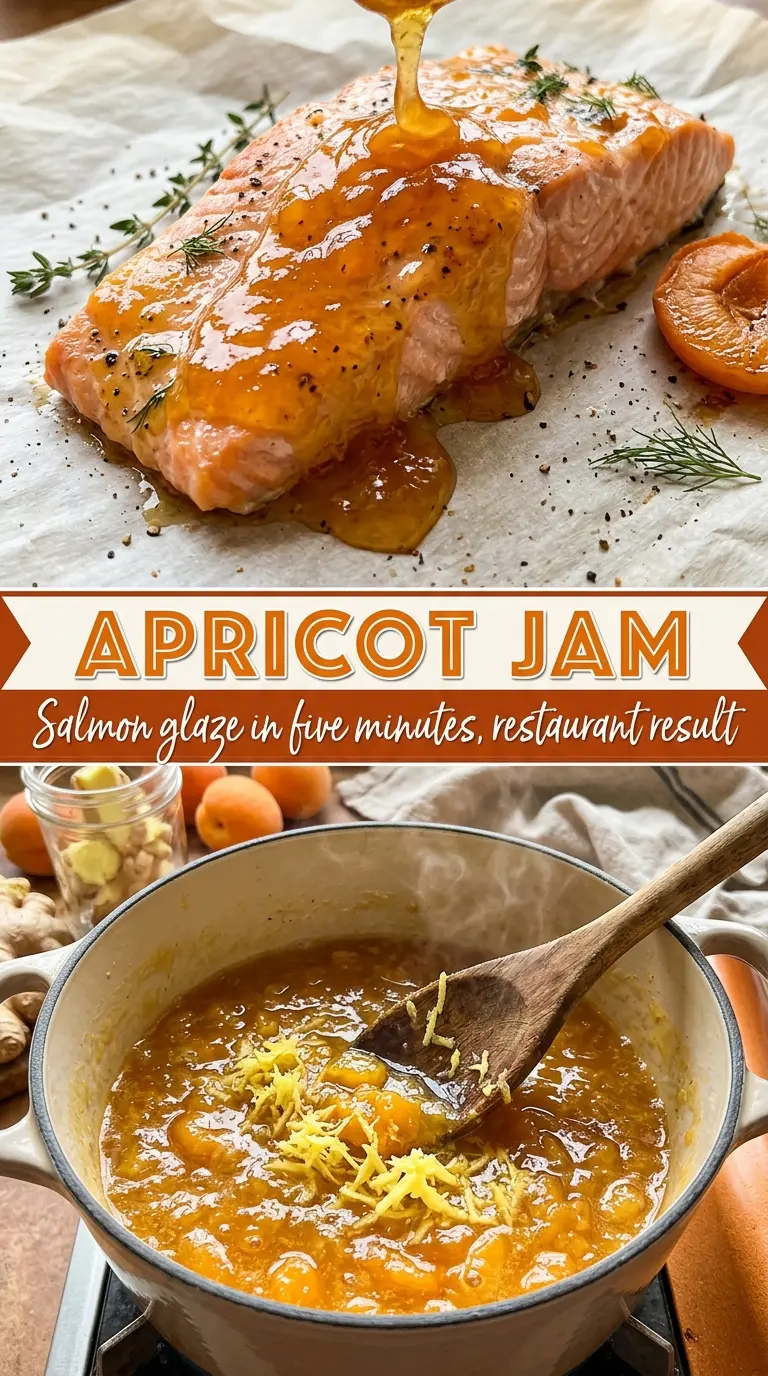
Warm the finished jam with a spoonful of water and brush it over salmon, chicken, or a fruit tart. Thin it just enough to spread cleanly; if it gets too loose, it loses that shiny finish.
Short-term refrigerator version
If you don’t want to process the jars, store the jam in clean containers in the fridge and use it within 3 weeks. The flavor holds well, but the texture will be a little softer than a canned batch.
Storage and Reheating
- Refrigerator: Store refrigerated jam for up to 3 weeks. It usually thickens a little more after chilling.
- Freezer: This jam freezes well in freezer-safe containers, leaving headspace for expansion. Thaw in the refrigerator overnight.
- Reheating: Warm only the amount you need over low heat or in short microwave bursts. High heat can make it scorch or turn looser than you want.
Answers to the Questions Worth Asking
Apricot Jam
Ingredients
Equipment
Method
- Combine the chopped apricots, granulated sugar, lemon juice, and lemon zest in a heavy pot, then rest 30 min.
- Stir in the grated ginger, then bring the mixture to a rolling boil while stirring.
- Reduce to a simmer and cook 20-30 min, stirring often, until thick enough to coat a spoon.
- Test set by dropping a small spoonful onto a cold plate; if it wrinkles when nudged, it’s ready.
- Ladle into sterilized jars.
- Process jars 10 min in a water bath, or refrigerate for up to 3 weeks.