
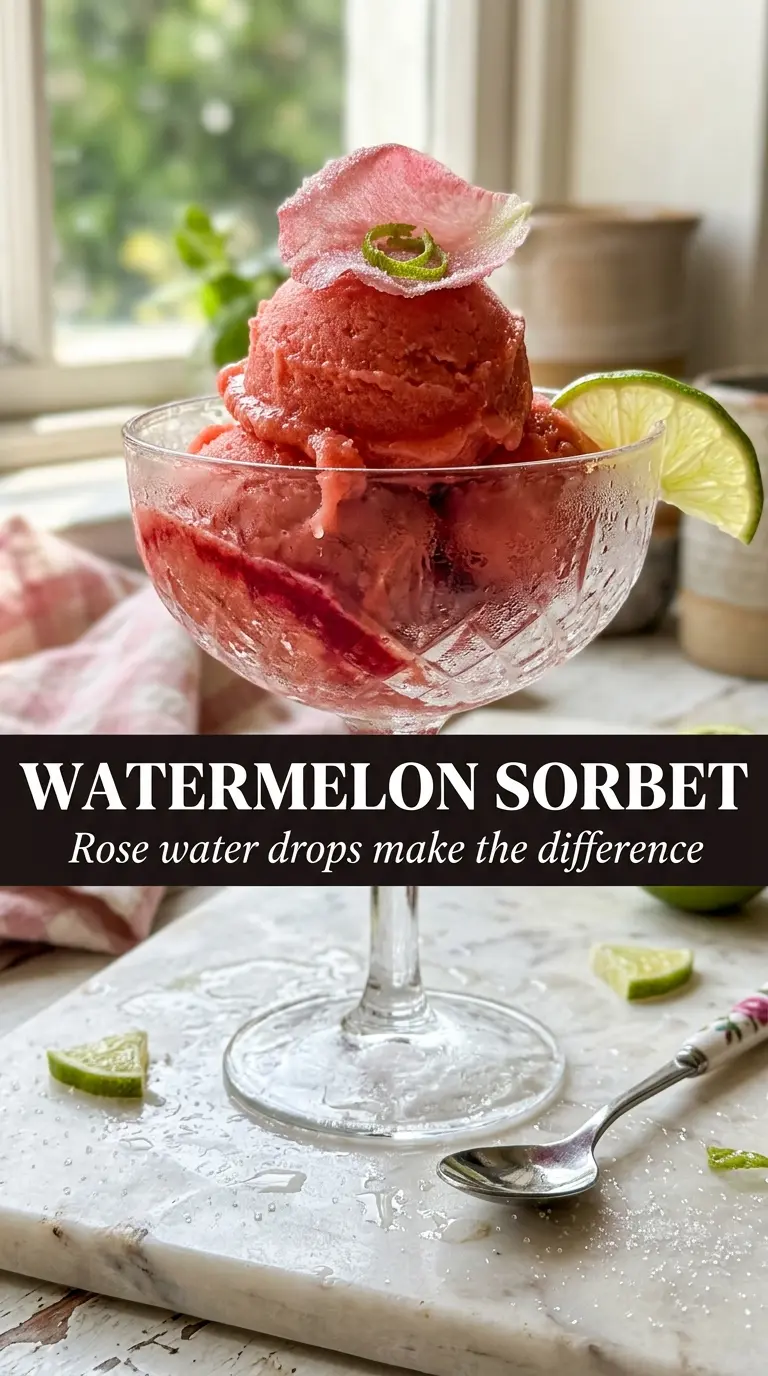
Watermelon sorbet should taste bright, cold, and clean, with enough body to scoop instead of melting into a pink puddle the second it hits the bowl. This version does that and then adds a whisper of rose water, which gives the fruit a floral edge without making it taste perfumey. The result feels polished and special, but the method stays simple enough for an ordinary afternoon when the melon is sweet and you want dessert to look like you planned ahead.
The trick is to strain the watermelon after blending. That removes the watery pulp that can turn sorbet icy and keeps the finished texture smoother. Sugar does more than sweeten here; it lowers the freezing point just enough that the sorbet stays spoonable instead of turning into a block. Lime juice keeps the sweetness in check, and a tiny pinch of salt makes the melon taste more like itself.
You’ll also find a granita option below if you don’t have an ice cream maker, plus the one note on rose water that matters most: a little goes a long way.
The rose water was perfect at 1/2 teaspoon and the sorbet churned up light instead of icy. I froze mine for an hour after churning and it scooped like a dream.
Save this rose water watermelon sorbet for the days when you want a vivid pink frozen dessert that tastes as elegant as it looks.
The Secret to Sorbet That Scoops Instead of Freezing Solid
Most homemade sorbets fail for one of two reasons: they’re too watery or they’re too sweet and still freeze into something hard. Watermelon is especially prone to the first problem because it carries so much water, which is why straining the purée matters here. You’re concentrating the fruit and removing the loose pulp that turns icy in the freezer.
The second piece is balance. Sugar isn’t optional in sorbet; it controls texture as much as sweetness. Lime juice sharpens the melon, while rose water should stay in the background. If you can smell it strongly in the bowl, you’ve already added too much.
What Each Ingredient Is Actually Doing in This Sorbet
- Watermelon — Use a ripe, sweet melon with deep color and a strong aroma. Bland watermelon makes bland sorbet, and there’s no sugar trick that can fully fix that. Seedless is easiest, but if you’re seeding it yourself, remove every black seed so the texture stays smooth.
- Sugar — This does the heavy lifting for texture. The sorbet won’t churn properly without enough sugar, and reducing it too much is how you end up with a hard frozen slab. If you want to lean less sweet, cut back only a spoonful or two.
- Lime juice — Fresh lime keeps the watermelon from tasting flat. Bottled juice works in a pinch, but it brings a sharper, less lively edge. Add it after straining so you can taste the base before deciding whether it needs another squeeze.
- Rose water — This is the ingredient that changes the whole mood of the dessert. Start with less than you think you need, then taste before adding more. Rose water can move from elegant to soapy fast, and that line is thinner than most people expect.
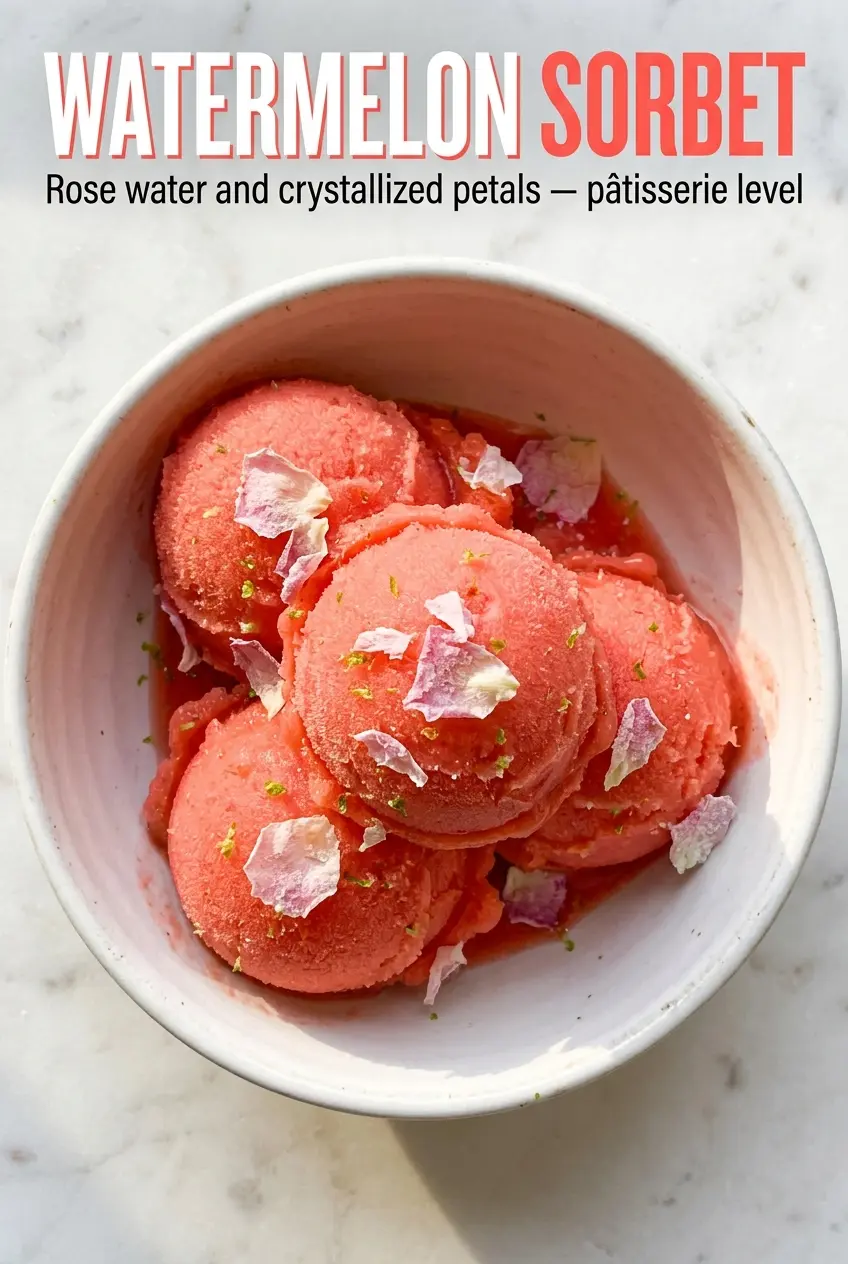
- Crystallized rose petals or edible flowers — These don’t affect the flavor much, but they make the final bowl feel finished. If you can’t find them, a few mint leaves or thin lime zest strips give you a cleaner garnish without changing the recipe.
How to Turn Watermelon Into a Smooth, Scoopable Sorbet
Blend and Strain the Fruit
Blend the watermelon until it’s completely smooth, with no visible chunks left behind. Strain it through a fine-mesh sieve and press gently to get the juice through without forcing all the pulp with it. If you skip this step, the sorbet can freeze with a grainy, slushy texture instead of a clean scoop.
Balance the Base Before It Freezes
Stir the sugar, lime juice, salt, and rose water into the strained juice until the sugar dissolves. Taste it before chilling. The base should taste a little sweeter and brighter than you want the finished sorbet, because freezing dulls both sweetness and aroma.
Churn or Scrape, Then Freeze Again
Chill the mixture for an hour so it starts cold and churn more evenly. In an ice cream maker, it should thicken to the texture of soft-serve and hold slow ridges from the paddle. If you’re making granita instead, pour it into a shallow container and scrape it every hour; the frozen crystals should stay light and fluffy, not form one hard sheet.
Let It Set Before Scooping
After churning, freeze the sorbet for about an hour so it firms up enough to scoop cleanly. Serve it in chilled glasses or bowls for the best texture. If it sits out too long, it softens fast, which is normal for a high-water fruit sorbet like this one.
Three Ways to Adjust This Sorbet Without Losing What Makes It Good
Skip the rose water for a cleaner watermelon flavor
If you want the melon to stay front and center, leave out the rose water and keep the lime. The sorbet will taste fresher and more straightforward, with a bright finish instead of a floral one. This is the best move if your watermelon is especially sweet and fragrant.
Make it dairy-free and vegan as written
This recipe is already dairy-free and vegan, which is part of why it works so well for a crowd. If you’re serving guests with different diets, you don’t need a separate dessert. Just check that any garnish, especially crystallized petals, is food-safe and meant for eating.
Turn it into granita when you don’t have an ice cream maker
The granita version gives you a lighter, icier texture with the same flavor. Freeze the base in a shallow dish and scrape it with a fork every hour, breaking up the ice crystals as they form. You lose the creaminess of churned sorbet, but you gain a sparkling, spoonable texture that still feels special.
Storage and Reheating
- Refrigerator: Not a good fit. Sorbet melts fast and won’t hold its texture in the fridge.
- Freezer: Store in an airtight container for up to 1 week. Press parchment directly on the surface if you want to limit ice crystals.
- Reheating: No reheating needed. Let it sit at room temperature for 5 to 10 minutes before scooping so the edges soften first.
Answers to the Questions Worth Asking
Watermelon Sorbet
Ingredients
Equipment
Method
- Blend the cubed and seeded fresh watermelon until smooth, then pour it through a fine-mesh sieve to remove pulp for a silkier sorbet texture.
- Transfer the strained watermelon to a bowl and set aside while you prepare the sweetened lime mixture.
- Stir the fresh lime juice, sugar, salt, and rose water (if using) together until the sugar fully dissolves, leaving no visible granules.
- Combine the sweetened lime mixture with the strained watermelon and stir until uniform in color.
- Chill the sorbet base for 1 hour until cold and ready to churn, with the surface looking clearer and slightly thickened.
- Churn the chilled base in an ice cream maker for 20-25 minutes until it reaches a soft, fluffy sorbet consistency that holds shape briefly.
- Transfer to a container and freeze for 1 hour until firm enough to scoop with clean edges.
- Scoop the sorbet into chilled glasses and garnish with crystallized rose petals or edible flowers just before serving for a vivid, fragrant finish.