
Deep golden-orange curry chicken earns a permanent place in the rotation because the sauce clings to every piece of meat, the spices taste warm instead of muddy, and the chicken turns tender enough to fall apart with a nudge of a fork. The best versions don’t rush the browning or drown the pot in liquid. They build flavor in layers until the broth turns silky and the whole kitchen smells like thyme, ginger, and curry powder blooming in hot oil.
What makes this version work is restraint at the right moments. Jamaican curry powder needs a short toast in oil to wake up the turmeric and spice, but it also needs the chicken and aromatics to go in at the right time so nothing burns bitter. Keeping the Scotch bonnet whole gives the pot its fruity heat without turning the whole dish into a dare, and adding potatoes near the end lets them soak up the sauce without falling apart.
Below, you’ll find the timing that gives the sauce its color and body, plus the simple swap that helps if you need to serve it with rice, roti, or both. I’ve also included the storage notes that keep the leftovers tasting as good as the first bowl.
The curry sauce turned this deep golden color and thickened up beautifully once the potatoes went in. I kept the Scotch bonnet whole like you said, and it had just the right amount of heat without blowing out our mouths.
Keep this Jamaican curry chicken handy for the nights when you want that deep golden sauce and fall-apart chicken without complicated steps.
The Reason the Curry Tastes Deep, Not Bitter
Jamaican curry powder can go from fragrant to harsh fast if it’s treated like generic curry powder. The difference here is that the spices get a brief run in hot oil before the broth goes in, which wakes them up and smooths out the raw edge. That short bloom is what gives the sauce its color and aroma without letting the turmeric taste chalky.
The other mistake is crowding the pot too early with too much liquid. Browning the chicken first leaves behind those dark, seasoned bits that carry the whole sauce, and the onions, garlic, and ginger help loosen them into something rich instead of scorched. If your curry tastes flat, it usually needs this kind of build rather than more salt.
What Each Ingredient Is Actually Doing in This Dish
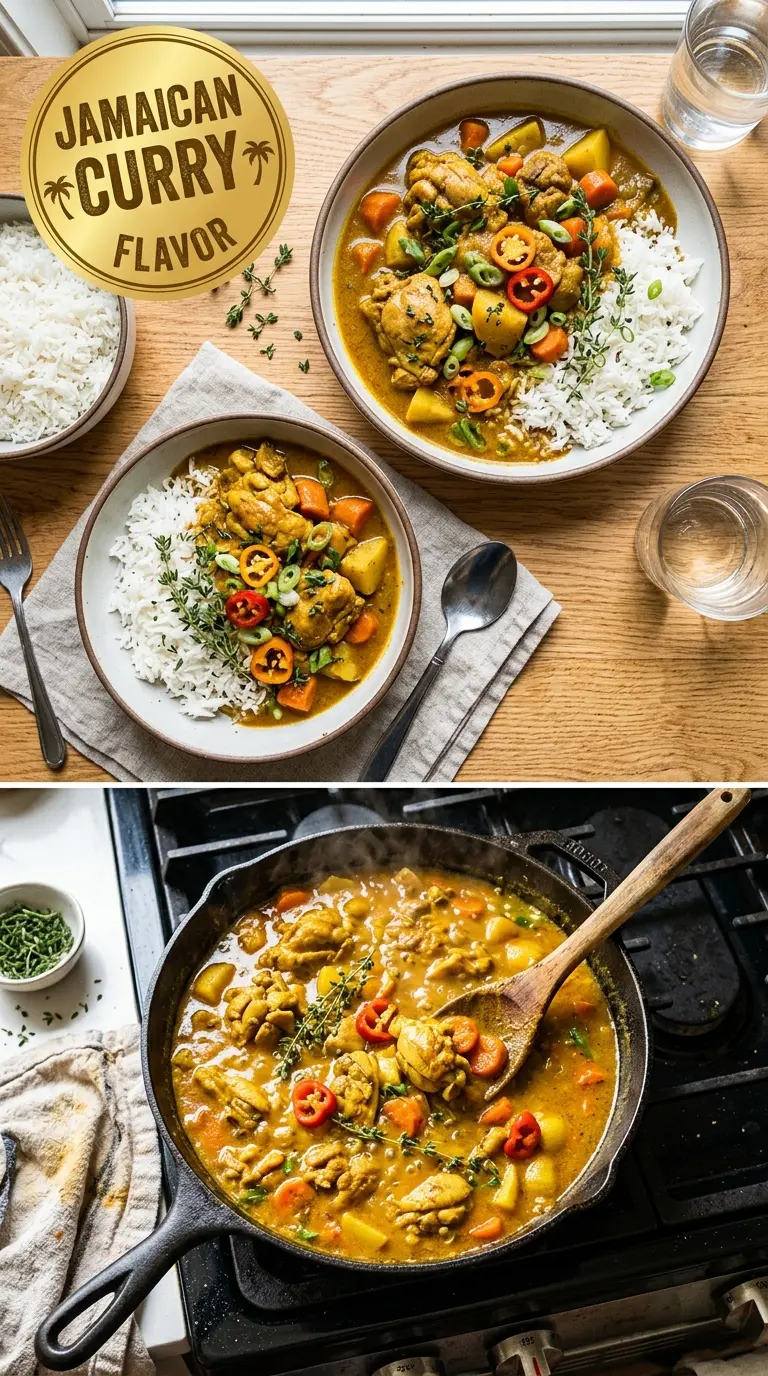
- Chicken pieces with bone and skin — Bone-in chicken gives you a fuller, rounder sauce and meat that stays juicy through the simmer. Boneless chicken works, but it cooks faster and won’t give the pot the same body.
- Jamaican curry powder — This isn’t the place to swap in a generic mild curry blend and expect the same result. Jamaican curry powder has a different spice balance and a stronger turmeric note, which is part of the dish’s signature color and taste.
- Scotch bonnet pepper — Keep it whole if you want the fruity heat without a fiery pot. If you can’t find one, a habanero gives a close heat level, but it won’t taste identical.
- Potatoes — These are optional, but they do more than bulk out the dish. They soften in the sauce and help thicken it naturally as they break down at the edges.
Building the Curry in the Right Order
Marinating for Flavor Before the Heat Hits
Coat the chicken with curry powder, allspice, onion, garlic, ginger, and salt, then give it at least an hour to sit. That short marination doesn’t just season the surface; it lets the aromatics start softening the meat and helps the curry powder cling better when it hits the pan. If you skip this and go straight to cooking, the dish still works, but the flavor stays more on the outside than in the bone-deep way you want here.
Brown the Chicken Until the Spices Darken
Use hot oil and give the chicken space so it can sear instead of steam. You’re looking for spots of deep color on the skin and a slightly darker, toasted look on the curry-coated aromatics. If the pan looks dry or the spices start catching hard on the bottom, lower the heat before they turn bitter; a little browning is good, blackened bits are not.
Simmer Until the Sauce Turns Silky
Pour in the broth, add the thyme, and drop in the whole Scotch bonnet. Let the pot simmer uncovered or partially covered until the chicken is tender and the sauce tastes rounded, about 35 to 40 minutes. If the sauce looks thin near the end, keep it uncovered for the last few minutes so it reduces instead of reaching for extra thickener.
Add the Potatoes at the End
Stir in the potatoes during the last 20 minutes so they soften without falling apart. They should hold their shape but give easily when pierced. If you add them at the beginning, they’ll collapse before the chicken is finished and muddy the texture of the whole pot.
What to Change When You Need to Work Around the Ingredients
No Scotch bonnet on hand
A habanero is the closest swap if you want the same bright heat and fruitiness. Keep it whole unless you want the curry much hotter, because cutting it open changes the pot from gently spicy to aggressive fast.
Need it gluten-free
This dish is naturally gluten-free as written as long as your curry powder and broth are certified gluten-free. Serve it with rice or gluten-free flatbread and you won’t lose anything in the finished dish.
Want to use boneless chicken
Boneless thighs work better than breasts because they stay tender during the simmer. Cut the cook time back and watch the sauce closely; breast meat dries out faster and won’t give you the same rich texture.
Leaving out the potatoes
You can skip them and serve the curry with rice for a lighter plate. The sauce will stay looser, so reduce it a few extra minutes if you want it to coat the chicken more closely.
Storage and Reheating
- Refrigerator: Store for up to 4 days. The sauce thickens as it chills, and the flavor usually gets better by day two.
- Freezer: It freezes well for up to 3 months. Cool it completely, portion it into airtight containers, and leave a little space at the top for expansion.
- Reheating: Reheat gently on the stove over low heat with a splash of broth or water. High heat can tighten the chicken and make the sauce look greasy before it warms through.
Answers to the Questions Worth Asking

Authentic Jamaican Curry Chicken
Ingredients
Equipment
Method
- In the Dutch oven, mix Jamaican curry powder, allspice, salt, diced onion, minced garlic, and grated ginger. Add the bone-in chicken pieces, then cover and marinate for 1 hour, until the spices look evenly coated and slightly darkened.
- Heat the vegetable oil over high heat, then add the marinated chicken in a single layer. Brown the chicken for 2–3 minutes, turning once, until you see deep golden-brown color on the surface.
- Add the thyme sprigs and cook for 1–2 minutes, stirring so the aromatics become fragrant. Keep the mixture sizzling and glossy, with no burning at the bottom.
- Add chicken broth and place the Scotch bonnet pepper (whole) into the pot. Bring to a simmer at medium-high heat, then immediately reduce to maintain a steady simmer.
- Simmer the curry chicken for 35–40 minutes, stirring occasionally, until the chicken is tender and the sauce turns deep golden-orange. Keep the surface at a gentle bubble and watch for sauce thickness.
- If using potatoes, add the cubed potatoes during the last 20 minutes of simmering. Cook until fork-tender and the sauce looks thick enough to cling to the chicken.
- Serve the Jamaican curry chicken hot over rice or roti. Spoon plenty of the sauce over the top so the chicken falls off the bone.