
Golden crust, a pillowy crumb, and that deep banana sweetness are what make a good loaf disappear fast. This banana bread bakes up tender without turning gummy, with just enough structure to slice cleanly after it cools. The edges pick up a little caramelization while the center stays soft and fragrant, which is exactly what you want from a loaf that’s meant to be eaten plain, toasted, or slathered with butter.
The trick is keeping the batter from getting overworked. Once the flour goes in, a few streaks are fine; that’s how you avoid a dense, tunnel-y loaf. Very ripe bananas do most of the heavy lifting here, bringing moisture and sweetness so the crumb stays plush instead of dry. Melted butter gives the bread a rich, even texture without the fuss of creaming, and a single egg is enough to bind everything without making it cakey.
Below, I’ll show you how to tell when the loaf is actually done, how to use bananas that are almost too far gone, and the easy add-ins that give this classic loaf more texture without weighing it down.
The loaf came out with a deep golden top and stayed moist for three days. I used bananas that were almost black, and the flavor was perfect without needing anything extra.
Save this banana bread for the next time your bananas turn spotty and you want a loaf with a soft crumb and caramelized top.
The Difference Between a Tender Loaf and a Heavy One
Banana bread gets dense when the batter is overmixed or the bananas are too wet without enough structure to hold them. The goal is a batter that comes together fast and looks a little rough before it goes into the pan. That roughness is what bakes into a soft, even crumb instead of a tight, rubbery slice.
The other place people go wrong is baking by the clock alone. A loaf can look done on top while the center is still wet, especially if the bananas were extra large. Use the toothpick test in the middle of the loaf, and look for a few moist crumbs rather than raw batter. If the top is browning too quickly before the center is set, lay a piece of foil loosely over it for the last stretch of baking.
Why These Simple Ingredients Matter More Than You’d Think
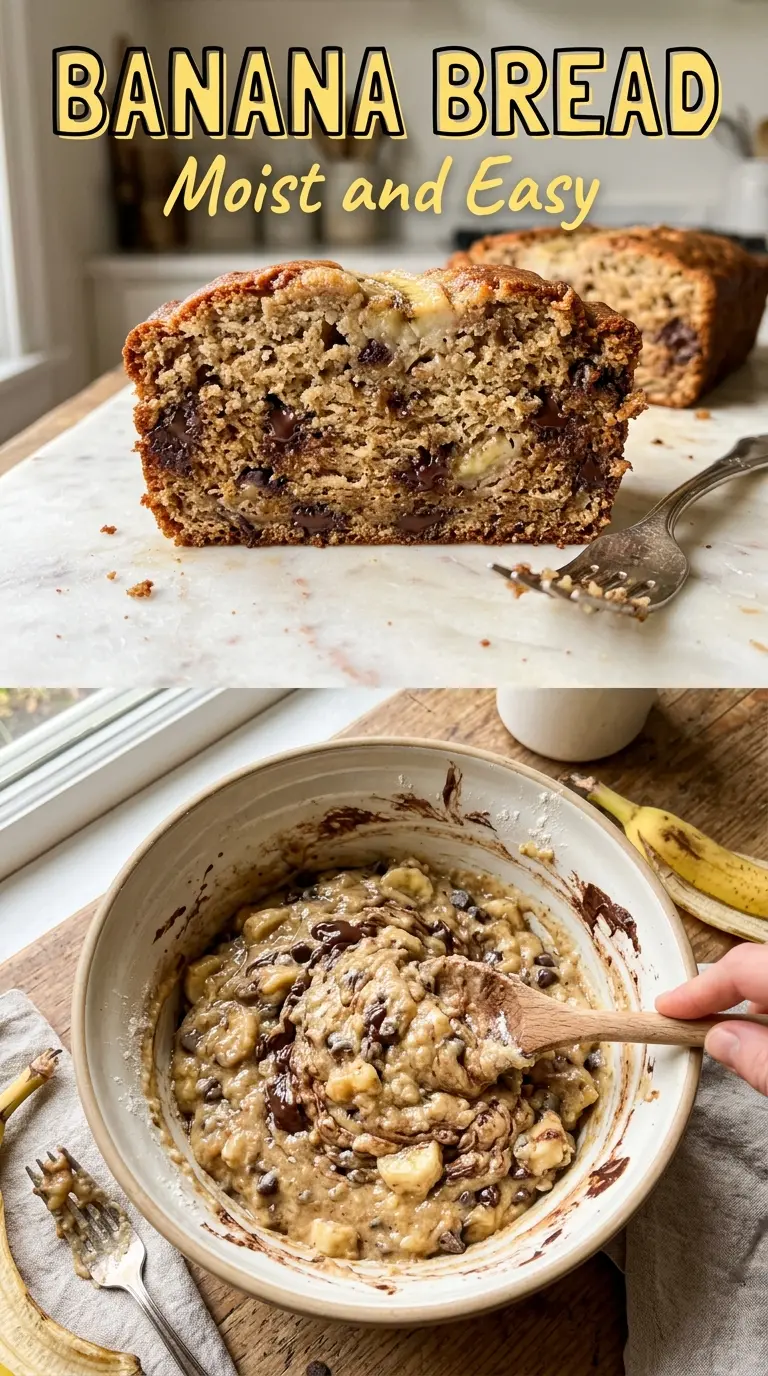
- Bananas — The riper they are, the better this loaf tastes. You want bananas with plenty of brown spotting or even nearly black skins, because that’s where the sweetest, most intense banana flavor comes from. If yours aren’t there yet, you can roast them in the peel at 300°F until they darken and soften, then cool before mashing.
- Melted butter — This gives the loaf a rich, soft texture and keeps the batter simple. It also helps the crumb stay tender after the bread cools. You can swap in neutral oil if you need a dairy-free loaf, but the flavor will be a little less warm and buttery.
- All-purpose flour — This is the structure that holds the loaf together without making it heavy. Spoon it into the measuring cup and level it off instead of packing it in, because too much flour is the fastest way to end up with a dry loaf. If you want a slightly heartier texture, replace up to 1/2 cup with whole wheat flour, but expect a denser result.
- Baking soda — This reacts with the bananas and gives the bread lift. If it’s old, the loaf can bake up flat and oddly dull, so check the date before you start. There isn’t a great substitute here if you want the same rise and texture.
How to Mix It So the Crumb Stays Soft
Starting with the Bananas
Mash the bananas until mostly smooth, but a few small lumps are fine. Those bits melt into the loaf and leave little pockets of banana flavor. Stir in the melted butter while it’s warm, not hot, so it blends easily without scrambling the egg later.
Bringing the Batter Together
Add the sugar, egg, and vanilla, then stir until the mixture looks glossy and even. Once the baking soda and salt go in, the batter will look a little looser, which is normal. Add the flour last and stop as soon as the dry streaks disappear. If you keep stirring past that point, the gluten tightens and the bread bakes up tougher.
Knowing When the Loaf Is Done
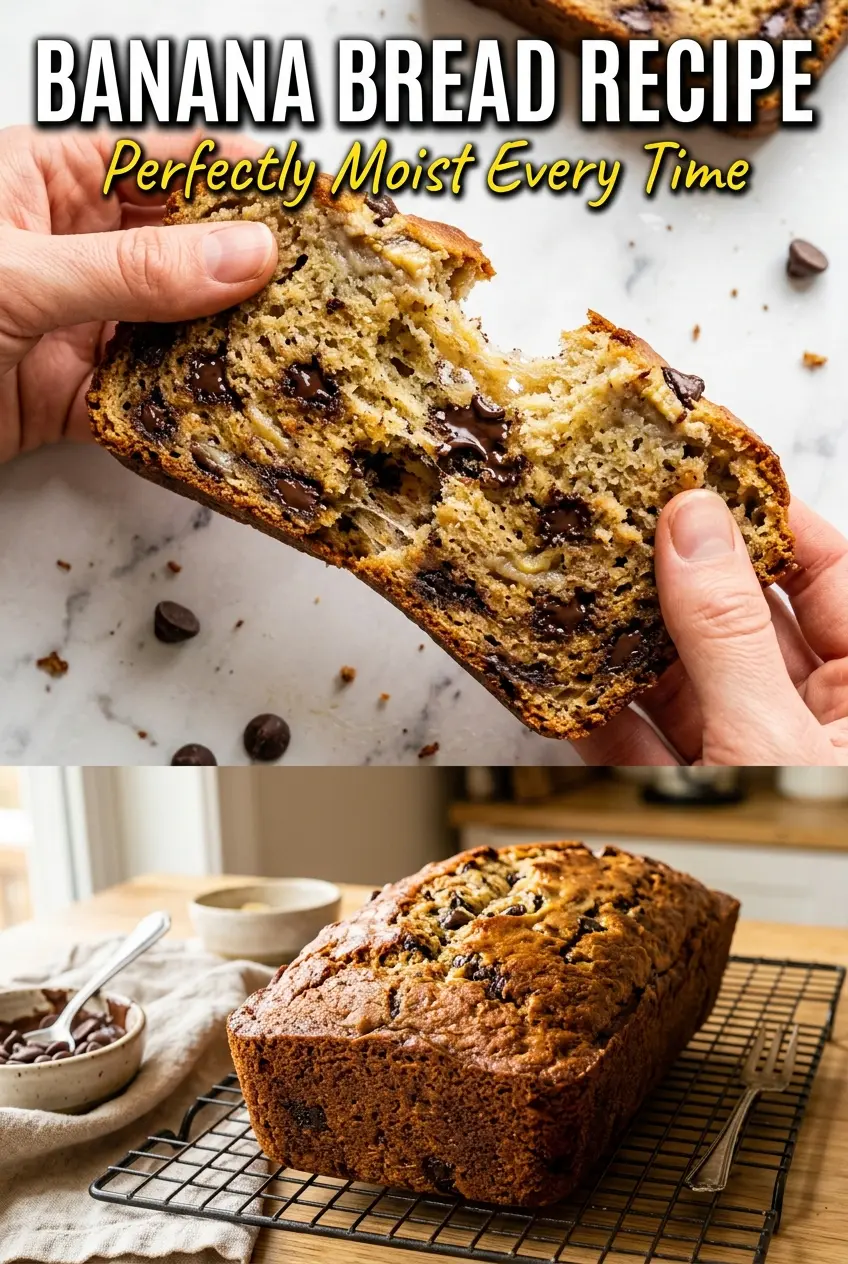
Scrape the batter into a greased 4×8 loaf pan and bake until the top is deeply golden and a toothpick in the center comes out clean or with a few crumbs attached. The center should spring back lightly when pressed, and the loaf should pull just slightly from the sides of the pan. Let it cool before slicing or the middle will seem gummy even when it’s fully baked.
How to Adapt This Banana Bread When You Want It Different
Chocolate Chip Banana Bread
Fold in 3/4 cup chocolate chips at the very end. They add pockets of melted sweetness and make the loaf feel more like a treat, but they also weigh the batter down a little, so don’t go overboard. Tossing the chips with a spoonful of flour helps keep them from sinking.
Walnut Banana Bread
Add 1/2 cup chopped walnuts for crunch and a deeper, toasty flavor. The nuts balance the soft crumb and make each slice feel a little more substantial. Toast them first if you want the flavor to stand out more.
Dairy-Free Version
Swap the butter for the same amount of melted coconut oil or neutral oil. Coconut oil keeps the loaf rich but adds a faint coconut note, while neutral oil gives you the mildest flavor. The texture stays soft either way, though butter still gives the best classic taste.
Make It a Little More Whole Grain
Replace up to 1/2 cup of the flour with whole wheat flour. That gives the loaf a nuttier flavor and a slightly sturdier crumb, but too much will make it dry. The bananas help keep it tender, yet the texture will still be a touch heavier than the original.
Storage and Reheating
- Refrigerator: Store tightly wrapped for up to 5 days. The crumb firms up a little in the fridge, but the flavor stays good.
- Freezer: Freezes well. Wrap individual slices or the whole cooled loaf in plastic and then foil, and freeze for up to 3 months.
- Reheating: Warm slices in the toaster or a low oven until just heated through. The biggest mistake is microwaving too long, which turns the crumb rubbery and dulls the banana flavor.
Questions I Get Asked About This Recipe
Banana Bread Recipe
Ingredients
Equipment
Method
- Preheat oven to 350°F and grease a 4x8 loaf pan. Set the pan on a sheet pan so it bakes evenly.
- Mix melted butter into mashed bananas until glossy and uniform in color. Stop when the mixture looks smooth with no big banana chunks.
- Stir in sugar, beaten egg, and vanilla until the batter thickens slightly and looks cohesive. Scrape the sides so no dry streaks remain.
- Add baking soda and salt, then mix well for even lift. The batter should look evenly speckled and not separate.
- Fold in all-purpose flour until just combined, with a few small flour streaks still visible. Keep mixing minimal so the crumb stays tender.
- Pour batter into the prepared loaf pan and smooth the top. Tap the pan once to settle the batter.
- Bake at 350°F for 55-65 minutes until a toothpick comes out clean. The top should be deeply golden and spring back lightly when pressed.
- Cool before slicing so the center sets and the loaf cuts cleanly. Let it rest in the pan until firm to the touch.