
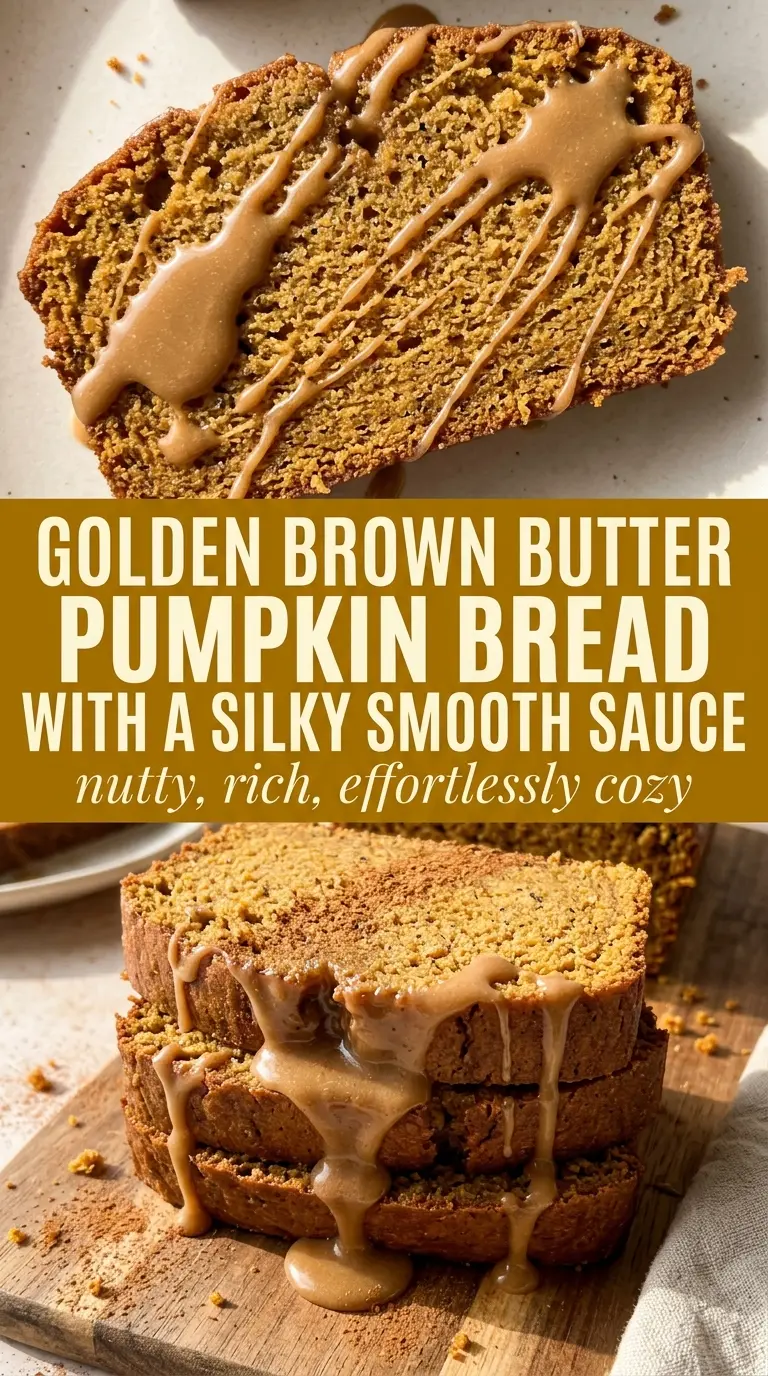
Brown butter pumpkin bread has the kind of deep, toasty flavor that makes plain pumpkin loaf taste thin by comparison. The browned butter brings in a nutty edge that settles right into the spices, while the pumpkin keeps every slice soft and moist without turning heavy. A thick drizzle of glaze over the warm loaf finishes it with just enough sweetness to make each slice feel bakery-worthy.
The part that matters most here is the butter. You want it browned, not just melted, because those amber bits at the bottom carry the flavor. Let it cool for a few minutes before mixing it with the eggs, though, because hot butter can scramble them and leave you with little cooked flecks in the batter. The other key move is not overbaking. Pumpkin bread keeps setting after it leaves the oven, and if you wait until it seems completely firm in the center, it usually goes dry.
Below, I’m walking through the little details that make this loaf work every time, plus the one glaze trick that keeps it smooth instead of grainy.
The browned butter made the whole loaf taste richer, and the glaze soaked into the top just enough without making it soggy. Mine baked in 58 minutes and came out incredibly moist with a tight, tender crumb.
Save this brown butter pumpkin bread for when you want a moist loaf with a nutty crumb and a warm glaze on top.
The Butter Needs to Brown Before the Pumpkin Goes In
The biggest mistake with pumpkin bread is treating browned butter like an optional upgrade instead of the flavor base. If you just melt the butter, the loaf tastes flatter and the spices carry all the weight. Browning it first gives you those toasted milk solids that turn into a warm, nutty backbone under the pumpkin and brown sugar.
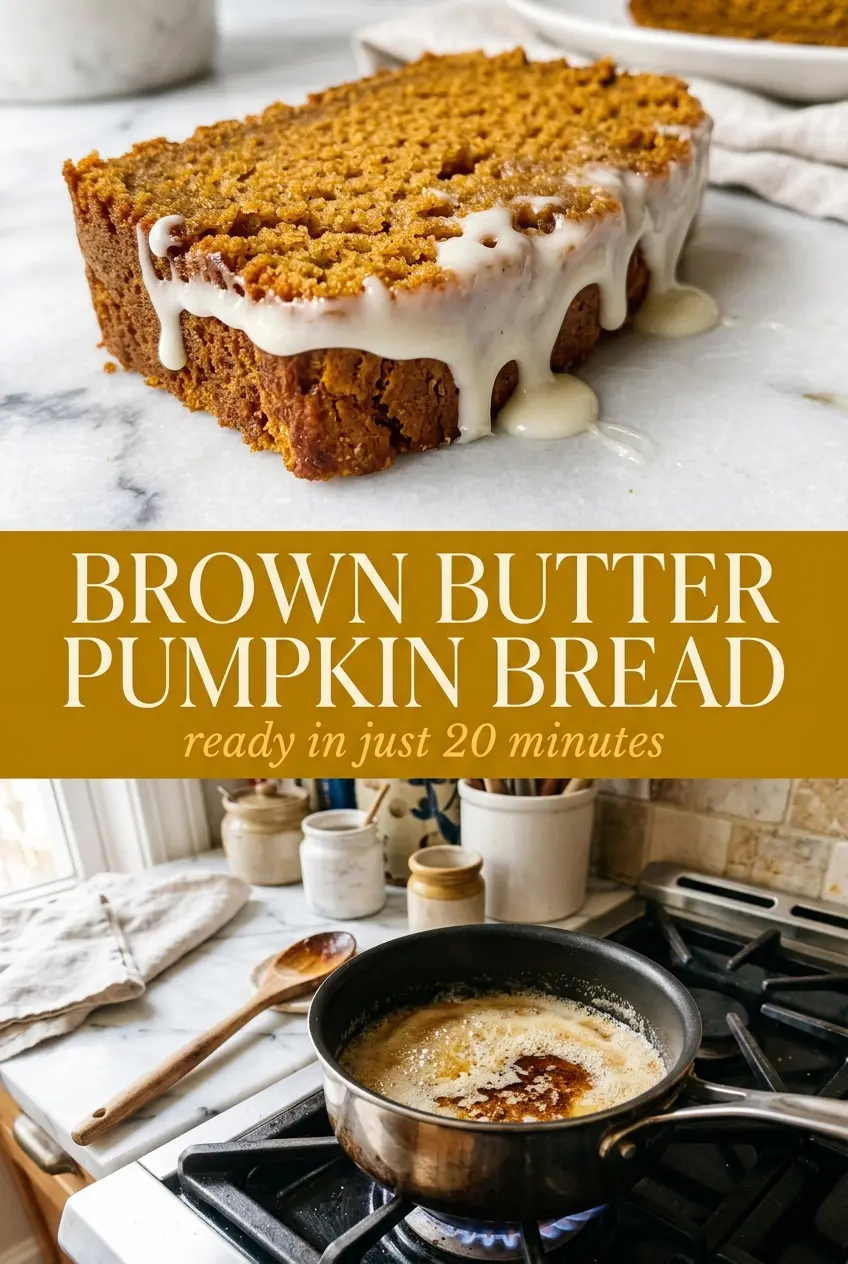
That browning happens fast once the foaming settles down. Pull the pan off the heat the moment you see golden specks and smell something nutty, almost like toasted hazelnuts. If you let it go too far, the butter turns bitter and the loaf picks up that burnt edge in every bite. Cool it just until it’s warm, not hot, before whisking it into the eggs and pumpkin.
What Each Ingredient Is Actually Doing in This Loaf
- Unsalted butter — This is the flavor engine. Browning it adds depth you can’t get from melted butter, and unsalted butter lets you control the salt in the batter. If you only have salted butter, use it and reduce the added salt a bit.
- Pumpkin puree — Use plain pumpkin puree, not pumpkin pie filling. The puree gives the bread its moisture and keeps the crumb tender, but the flavor stays clean so the spice and browned butter can come through.
- Brown sugar — This adds a light molasses note that fits the browned butter beautifully and helps the loaf stay soft for days. Granulated sugar works in a pinch, but the bread will taste less rounded and a little less moist.
- Pumpkin pie spice — This is where the warm spice note comes from, and it matters more than people think. If your blend is old, the bread can taste dull, so use a fresh jar if you have one.
- Powdered sugar and milk — This glaze is meant to be quick and pourable. Start with less milk than you think and add it slowly, because a thin glaze runs off the loaf instead of settling into that shiny top.
The Mixing Order That Keeps the Crumb Tender
Brown the Butter First
Put the butter in a saucepan over medium heat and stir as it foams. The color changes from pale yellow to gold, then to amber with tiny brown flecks at the bottom. That’s your cue to stop. If you walk away for even a minute at the end, it can jump from nutty to burnt.
Build the Wet Mixture Gently
Whisk the pumpkin puree, browned butter, eggs, and brown sugar until the mixture looks smooth and glossy. If the butter is still too hot, the eggs can start to cook and the batter turns lumpy. A warm bowl is fine. A hot one is not.
Fold the Dry Ingredients Just Until Combined
Stir the flour, baking soda, pumpkin pie spice, and salt into the wet mixture until no dry streaks remain. Stop as soon as the batter comes together. Overmixing builds too much structure and leaves you with a tougher loaf instead of a tender one. The batter should be thick and spoonable, not pourable like cake batter.
Bake Until the Center Springs Back
Scrape the batter into a greased loaf pan and bake at 350°F until a toothpick comes out clean, usually 55 to 60 minutes. Look for a domed top and a loaf that smells deeply spiced and toasted. If the top browns too quickly, tent it loosely with foil for the last part of baking. Let it cool just long enough to set before glazing, or the glaze will melt right off.
How to Adapt This for a Different Pantry or a Smaller Crowd
Dairy-Free Brown Butter Style
Use a plant-based butter that browns well, then watch it closely because some brands darken faster than dairy butter. You’ll get a similar nutty note, though it may be a little softer and less caramel-like.
Gluten-Free Swap
Use a 1:1 gluten-free baking flour with xanthan gum already included. The loaf will still be moist, but it may crumble a bit more when warm, so give it extra time to cool before slicing.
Skip the Glaze for a Less Sweet Loaf
Leave off the powdered sugar glaze and the bread becomes more breakfast-friendly, with the browned butter and spice doing all the talking. A thin swipe of salted butter on a warm slice brings the richness back without adding more sugar.
Mini Loaves or Muffins
Divide the batter into smaller pans or a muffin tin and shorten the bake time. Smaller portions brown faster, so start checking early. You’ll get more edges and a slightly firmer crumb, which is great if you want grab-and-go slices.
Storage and Reheating
- Refrigerator: Store tightly wrapped for up to 4 days. The crumb stays moist, but the glaze softens as it sits.
- Freezer: Freeze slices or the whole loaf, well wrapped, for up to 2 months. Freeze before glazing if you want the best texture, then add the glaze after thawing.
- Reheating: Warm slices in a low oven or give them a short turn in the microwave. Don’t blast it on high heat or the bread dries out at the edges before the center is warmed through.
Answers to the Questions Worth Asking
Brown Butter Pumpkin Bread
Ingredients
Equipment
Method
- Melt unsalted butter in a saucepan over medium heat until it turns golden brown and nutty, then cool slightly.
- Let the browned butter cool briefly so it doesn’t cook the eggs when mixed.
- Preheat oven to 350°F and grease a loaf pan.
- Whisk all-purpose flour, baking soda, pumpkin pie spice, and salt together.
- Beat pumpkin puree, browned butter, eggs, and brown sugar until smooth, then fold into the dry ingredients.
- Pour batter into the pan and bake 55-60 minutes at 350°F until a toothpick comes out clean.
- Whisk powdered sugar with milk until smooth and drizzle over the warm loaf, watching for a glossy, even ribbon.