
Breakfast that lands around 300 to 400 calories can still keep you full, steady, and satisfied well past midmorning. The trick isn’t eating less food for the sake of it. It’s building a plate with enough protein, fiber, and texture that you don’t end up hunting for snacks an hour later. That means eggs that actually hold their shape, yogurt that tastes creamy instead of thin, and toast or fruit used with purpose instead of as filler.
The combinations below all follow the same basic logic: get at least 20 grams of protein, add produce for volume, and keep the fat portion measured instead of automatic. A little avocado goes a long way. So does Greek yogurt, which gives you body and protein without needing cream or sugar to feel satisfying. If you’ve ever tried “eating lighter” and ended up hungry before lunch, this is the fix that makes the whole idea workable.
Below, you’ll find four breakfasts that are fast enough for weekdays and flexible enough to repeat without getting bored. The best part is that each one can be adjusted slightly to fit your calorie target without losing the structure that makes it satisfying.
I made the veggie omelette with egg whites and it stayed fluffy instead of rubbery, which never happens for me. The Greek yogurt bowl kept me full until lunch, and the avocado toast with egg was just enough food without blowing my calorie goal.
Save these calorie deficit breakfast ideas for the mornings when you want 20+ grams of protein without going over 400 calories.
The Difference Between “Light” and Actually Filling
The mistake with low-calorie breakfasts is usually the same one: too little protein, too little texture, and not enough volume from foods that take a while to eat. A bowl of fruit alone digests fast. Toast without protein disappears fast too. When you combine eggs or Greek yogurt with berries, spinach, avocado, or whole grain toast, the meal slows down enough to feel like breakfast instead of a snack wearing a disguise.
The other problem is overloading one ingredient. Too much avocado, too much honey, or too much toast can push a “healthy” breakfast out of its calorie lane without improving satiety much. The sweet spot here is balance. Protein carries the meal, produce gives you volume, and the fat or carbohydrate component stays measured so the plate works with your goals instead of fighting them.
What Each Ingredient Is Actually Doing in These Breakfasts
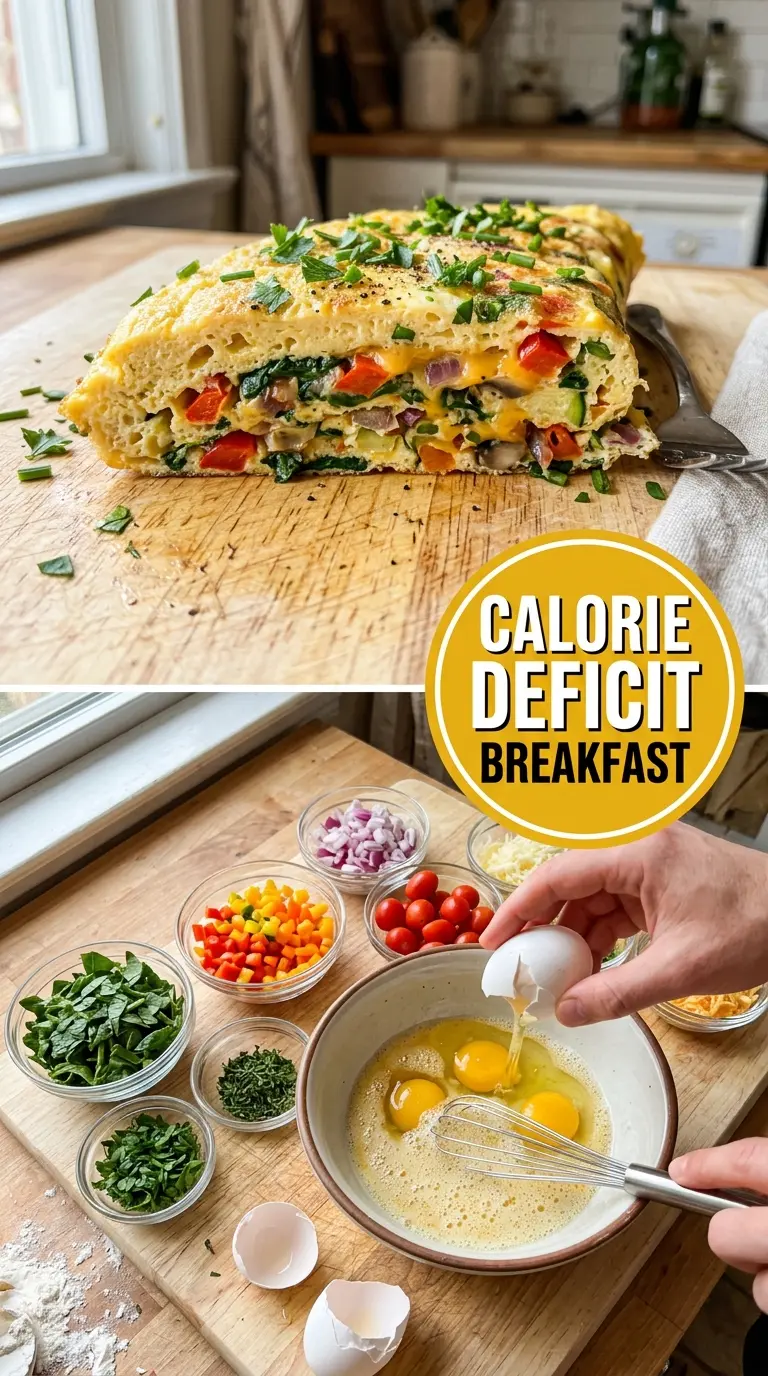
- Eggs or egg whites — Whole eggs give you richer flavor and better texture, while egg whites let you keep calories down while still building protein. If you swap all the way to whites, add a pinch more seasoning because yolks carry a lot of the roundness.
- Non-fat Greek yogurt — This is the quiet workhorse. It brings protein, tang, and body without the calorie load of regular yogurt. If yours tastes too sharp, a few berries on top and a tiny drizzle of honey smooth it out without turning the bowl into dessert.
- Whole grain toast — Use bread with some heft. Thin, airy sandwich bread doesn’t hold up to avocado or eggs and leaves you hungry faster. Toast it well so it stays crisp under the toppings.
- Avocado — A quarter avocado is enough for creaminess and staying power. More than that can crowd out the rest of the plate. Mash it with salt and seasoning so it tastes finished without needing extra fat.
- Spinach and cherry tomatoes — These add volume, color, and a little sweetness with almost no calorie cost. Spinach cooks down fast, so don’t overcook it into wet strings; it should just wilt and disappear into the eggs.
- Everything bagel seasoning — This does the heavy lifting on flavor for eggs and avocado toast. It adds salt, crunch, and a garlic-onion hit that makes a simple breakfast taste complete.
- Greek yogurt, berries, and optional honey — The berries keep the parfait bright and juicy, while honey should stay in the background, not take over. If you skip it, add cinnamon or vanilla instead of piling on more sweetness.
Building a Breakfast That Stays Under 400 Calories
The Veggie Omelette That Stays Tender
Whisk the eggs until the whites and yolks are fully combined and pour them into a preheated nonstick pan over medium-low heat. Add the spinach and tomatoes once the eggs start setting around the edges. If the heat is too high, the eggs toughen before the center finishes, and the whole thing turns dry and brittle instead of soft and foldable.
The Yogurt Parfait That Doesn’t Turn Watery
Use thick Greek yogurt and layer the berries on top right before eating if you want the best texture. If you stir the berries in too early, the juice runs into the yogurt and thins it out. A spoonful of granola can fit here too, but keep it small if you are watching calories, because crunch adds up fast.
The Avocado Toast That Feels Complete
Mash the avocado until it looks spreadable, not chunky, then pile it onto well-toasted bread. Top it with the egg while it’s still warm so the yolk can coat the toast a little. If your toast goes soggy, the bread wasn’t crisp enough or the avocado went on too thick.
The Smoothie That Actually Keeps You Full
Blend the Greek yogurt, berries, spinach, and cold water until smooth. Stop once the spinach disappears; overblending won’t improve it, and it can make the texture thin. This works best when you keep the liquid modest, since too much water turns a filling smoothie into colored juice.
Three Ways to Work These Into Your Week
Dairy-Free Breakfast Bowl
Swap the Greek yogurt for a high-protein dairy-free yogurt and add chia seeds for body. You won’t get the same tang or naturally high protein from plain coconut yogurt, so check the label and choose one with enough protein to keep the meal satisfying.
Lower-Carb Avocado Toast
Skip the bread and serve the avocado and egg over sautéed spinach or alongside tomatoes. You lose the crunch of toast, but the plate stays satisfying and drops a noticeable chunk of calories.
Meal Prep for Busy Mornings
Hard-boil a batch of eggs and wash the berries and spinach ahead of time. The omelette still tastes best made fresh, but the yogurt bowl and toast become fast assembly jobs when the fruit and eggs are ready to go.
Storage and Reheating
- Refrigerator: Cooked eggs keep for up to 3 days, yogurt bowls for 2 days if the berries are added just before serving. Avocado toast doesn’t store well once assembled because the bread softens and the avocado darkens.
- Freezer: The omelette and yogurt bowl do not freeze well. Hard-boiled eggs can be frozen in theory, but the whites turn rubbery, so that isn’t the move here.
- Reheating: Warm eggs gently in short bursts in a skillet over low heat or in the microwave at reduced power. High heat dries them out fast, which is the most common mistake people make with breakfast eggs.
Answers to the Questions Worth Asking
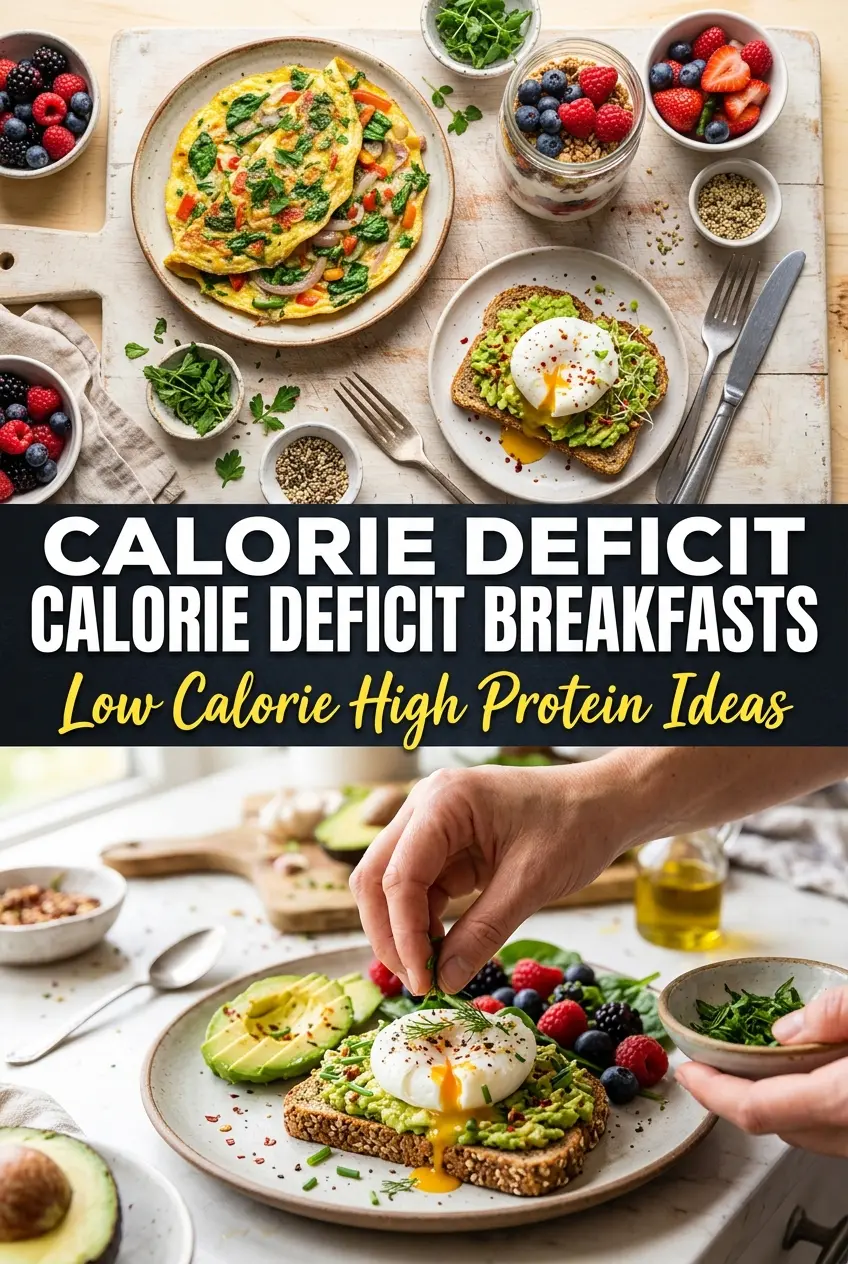
Calorie Deficit Breakfast Ideas
Ingredients
Equipment
Method
- Heat a cast iron skillet over medium heat for 2 minutes until hot and ready to sizzle.
- Whisk the eggs (or egg whites) until smooth, then pour into the pan and let set for 2-3 minutes.
- Add spinach and cherry tomatoes to one side of the omelette and cook for 1-2 minutes until spinach wilts and tomatoes soften.
- Fold the omelette and cook for 1-2 minutes more until eggs are fully set with no runny center, then serve.
- Spoon Greek yogurt into a bowl and spread it into an even layer.
- Top with fresh berries and gently press them in so they sit firmly on the yogurt.
- Add honey in a thin drizzle if using, then serve immediately for the freshest texture.
- Toast the whole grain bread until crisp, then let it cool for 1 minute so the topping doesn’t melt.
- Mash the avocado and spread it over the toast in an even layer.
- Top with the eggs (fried or poached) and finish with everything bagel seasoning, then serve right away.
- Blend Greek yogurt, berries, spinach, and water until smooth and thick, about 30-45 seconds.
- Pour into a glass and drink immediately for best texture.
- Choose one option and portion it to land around 300-400 kcal per breakfast with 20+ grams of protein, then add the optional low-calorie protein shake only if needed.