
An abundant charcuterie board earns its place because it looks generous before anyone takes a bite, then keeps delivering as people move from creamy cheese to salty meat to a sweet spoonful of jam. The best boards don’t feel arranged so much as naturally overflowing, with every gap filled so the whole thing reads as one complete spread instead of a few items scattered on wood.
What makes this version work is the balance of textures and the order you build it in. Large anchors like cheese and small bowls go down first so they define the shape of the board, then the fruit, nuts, and crackers fill the empty spaces without crowding the good stuff. Keeping a mix of sharp cheddar, brie, and manchego gives you different levels of richness, while prosciutto, salami, and soppressata cover everything from silky to chewy to bold.
Below, I’ve laid out the easiest way to assemble a board that looks abundant without turning into a mess, plus a few swaps that keep the same feeling when you need to work with what’s in the fridge.
The board looked full and balanced without feeling crowded, and the honey with brie was the first thing gone. I liked that the cheeses stayed distinct and the crackers didn’t go soggy because everything was tucked in at the end.
Charcuterie board building is all about that abundant, edge-to-edge look with cheeses, fruit, and cured meats in every gap.
The trick to a board that looks full without wasting good cheese
The mistake most people make is trying to place everything evenly, which leaves the board looking sparse and a little awkward. A better board starts with a few big anchors: wedges of cheese, one or two small bowls, and a couple of strong focal points. Once those are down, the rest of the ingredients become filler in the best possible way, tucked into every open space so the board looks abundant from every angle.
Temperature matters more than people think. Brie should sit out just long enough to soften slightly, because cold brie tastes flat and doesn’t spread well. Hard cheeses like cheddar and manchego can stay firmer, which gives the board structure and keeps the texture mix interesting. The cured meats should be folded or fanned instead of piled flat so they add height and movement.
What Each Ingredient Is Actually Doing in This Dish
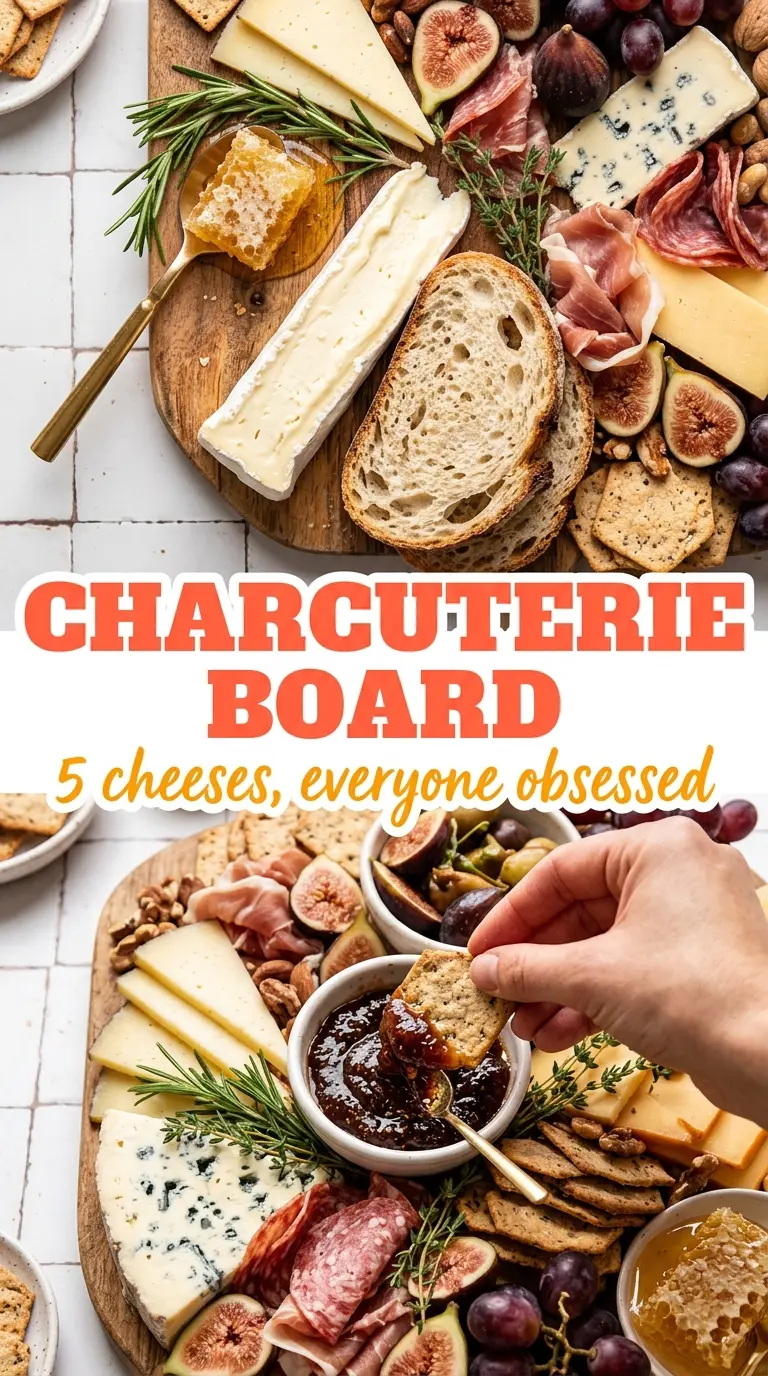
- Sharp cheddar — Choose a block and slice it yourself if you can. Pre-sliced cheddar works, but hand-cut pieces look cleaner and hold their shape better on the board.
- Brie — A whole wedge gives you that soft, creamy center people reach for first. If you swap it for camembert, the texture stays in the same lane; if you skip soft cheese entirely, the board loses a lot of contrast.
- Manchego — This adds a nutty, firm bite that keeps the cheese selection from feeling one-note. Any aged sheep’s milk cheese can stand in here.
- Prosciutto, salami, and soppressata — Use a mix of silky, mild, and bolder cured meats so each bite feels different. Fold prosciutto into ribbons, fan the salami, and cut the soppressata a little thicker for visual variety.
- Honey and fig jam — These are the sweet anchors that tie the cheeses together. Use good honey if you can, and honeycomb is worth adding when you want the board to look extra generous.
- Crackers and crostini — Choose sturdy ones. Thin crackers break under soft cheese and jam, which is the fastest way to turn a pretty board into a crumb pile.
How to layer the board so it feels abundant instead of crowded
Place the anchors first
Set the cheeses down before anything else, spacing them across corners and the center so the board has a natural shape. Add the small bowls for honey, jam, and mustard next, because those are the spots that define the negative space. If you wait too long to place them, you’ll end up moving everything around trying to make room.
Build around the strongest colors
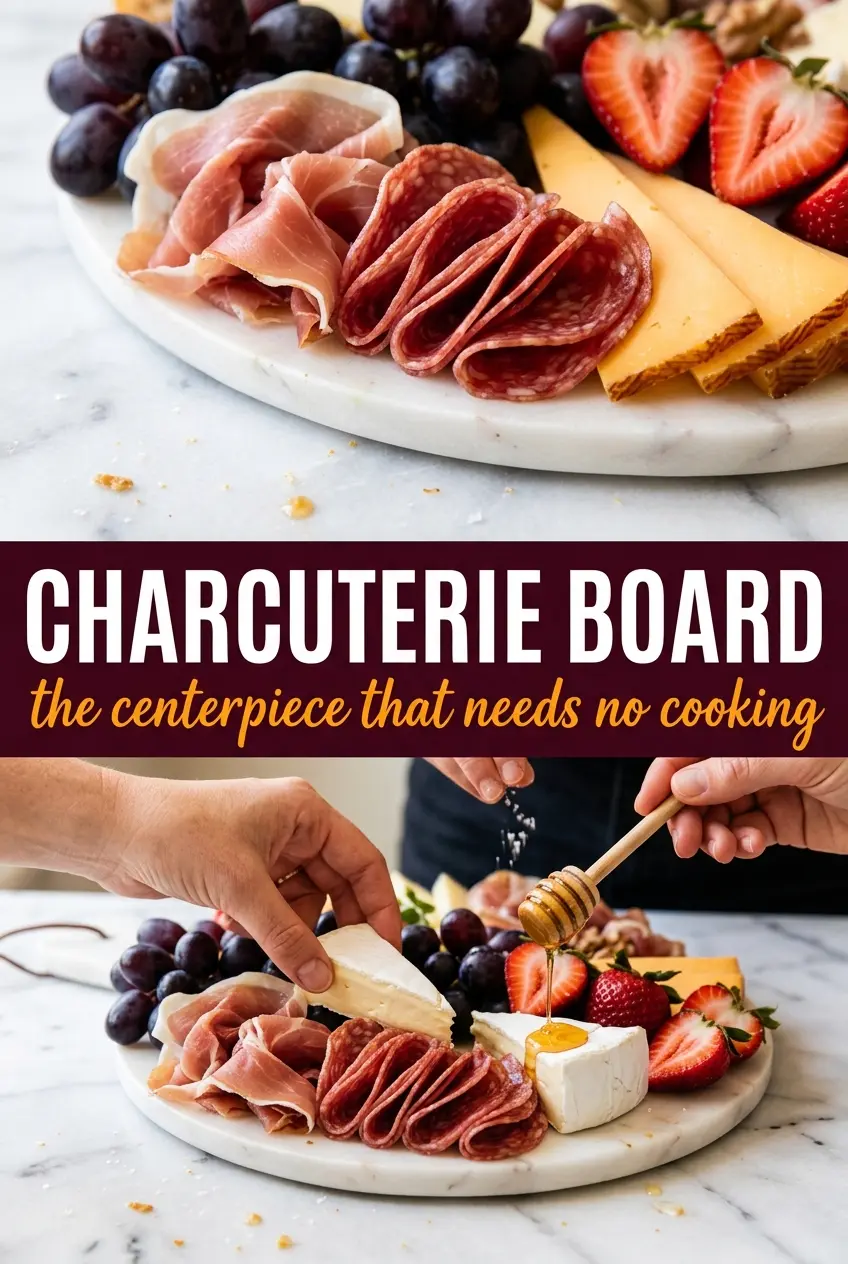
Fold the prosciutto into loose ribbons, fan the salami, and tuck the soppressata beside the cheeses rather than stacking all the meats together. Then add the grapes, strawberries, and olives where the board still looks bare. The goal is to create clusters with contrast, not little piles of ingredients that all look the same from the top.
Finish with the smallest pieces
Scatter the nuts into the last open spaces and tuck the crackers around the edges and between larger items. This is where the board goes from decent to full. If you put the crackers in first, they get buried; if you add them last, they frame the board and stay crisp longer. Garnish with rosemary and thyme at the end so the herbs sit on top instead of disappearing under the food.
Three ways to adjust the board without losing the point
Dairy-Free Board With the Same Variety
Swap the cheeses for marinated artichokes, hummus, olives, roasted peppers, and extra nuts. You lose the creamy cheese moment, but you keep the same mix of salty, sweet, crunchy, and juicy elements that makes the board feel complete.
Gluten-Free Serving Board
Use certified gluten-free crackers or skip them and add sliced cucumber, endive leaves, and apple wedges for scooping. That keeps the board useful for everyone without changing the main assembly at all.
Smaller Board for Four to Six People
Use two cheeses, two meats, one fruit, one nut, and one or two condiments instead of the full spread. The technique stays the same, but the board feels intentional instead of underfilled because you’re scaling the variety, not just shrinking every ingredient equally.
Storage and Reheating
- Refrigerator: Leftover cheese, meats, fruit, and condiments keep for 2 to 3 days if stored separately. Once crackers are on the board, they soften fast.
- Freezer: Don’t freeze the assembled board. The cheeses turn crumbly and the fruit loses its texture once thawed.
- Reheating: No reheating needed. Set the cheese out 20 to 30 minutes before serving so it softens again; that’s the part people usually skip, and it matters more than anything else on the board.
Questions I Get Asked About This Recipe
Charcuterie Board
Ingredients
Method
- Place sharp cheddar slices on the board first in the corners and center to create anchor coverage.
- Add brie and manchego to the remaining corner and center spots so the cheeses are visible and evenly spaced.
- Fan or fold prosciutto beside the cheeses so pink ribbons create height and contrast.
- Fan salami next to the brie for deep-red arcs that fill gaps without covering all fruit.
- Place hard soppressata beside the other meats to add extra texture and a darker cured-meat layer.
- Fill small bowls with honey and place it onto the board near the cheeses.
- Add the honeycomb piece to sit beside the honey for a crunchy sweet bite.
- Fill a separate spot with fig jam and nestle it onto the board so it’s easy to spoon.
- Place whole grain mustard in a small bowl on the board next to the jam and honey.
- Fill open spaces with grapes and sliced strawberries to add jewel tones across the board.
- Scatter mixed olives in the gaps to bring briny pops between cheeses and meats.
- Tuck mixed nuts into the remaining spaces so every section has a crunchy option.
- Tuck assorted crackers and crostini around the edges to frame the board and keep everything grab-ready.
- Garnish with fresh rosemary and thyme sprigs for an herb-fresh look at the top and corners.