
Deep, glossy fig jam has a way of turning a simple loaf of bread, a cheese board, or a plain piece of toast into something worth slowing down for. This version leans darker and more layered than the usual straight-sugar jam, with aged balsamic vinegar bringing a mahogany color and a little bass note underneath the fruit. The rosemary doesn’t make it taste savory; it just leaves a faint resinous edge that keeps the jam from reading flat.
The real key is letting the figs sit with the sugar long enough to draw out their juices before the pan ever goes on the heat. That little head start gives you a thicker jam faster and helps the fruit break down evenly instead of collapsing into a scorched paste at the edges. Aged balsamic matters here because it tastes round and syrupy, not sharp, and it blends into the figs instead of standing apart from them.
Below, I’ll walk through the part that matters most: getting the jam thick and glossy without overcooking it. You’ll also find the best way to test the set and a few smart swaps if you need to work with a different type of fig or want to adjust the sweetness.
The jam set up beautifully and the rosemary was just there in the background, not overpowering at all. I used it on a cheese board and the jar was gone before dessert.
Pin this glossy fig jam for the cheese board nights when you want that dark balsamic depth and rosemary finish in one jar.
The Set That Makes Fig Jam Glossy Instead of Sticky
Fig jam can go from perfect to overdone in a narrow window. The goal is not a stiff, candy-like spoonful. You want a thick, spreadable jam that still looks loose in the pan and firms up as it cools. If you cook it until it looks finished in the pot, it usually lands too firm in the jar.
The cold-plate test matters here because figs contain a lot of natural pectin, but they release it unevenly as they cook. A small spoonful on a chilled plate will show you the true texture in about a minute. If it wrinkles when pushed with your finger, it’s ready. If it runs like syrup, keep cooking and test again after another few minutes.
What Each Ingredient Is Actually Doing in This Dish
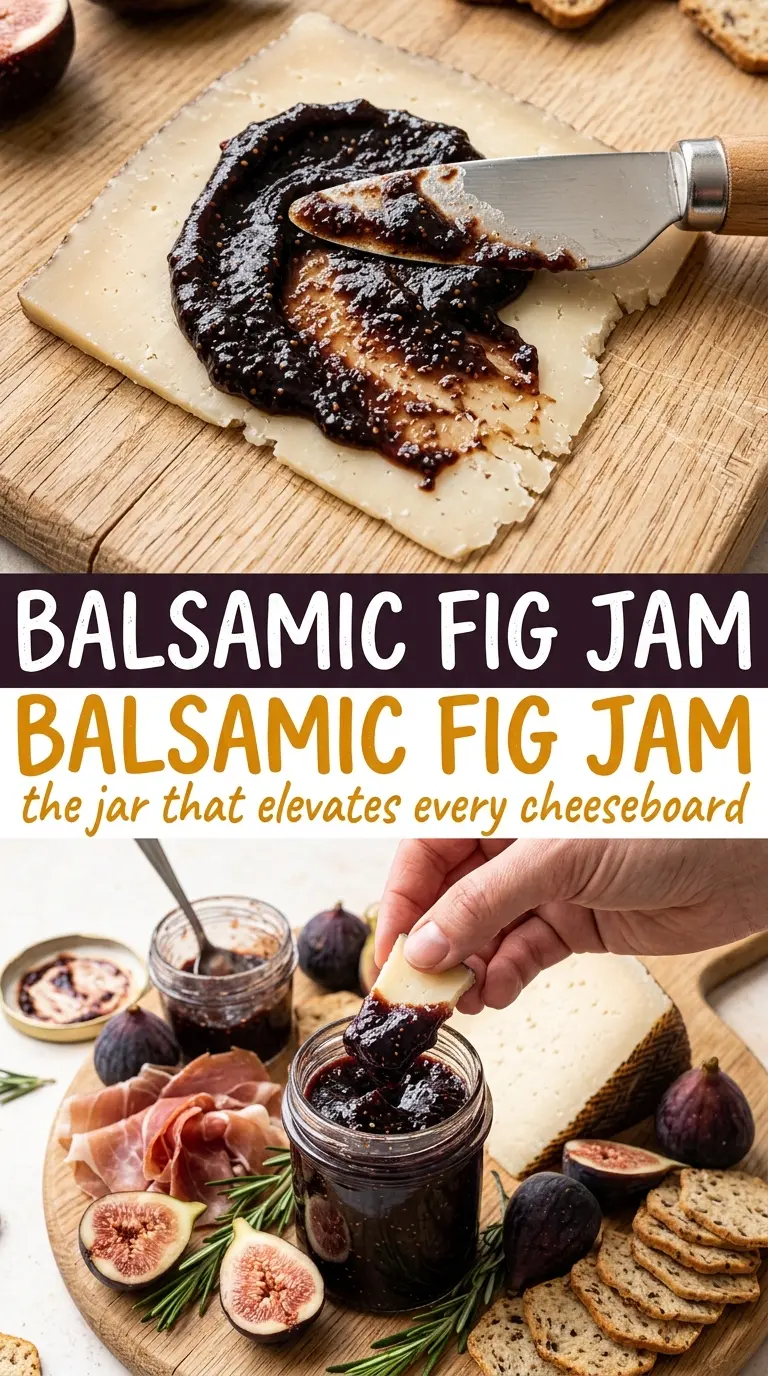
- Black Mission figs — Their deep, jammy flavor and dark skin give this preserve its burgundy color. Riper figs break down faster and taste fuller, but avoid any that are leaking or fermented.
- Aged balsamic vinegar — This is not the place for thin, sharp balsamic. Aged balsamic tastes round and almost syrupy, which reinforces the fruit instead of making the jam taste acidic.
- Rosemary — Two sprigs are enough. The herb should perfume the jam, not dominate it. Pull it out before jarring so the flavor stays elegant instead of piney.
- Lemon juice and zest — The juice brightens the sweetness and helps the set, while the zest carries more aroma than acidity. Fresh lemon matters here because bottled juice tastes blunt in a preserve with this few ingredients.
- Black pepper — Just a pinch gives the jam a little edge at the back of the throat. It disappears into the fruit, but you’d notice if it were missing.
How to Cook the Figs Down Without Burning the Bottom
Macerating the Fruit
Combine the figs, sugar, lemon juice, and zest in a heavy pan and let them sit until the fruit starts giving up juice. That resting time keeps the pan from scorching at the start and helps the sugar dissolve into a syrup instead of sticking dry to the pan. If the figs are very ripe, you’ll see liquid pooling fairly quickly; if they’re firmer, give them the full 30 minutes.
Building the Flavor Base
Add the balsamic, rosemary, and black pepper before the heat goes on so the flavors have time to mingle from the start. Bring the mixture to a boil, then lower the heat enough to keep it at an active simmer, not a furious bubble that spatters everywhere. Stir often, scraping the bottom and corners of the pan, because the sugars concentrate quickly and the jam can catch there before you notice.
Cooking to the Right Thickness
Simmer for 30 to 35 minutes, watching for the fruit to turn deeply colored and the liquid to look glossy rather than watery. The jam should mound on the spoon and fall in heavy ribbons. If the bottom starts to darken too fast, the heat is too high; pull it down and keep stirring until the bubbles slow and the jam thickens evenly.
Finishing and Jarring
Remove the rosemary before you taste and adjust the sweetness. Then test a spoonful on a cold plate and wait a minute for it to settle. Once it wrinkles, ladle it into sterilized jars while it’s still hot. If you wait too long, it thickens in the pan and becomes harder to transfer cleanly.
How to Adapt This Fig Jam When the Pantry Changes
Use other figs when Black Mission aren’t available
Brown Turkey or Kadota figs work, but the jam will be lighter in both color and flavor. If you use a milder fig, lean toward the full amount of balsamic and let the jam cook the extra few minutes it needs to develop depth.
Make it vegan and naturally gluten-free
This recipe already fits both without any changes. The only thing to watch is your serving context: pair it with crackers or bread that suit your needs, because the jam itself is just fruit, sugar, vinegar, herbs, and spice.
Dial the sweetness up or down
If your figs are especially sweet, you can cut the sugar back a little, but don’t drop it too far or the texture can get loose. Sugar does more than sweeten here; it also helps the jam set and gives it that glossy finish.
Storage and Reheating
- Refrigerator: Store sealed jars in the fridge for up to 3 weeks. The texture will firm up as it chills.
- Freezer: It freezes well in freezer-safe containers, leaving headspace for expansion. Thaw in the fridge overnight.
- Reheating: Jam doesn’t need reheating for serving, but if it feels too firm straight from the fridge, let it sit at room temperature for 10 to 15 minutes. Don’t microwave the whole jar; that can make the edges hot and loose while the center stays cold.
Questions I Get Asked About This Recipe
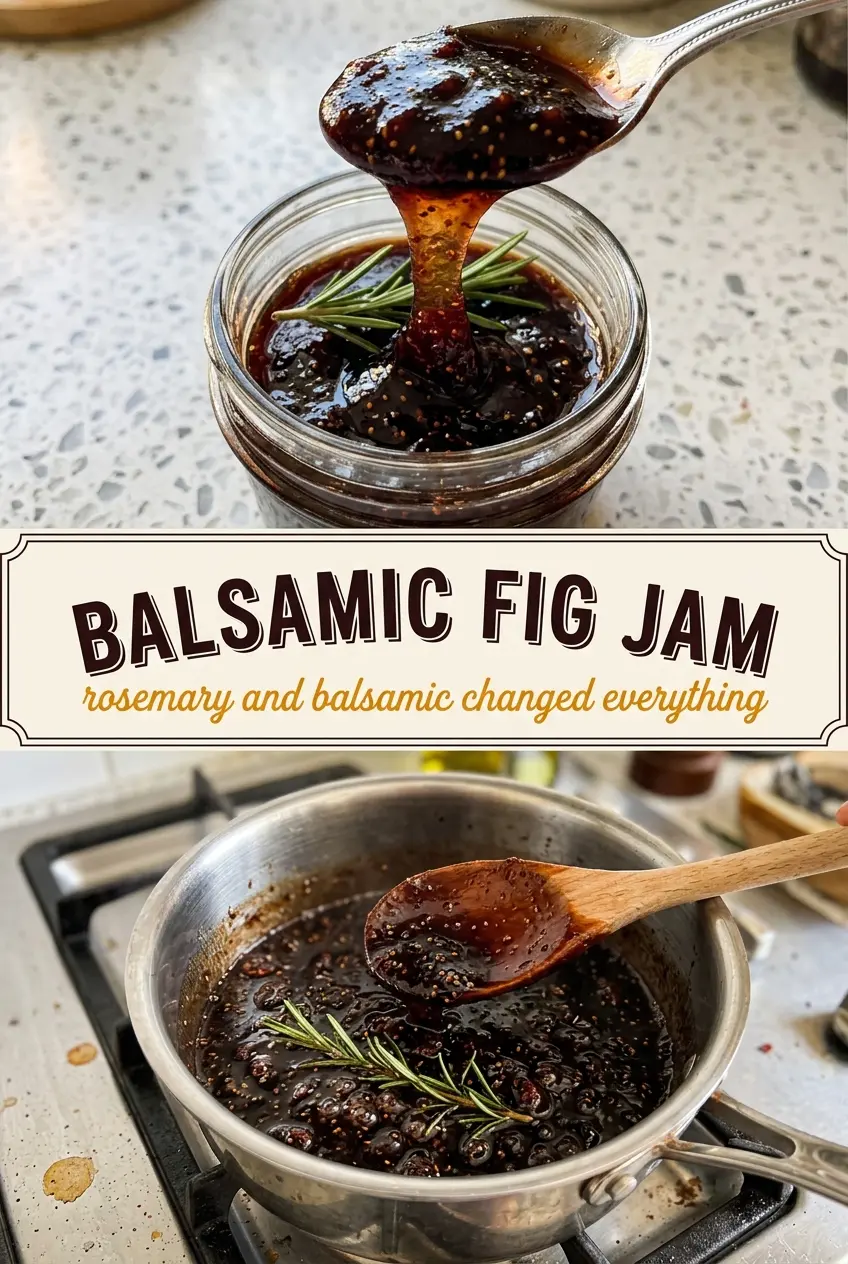
Fig Jam Recipe
Ingredients
Equipment
Method
- Combine black mission figs, sugar, lemon juice, and lemon zest in a heavy Dutch oven. Let stand at room temperature for 30 min to macerate as juices form and the fruit softens, stirring once halfway through so it releases evenly.
- Add aged balsamic vinegar, fresh rosemary sprigs, and black pepper to the pan. Bring to a boil over medium-high heat, then maintain a steady boil for 2–3 min so the flavors start blooming.
- Reduce the heat and simmer for 30–35 min, stirring often, until thick and deeply colored. Watch the jam’s slow movement on the spoon—when it holds a glossy trail, it’s ready.
- Remove fresh rosemary sprigs and discard. Taste the jam and adjust sweetness as needed, then let it bubble 1 min on low to re-emulsify the flavor.
- Test for set by dropping a small spoonful onto a cold plate and letting it stand for 30 sec. When it wrinkles slightly instead of pooling, ladle the jam into sterilized jars while hot, then cool before sealing.