
Cilantro lime noodles land somewhere between a cold herb sauce and a hot noodle dinner, and that’s exactly why they get made on repeat. The sauce is bright, green, garlicky, and just rich enough to cling to every strand instead of pooling at the bottom of the bowl. One bite gives you lime first, then cilantro, then that savory soy finish that keeps the whole thing from tasting sharp or one-note.
The trick is warming the oil before blending it into the herbs. That step softens the garlic bite, pulls more flavor out of the cilantro, and gives the sauce a smoother, silkier texture than a straight raw blend. Toss it with the noodles while they’re still warm and slightly damp from draining; that little bit of moisture helps the sauce coat instead of turning pasty.
Below, I’ve broken down the ingredient choices, the one technique that matters most, and a few smart variations for when you want to change the noodles, skip the gluten, or make it a little more substantial.
The sauce coated the noodles perfectly and stayed bright instead of turning muddy. I used rice noodles and the whole bowl came together in minutes, but the lime and cilantro still tasted fresh and punchy.
Cilantro lime noodles with that glossy green sauce are perfect for a fast dinner that still tastes layered and fresh.
The Secret to Keeping Cilantro Lime Sauce Bright Instead of Bitter
The fastest way to lose the fresh, punchy character in a cilantro sauce is to hammer everything cold and raw in the blender and call it done. That can work, but it often leaves the garlic harsh and the herbs a little flat. Warming the oil first changes the texture and the flavor at the same time: the sauce turns smoother, the garlic tastes rounder, and the cilantro stays vivid instead of muddy.
Another thing worth paying attention to is balance. Lime juice gives you the lift, soy sauce gives you depth, and sugar takes the edge off both without making the sauce sweet. If the noodles taste sharp or hollow, it usually means the sauce needs that small touch of sweetness or a pinch more salt from the soy. Taste after tossing, not before. Noodles mellow sauces more than people expect.
What Each Ingredient Is Actually Doing in This Bowl
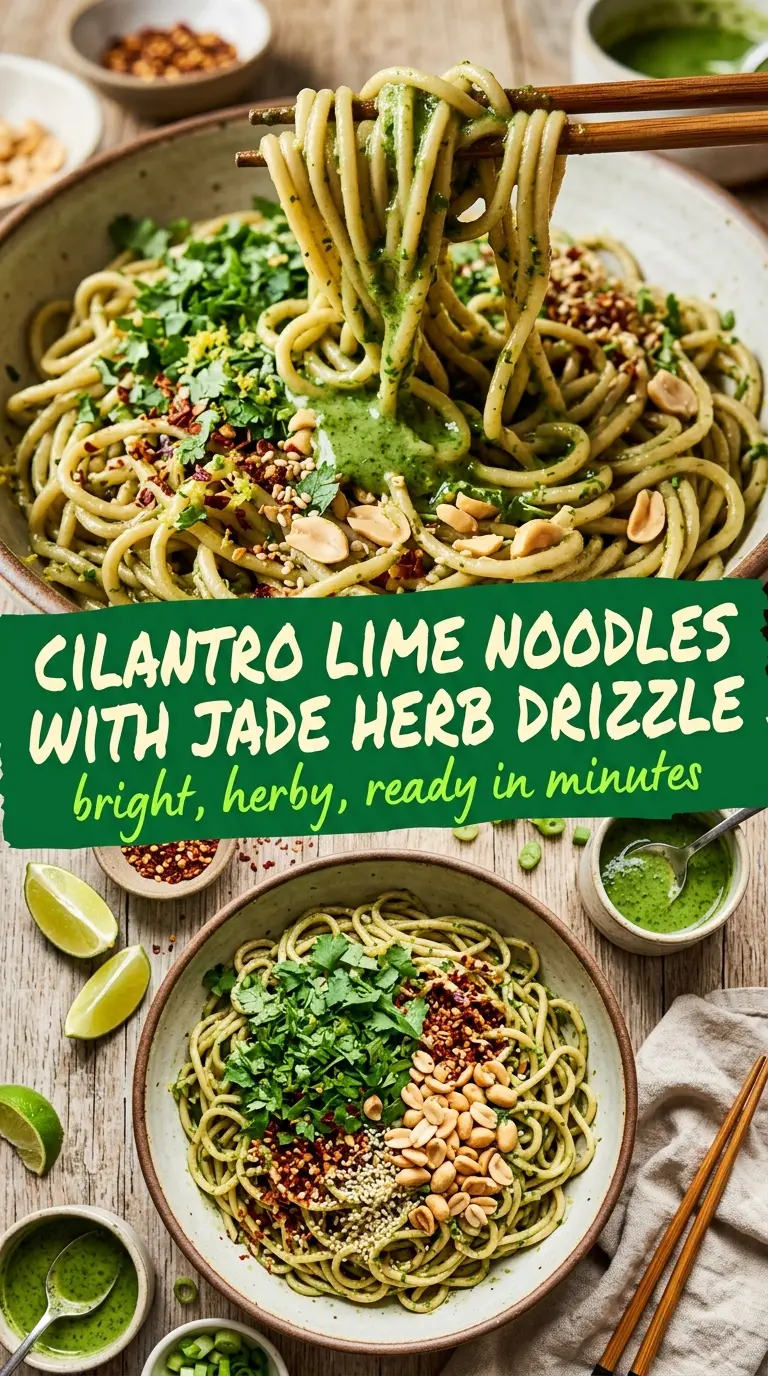
- Noodles — Ramen, rice noodles, or wheat noodles all work here. The only real rule is surface area: you want something that can catch the sauce. Thicker noodles give you a softer chew, while rice noodles keep the dish lighter and a little more delicate.
- Fresh cilantro — This is the backbone of the sauce, so fresh matters. Cilantro that’s limp or browning at the edges will taste tired. If you’re one of those people who finds cilantro a little strong, use a little less and add a handful of parsley to soften the edge without losing the green-herb character.
- Garlic — Raw garlic can take over fast, which is why the hot oil matters. It takes the sharp bite down a notch and makes the sauce taste more rounded. If your cloves are large, use two instead of three; you want garlic in the background, not a burn at the front of your tongue.
- Lime juice — Fresh lime juice is worth it here. Bottled juice can taste dull and slightly metallic, which shows up more in a sauce with only a few ingredients. If your limes are on the dry side, roll them hard on the counter before juicing to get more out of them.
- Soy sauce — This is what keeps the sauce from reading like herb paste. It adds salt and savory depth in one shot. Use regular soy sauce unless you need gluten-free; then tamari is the cleanest swap.
- Neutral oil — The oil carries the sauce and gives it that slick finish that helps it cling to the noodles. A neutral oil is best because you don’t want another flavor competing with cilantro and lime. Olive oil works in a pinch, but its stronger taste will change the bowl.
- Sugar — Just a tablespoon, but it matters. It smooths out the lime and balances the garlic so the sauce tastes bright instead of sharp. Honey can stand in if that’s what you have, though it adds a slightly different finish.
Building the Sauce So It Stays Silky on the Noodles
Blend the herbs and seasonings first
Start by blending the cilantro, garlic, lime juice, soy sauce, and sugar until the mixture looks chopped and loose. It doesn’t need to be perfectly smooth yet. If the leaves are still in big pieces, the oil won’t emulsify as evenly later, and you’ll end up with a sauce that separates in the bowl instead of coating the noodles.
Pour the hot oil in slowly
Heat the oil until it shimmers, then pour it carefully into the blender while it’s running. That hot oil cooks the garlic just enough to take the raw edge off and helps the sauce turn glossy. If you dump it in all at once and the blender isn’t moving, the texture can go a little greasy instead of creamy.
Toss the noodles while they’re still warm
Drain the noodles, then toss them right away with the sauce. Warm noodles absorb flavor better than cold ones, and a small amount of surface moisture helps the sauce spread. If the noodles sit too long and cool down completely, the sauce clings less evenly and can start to feel thick rather than silky.
Three Ways to Make These Noodles Fit What You’ve Got
Gluten-Free Version
Use rice noodles and swap the soy sauce for tamari. The result stays light and glossy, with the same bright lime-cilantro hit, but the texture turns a little softer and silkier. Rice noodles can clump if they sit too long, so toss them as soon as they’re drained.
Make It a Fuller Meal
Add shredded chicken, seared shrimp, crispy tofu, or edamame. The sauce is strong enough to stand up to protein, but the best additions are ones with a little texture of their own. Something soft and bland will disappear next to the herb sauce.
Turn Down the Garlic Bite
Drop the garlic to two cloves and add a small handful of parsley along with the cilantro. That keeps the sauce green and fresh while taking the sharpest edge off. It’s the version I’d use for anyone who loves herb sauces but doesn’t want them aggressively garlicky.
Storage and Reheating
- Refrigerator: Store leftovers in an airtight container for up to 3 days. The noodles will soak up some sauce, so expect a slightly tighter texture the next day.
- Freezer: I don’t recommend freezing this dish. The herbs lose their brightness and the noodles get soft once thawed.
- Reheating: Reheat gently in a skillet over low heat with a splash of water to loosen the sauce. Microwave heat can make the noodles gummy if you blast them too long.
Answers to the Questions Worth Asking
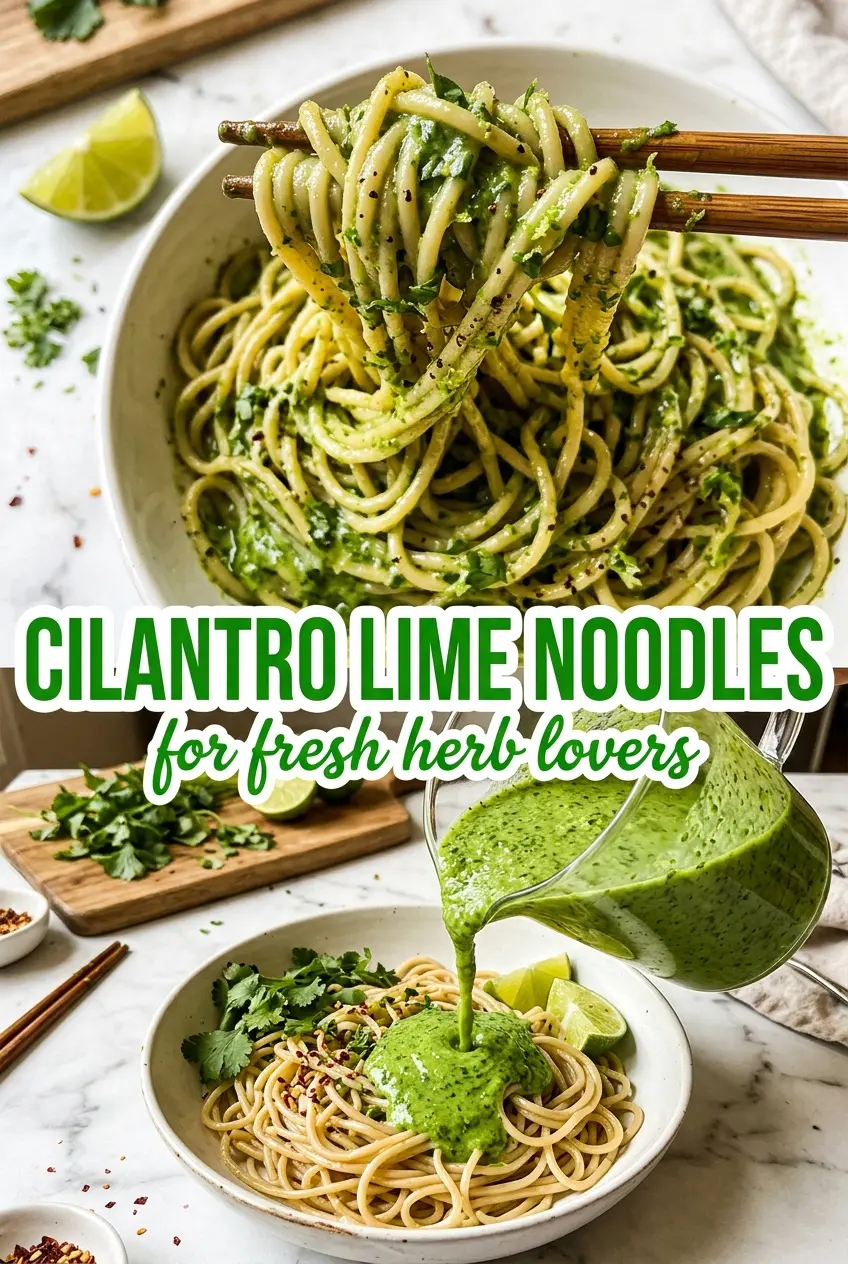
Cilantro Lime Noodles
Ingredients
Equipment
Method
- Bring a pot of water to a boil, cook the noodles of choice according to package directions, then drain and set aside.
- Keep the noodles warm while you make the sauce so they toss evenly.
- Combine the fresh cilantro, garlic, lime juice, soy sauce, and sugar in a blender and blend until smooth.
- Heat the neutral oil in a small pan over medium heat until shimmering, then carefully pour it into the blender while blending.
- Toss the warm noodles with the cilantro lime sauce until evenly coated.
- Sprinkle with chili flakes if using and serve immediately with the sauce glossy on the noodles.