
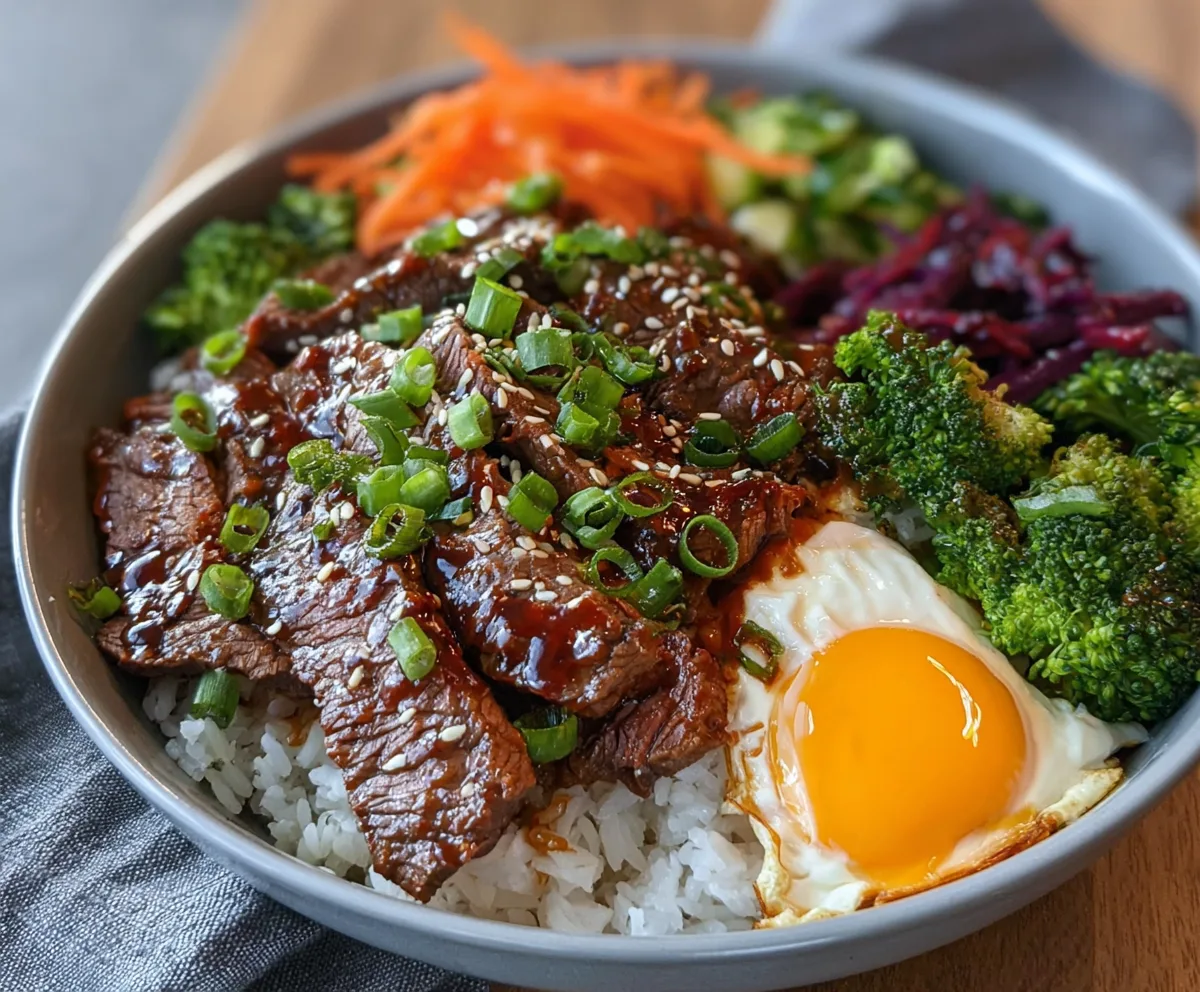
Korean BBQ Beef Bowls are an easy and tasty way to bring bold, familiar flavors to your dinner table. This dish features tender, marinated beef cooked up with a sweet and spicy mix of soy sauce, garlic, and a touch of sesame oil, served on a bed of fluffy rice. The flavors are bright, comforting, and packed with a little kick, making every bite really satisfying.
I love making these bowls when I want something quick but feel like I’m treating myself. What’s great is how the marinade just seeps into the beef, keeping it juicy and full of flavor, and the sprinkle of green onions or sesame seeds on top adds a nice fresh crunch. I usually add a little kimchi on the side for an extra zing—it makes the whole meal even better.
This is the kind of meal that’s great for weeknights because it’s fast to pull together but still feels special. I often invite friends over and serve it family-style so everyone can load up their own bowls. It’s a simple recipe, but it always gets rave reviews—probably because who can resist sweet, savory beef paired with warm rice and fresh toppings? It’s a winner every time.
Key Ingredients & Substitutions
Beef: Flank steak or sirloin works best for Korean BBQ. Slice thinly against the grain to keep it tender. If you prefer, you can try skirt steak or even thinly sliced chicken breast.
Soy sauce: This is the salty backbone of the marinade. Low-sodium soy sauce is a good swap if you want to control salt. For gluten-free, use tamari instead.
Gochujang: This Korean chili paste adds heat and depth. If you don’t have it, red pepper flakes can give a similar spicy kick, though milder. Honey or brown sugar balances the spice nicely.
Rice: Use short-grain white rice or sushi rice for the sticky, tender texture. Jasmine rice is a fine alternative if you want a fragrance twist.
Kimchi & Cucumber: Kimchi offers tang and crunch. If you can’t find it, try pickled vegetables or sauerkraut. Fresh cucumber adds coolness, but you can also use radishes or lightly pickled carrots for crunch.
How Do I Marinate and Cook the Beef for Maximum Flavor and Tenderness?
Marinating is key to getting flavorful, juicy beef here. Follow these tips:
- Thin slices: Cut the beef thinly against the grain to avoid toughness.
- Marinate time: At least 20 minutes is enough, but longer (up to 1 hour) deepens flavor.
- Mix well: Make sure every piece is fully coated in the marinade.
- High heat cooking: Use a hot skillet or grill pan so the beef quickly sears, locking in juices and developing a nice caramelized crust.
- Don’t crowd the pan: Cook in batches if needed, so slices brown evenly rather than steam.
- Quick cook: Each side should cook about 2-3 minutes. Overcooking makes it dry.
Following these steps ensures your beef stays tender, flavorful, and perfect for piling on your rice bowls.
Equipment You’ll Need
- Skillet or grill pan – I prefer a hot skillet for a good sear and quick cooking of the beef.
- Cutting board and sharp knife – helps slice the beef thinly and evenly for tender bites.
- Measuring spoons and cups – to measure the marinade ingredients precisely.
- Small bowl – for whisking together the marinade and sauce.
- Serving bowls – to assemble and enjoy your Korean BBQ Beef bowls.
Flavor Variations & Add-Ins
- Spice level: Add more gochujang or red pepper flakes for extra heat, or skip it for milder flavor.
- Protein*: Swap beef for thinly sliced chicken, pork, or tofu for different textures and flavors.
- Veggies: Top with sautéed mushrooms, bell peppers, or shredded carrots for extra crunch and color.
- Cheese or sauces: A drizzle of sriracha mayo or a sprinkle of cheese can add richness or extra spice.
Korean BBQ Beef Bowls
Ingredients You’ll Need:
For the Beef and Marinade:
- 1 lb (450g) flank steak or sirloin, thinly sliced against the grain
- 1/4 cup soy sauce
- 2 tbsp brown sugar or honey
- 1 tbsp sesame oil
- 3 cloves garlic, minced
- 1 tsp grated fresh ginger
- 1 tbsp gochujang (Korean chili paste) or 1 tsp red pepper flakes (optional for spice)
For Serving:
- 3 cups cooked short-grain white rice (steamed)
- 2 green onions, sliced
- 1 tbsp toasted sesame seeds
- 1/2 cup kimchi (store-bought or homemade)
- 1/2 cucumber, thinly sliced
- Mayonnaise-based sauce for drizzling (e.g., mix 3 tbsp mayonnaise, 1 tbsp sriracha or Korean chili sauce, and a squeeze of lime juice)
Time Needed
This recipe takes about 10 minutes to prepare, 20 to 60 minutes for marinating the beef, and roughly 10 minutes to cook. In total, plan around 40 minutes to 1 hour and 20 minutes, depending on how long you marinate the beef for best flavor.
Step-by-Step Instructions:
1. Make the Marinade and Marinate the Beef:
In a medium bowl, whisk together the soy sauce, brown sugar (or honey), sesame oil, minced garlic, grated ginger, and gochujang or red pepper flakes if you like it spicy. Add the thinly sliced beef and toss well to coat. Let the beef marinate for at least 20 minutes, or up to 1 hour for deeper flavor, keeping it refrigerated.
2. Cook the Beef:
Heat a large skillet or grill pan over medium-high heat until hot. Add the marinated beef strips in a single layer and cook for about 2 to 3 minutes on each side, until nicely browned and cooked through. Remove from heat.
3. Assemble the Bowls:
Divide the cooked rice evenly among serving bowls. Top each bowl with the cooked Korean BBQ beef. Sprinkle with green onions and toasted sesame seeds. Add a side of kimchi and cucumber slices for freshness and crunch. Drizzle your mayonnaise-based sauce over the beef and rice for a creamy, tangy finish. Serve immediately and enjoy!
Can I Use Frozen Beef for Korean BBQ Beef Bowls?
Yes, you can use frozen beef, but make sure to fully thaw it in the refrigerator overnight before slicing and marinating. This helps the marinade penetrate better and ensures even cooking.
How Long Can I Marinate the Beef?
You can marinate the beef for as little as 20 minutes, but for the best flavor, let it marinate up to 1 hour in the fridge. Avoid marinating much longer, as the meat can become too soft or mushy.
Can I Make This Recipe Ahead of Time?
Absolutely! You can prepare the marinade and marinate the beef a few hours ahead or even overnight. Cook the beef fresh before serving. Store leftovers separately in airtight containers and reheat gently before assembling your bowls.
What Can I Substitute for Kimchi If I Don’t Have Any?
If you don’t have kimchi, try using pickled vegetables, sauerkraut, or even a crunchy slaw for that tangy, crisp contrast. These options won’t be exactly the same but will add a nice refreshing element.