
Caramelized bell peppers turn into something completely different once they’ve had time in the oven before filling. The edges soften and sweeten, the skins pick up a little blistered char, and the pepper shells become sturdy enough to hold a generous farro filling without collapsing into a soggy mess. That first roast is the difference between a stuffed pepper that tastes like steamed vegetables and one that eats like a full, composed dinner.
This version leans on texture in all the right places. The farro stays chewy, the roasted cherry tomatoes soften into little bursts of sweetness, the sun-dried tomatoes bring depth, and the burrata melts just enough on top to tie everything together without turning heavy. A little lemon brightens the whole pan, and the basil oil adds that final herbal finish that makes the dish taste polished instead of fussy.
The key is building flavor in layers instead of stuffing everything into the pepper and hoping the oven does the work. You’ll roast the peppers first, then fill them with the seasoned farro mixture, then finish with burrata so it warms without disappearing. There’s also a very good reason the basil oil goes on at the end, and I’ll walk through that below.
The peppers roasted up sweet and tender instead of watery, and the burrata melted into the farro just enough to make it feel creamy without getting heavy. Even my husband, who usually wants meat in stuffed peppers, went back for seconds.
Love the caramelized peppers, creamy burrata, and basil oil finish? Save this stuffed bell pepper recipe for the nights when you want dinner that feels fresh, hearty, and a little special.
The Reason These Peppers Need a Head Start in the Oven
Most stuffed pepper problems start before the filling even goes in. If the peppers go straight into the pan raw, they tend to steam in their own moisture, stay too firm in the walls, and release water into the filling as they cook. The result is a pepper that tastes underdone at the edges and a center that turns loose instead of cohesive.
Pre-roasting changes everything. The peppers soften just enough to hold their shape, the cut edges pick up real color, and some of that surface moisture cooks off before the farro mixture ever touches them. That’s what gives you a stuffed pepper that slices cleanly and eats like a finished dish, not a vegetable waiting for help.
- Roast the peppers until they’re glossy, softened, and starting to collapse slightly at the top. That’s the cue they’re ready to fill.
- Don’t skip the olive oil on the outside. It helps the peppers caramelize instead of drying out.
- If your peppers are especially thick-walled, give them the full roasting time. Thin peppers can go a little shorter, but they still need that first bake.
What Each Ingredient Is Actually Doing in This Dish
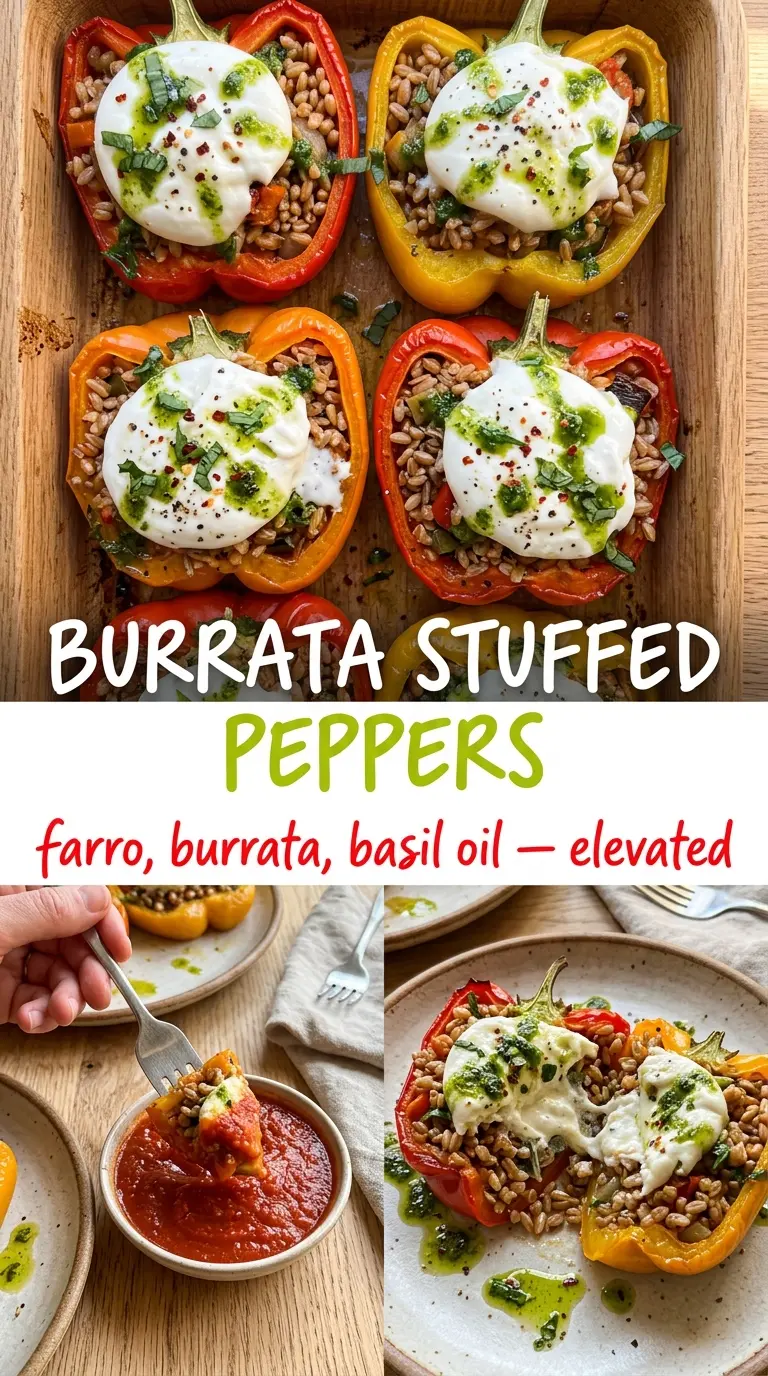
- Bell peppers — Red and orange peppers bring sweetness that plays beautifully against the lemon and sun-dried tomatoes. Yellow works too, but green peppers will taste sharper and less balanced in this particular filling.
- Farro — This gives the dish its chew and structure. Brown rice can work in a pinch, but it won’t have the same nutty bite or hold the filling together as well.
- Roasted cherry tomatoes — Roasting concentrates their flavor and keeps the filling from tasting flat. Fresh raw tomatoes will add too much liquid and not enough depth.
- Burrata — This is the creamy finish that turns the dish from wholesome to memorable. Fresh mozzarella can replace it, but you’ll lose the soft, spoonable center that melts into the farro.
- Pine nuts — They add richness and a little crunch. Toast them until just golden; if they go too dark, they turn bitter fast.
- Sun-dried tomatoes — These bring concentrated tomato flavor and a little chew. If yours are packed in oil, drain them well before chopping so the filling doesn’t get greasy.
- Basil oil — The oil carries the basil flavor across the top of the peppers and around the plate. You can skip it, but the dish will taste less bright and less finished.
Building the Filling Without Turning It Mushy
Roasting the Peppers First
Set the peppers cut-side up and brush them with olive oil before they go into the oven. You want the walls softened and lightly caramelized, not collapsed into puddles, so watch for wrinkled skins and browned edges rather than deep charring. If the peppers are still stiff when you try to fill them, they haven’t had enough time.
Mixing the Farro Filling
Combine the warm farro with the roasted tomatoes, sun-dried tomatoes, pine nuts, garlic, lemon zest, lemon juice, and seasoning. The mixture should look glossy and loose enough to spoon, not wet enough to slump. If it seems dry, add a small drizzle of olive oil; if it seems damp, let it sit for a minute so the farro can absorb some of the juices.
Filling and Finishing With Burrata
Spoon the farro mixture into the peppers and mound it gently on top. Tear the burrata over each pepper instead of slicing it, because torn pieces melt more naturally and give you little pockets of creaminess. Return the pan to the oven just until the burrata is warmed through and starting to melt at the edges; if it stays in too long, it loses that soft center and becomes rubbery.
The Basil Oil Finish
Drizzle the basil oil over the peppers right before serving so the color stays bright and the flavor stays fresh. Heat dulls basil fast, and this is the kind of detail that makes the whole dish taste intentional. Finish with extra basil and red pepper flakes while the peppers are still hot so the aroma blooms as they hit the table.
How to Adapt These Stuffed Peppers for the Way You Eat
Make It Dairy-Free
Leave off the burrata and finish with an extra drizzle of basil oil and a handful of toasted pine nuts. You’ll lose the creamy center, but the dish stays bright, hearty, and fully satisfying.
Swap the Farro for a Gluten-Free Grain
Use cooked quinoa or brown rice if you need this gluten-free. Quinoa gives you a lighter, fluffier filling, while brown rice keeps more chew; either one works, but both will taste a little less nutty than farro.
Turn It Into a Bigger Meal
Add chickpeas or white beans to the farro mixture for more protein and a more filling dinner. The beans work best if they’re well drained and lightly seasoned first so they don’t water down the roasted tomato mixture.
Use What You Have Instead of Burrata
Fresh mozzarella is the closest swap, and it melts cleanly over the top. Feta works if you want something saltier and more assertive, but it won’t give you the same creamy finish.
Storage and Reheating
- Refrigerator: Store leftovers in an airtight container for up to 3 days. The peppers soften a little more, but the flavors hold up well.
- Freezer: The peppers and farro filling can be frozen, but the burrata won’t thaw with the same texture. Freeze before adding the cheese if you want the best result.
- Reheating: Warm in a 350°F oven until heated through, about 15 to 20 minutes, or microwave in short bursts. The biggest mistake is blasting them too hard, which makes the peppers watery and the burrata tough.
Answers to the Questions Worth Asking
Stuffed Bell Peppers
Ingredients
Equipment
Method
- Preheat oven to 400°F. Brush bell peppers with olive oil and roast for 20 min until caramelized and lightly browned at the edges.
- Halve cherry tomatoes and toss with olive oil, then roast for 20 min at 400°F until concentrated and jammy.
- In a mixing bowl, combine cooked farro with roasted cherry tomatoes, sun-dried tomatoes, pine nuts, minced garlic, lemon zest and lemon juice, and season with salt, pepper, and red pepper flakes.
- Fill the roasted bell peppers with the farro mixture, packing it gently to the tops.
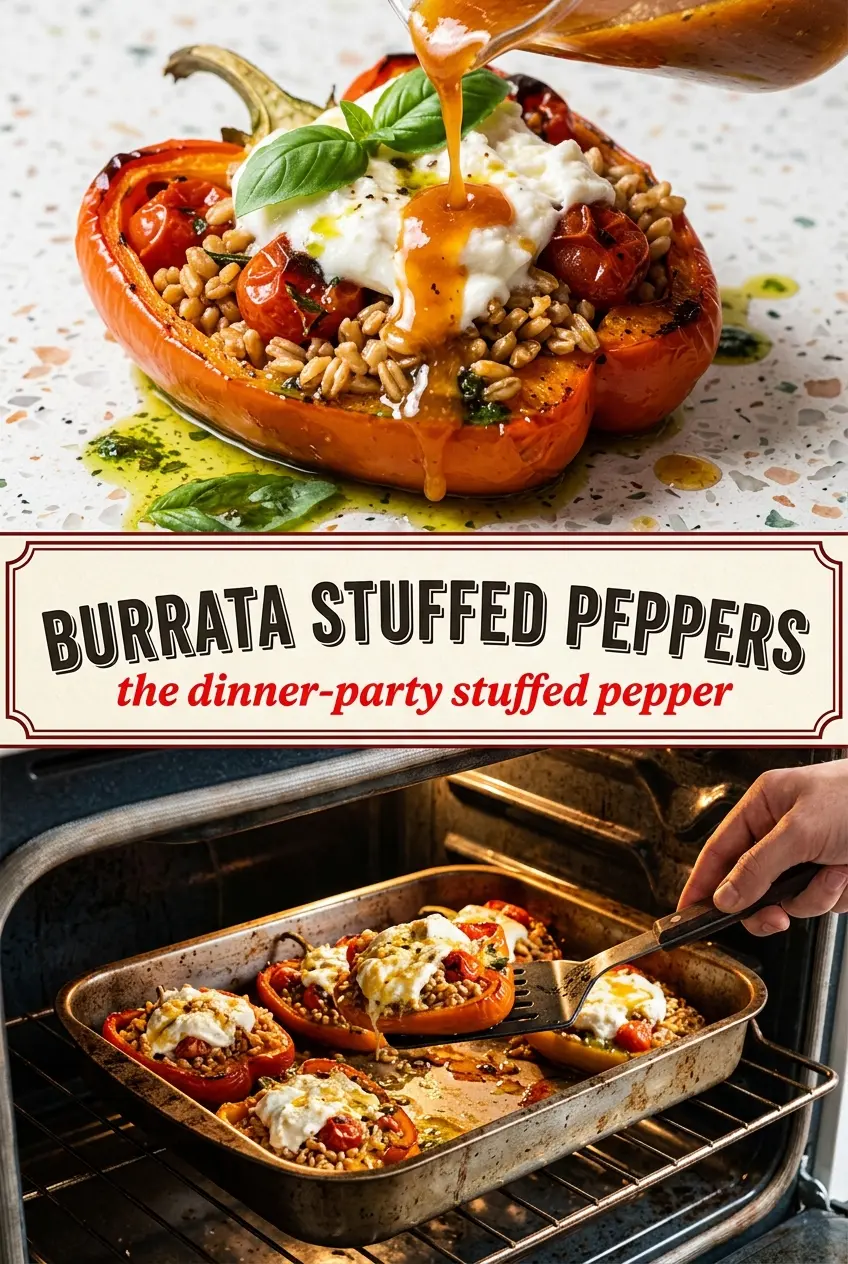
- Top each stuffed pepper with torn burrata, letting it rest across the farro surface.
- Return to the oven and bake for 10 min at 400°F until the burrata is warm and slightly melted.
- Drizzle basil oil over the peppers right before serving, letting it pool around the base.
- Finish with chiffonade basil and red pepper flakes for a fresh herbal bite.