
Fluffy shortcakes, syrupy strawberries, and a cloud of orange-zest cream make this strawberry shortcake taste brighter and more layered than the usual version. The berries stay front and center, but the orange lifts their sweetness instead of flattening it into plain sugar syrup. Every bite gets that soft biscuit crumb, juicy fruit, and cold whipped cream contrast that keeps people coming back for seconds.
The small changes matter here. Fresh orange juice in the macerated berries pulls out strawberry flavor and gives you a sauce with more depth, while orange zest in the whipped cream adds a clean floral note that keeps the dessert from tasting heavy. The shortcakes themselves need cold butter and a hot oven, which is what gives you those tender layers instead of a dense, bread-like base.
Below, I’m walking through the part that changes the dessert the most: how to handle the berries so they turn glossy and spoonable without going flat. You’ll also see why the cream should be whipped only to soft peaks, because that texture holds up better once the shortcakes and fruit start soaking into it.
The orange juice in the strawberries gave me the prettiest syrup, and the whipped cream stayed light instead of sliding off the shortcakes. My husband said it tasted like strawberry shortcake from a bakery, but better.
Like this strawberry shortcake? Save it to Pinterest for the orange-kissed berries and orange-zest cream that make it stand out.
The Shortcake Secret: Keep the Butter Cold and the Oven Hot
The mistake that ruins most shortcakes is letting the butter soften too much before it hits the flour. Once that happens, you lose the little pockets that create lift and tenderness, and you end up with a biscuit that eats like a scone turned heavy. Cold butter, handled just enough to leave pea-sized bits throughout the dough, is what gives you those flaky, torn layers when the shortcakes bake.
The second part is heat. A 425°F oven sets the outside quickly before the butter melts away completely, which helps the shortcakes rise instead of spreading. If the tops pale out and the sides still look dense, they need another minute or two; if they’re already deeply golden, they’re done. You want a crisp edge and a soft center, not a dry crumb all the way through.
What the Strawberries, Cream, and Orange Zest Are Each Doing
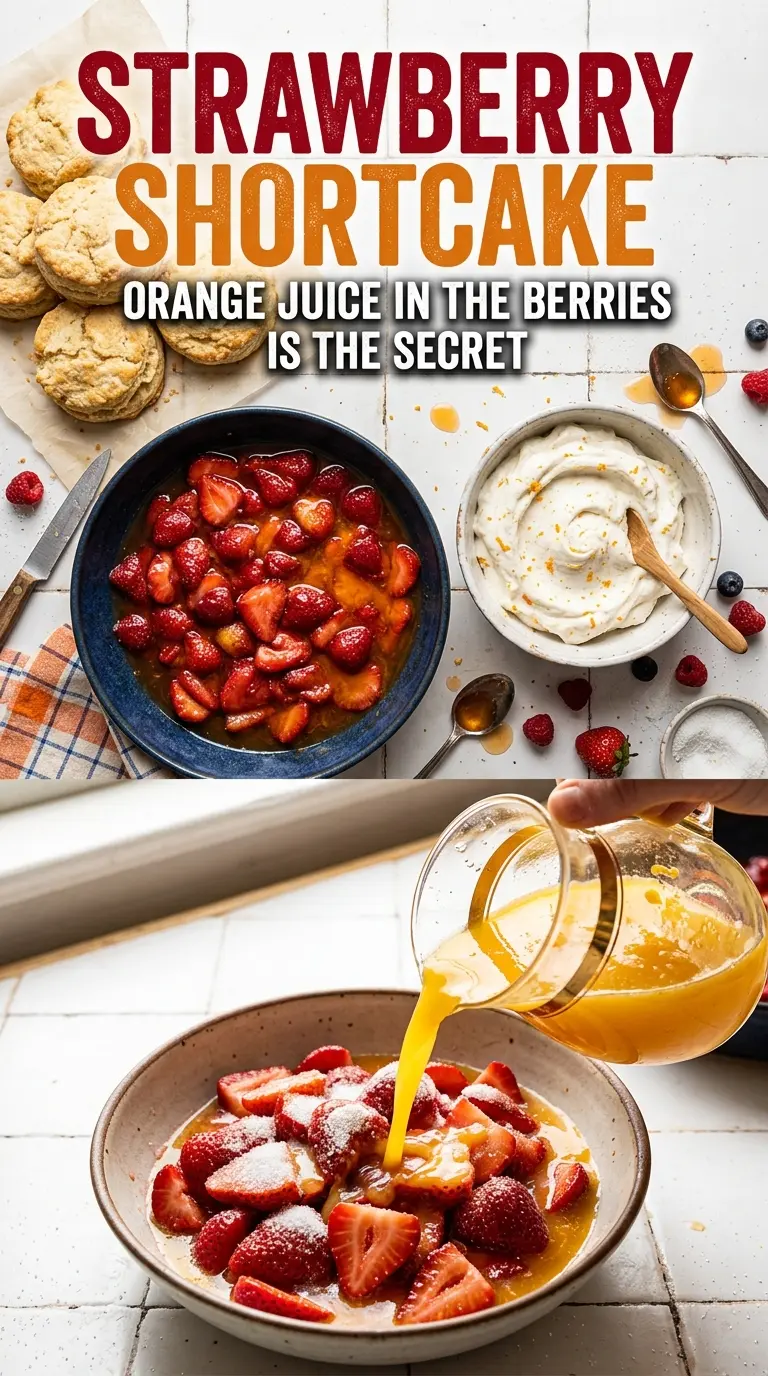
- Strawberries — Use ripe berries with good aroma, not just deep color. If they’re bland to start, no amount of sugar will fully fix that, though the orange juice will help pull more flavor out of them while they macerate.
- Fresh orange juice — This is the ingredient that changes the whole dessert. Lemon can sharpen fruit, but orange makes the syrup taste rounder and more fragrant, and it keeps the strawberries from tasting one-note.
- Heavy cream — Both the shortcakes and the topping use cream, but they play different roles. In the dough, it adds richness and tenderness; in the topping, it whips into soft peaks that hold the berries without turning stiff.
- Orange zest — Zest carries the essential oils that give the whipped cream its bright finish. Don’t skip the fresh zest if you want the flavor to read as intentional instead of just sweet cream on berries.
- Cold butter — This is nonnegotiable for the shortcakes. Cubes of cold butter create steam in the oven, and that steam is what separates layers and keeps the texture light.
Building the Layers Without Soggy Shortcakes
Macerating the berries
Slice the strawberries and toss them with sugar and fresh orange juice, then let them sit until they turn glossy and release a thick syrup, about 30 minutes. You’re looking for berries that soften at the edges but still hold their shape. If they sit too long, they can turn mushy; if they sit too briefly, you won’t get enough syrup to soak into the shortcake in a good way.
Mixing the shortcake dough
Whisk the dry ingredients together, then cut in the cold butter until the mixture looks like coarse crumbs with a few larger bits scattered throughout. Stir in the cream and vanilla just until the dough comes together. Overmixing makes the shortcakes tough and flat, so stop as soon as you no longer see dry flour.
Baking until the tops are golden
Drop or pat the dough into portions and bake at 425°F until the tops are deeply golden and the edges feel set, 12 to 15 minutes. The best cue is color: pale tops mean underbaked shortcakes that taste doughy in the middle. Let them cool just enough to handle, but don’t wait until they’re fully cold or the texture loses that fresh-from-the-oven softness.
Whipping the cream and assembling fast
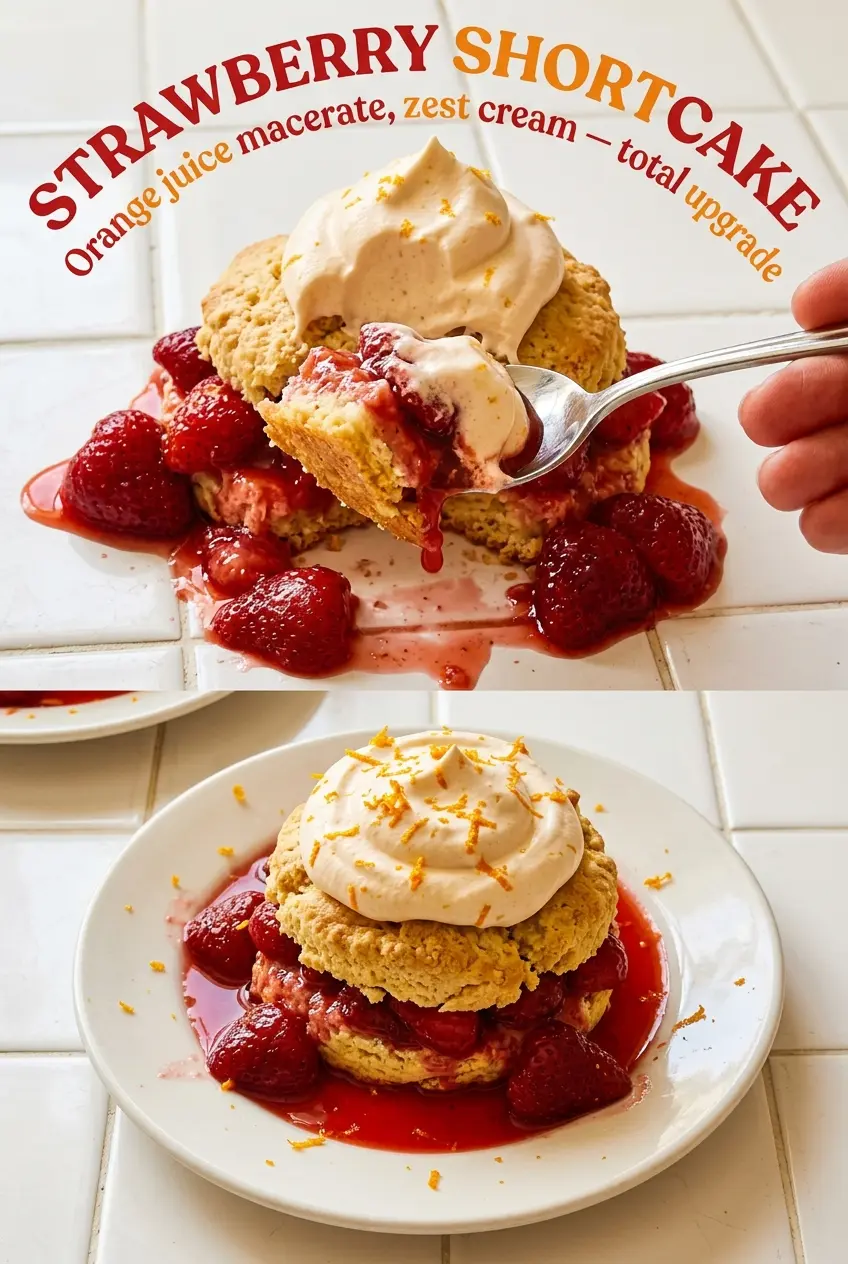
Whip the heavy cream with powdered sugar and orange zest to soft peaks, not stiff ones. Soft peaks hold their shape but still melt into the berries, which is exactly what you want here. Split the shortcakes, pile on the strawberries and syrup, add the orange-zest cream, then cap them and serve right away before the juices run too far into the biscuit.
How to Adapt This Strawberry Shortcake for Different Needs
Dairy-Free Version That Still Feels Rich
Swap the butter in the shortcakes for a solid vegan baking stick and use a plant-based whipping cream for the topping. The shortcakes will still bake up tender, though they’ll lose a little of the buttery depth, and the topping should be whipped only to soft peaks because most dairy-free creams tighten up fast.
Gluten-Free Shortcakes
Use a cup-for-cup gluten-free flour blend with xanthan gum already included. The dough may feel a little softer, so handle it gently and don’t add extra flour unless it’s too sticky to portion; too much dry flour makes gluten-free shortcakes crumbly and dry.
Vanilla Cream Instead of Orange Zest
If you want a more classic shortcake flavor, skip the orange zest and add a little extra vanilla to the whipped cream. The dessert will taste softer and more familiar, but you’ll lose the bright top note that makes this version stand out from standard strawberry shortcake.
Storage and Reheating
- Refrigerator: Store the baked shortcakes at room temperature for 1 day, or refrigerate for up to 3 days. The strawberries and whipped cream should be kept separately and assembled right before serving so the biscuits don’t turn soggy.
- Freezer: The shortcakes freeze well for up to 2 months. Wrap them tightly and thaw at room temperature; freeze only the biscuit portion, not the strawberries or whipped cream.
- Reheating: Warm the shortcakes in a 300°F oven for a few minutes until the outside loosens and the center is no longer cold. Don’t microwave them if you want to keep the crumb tender instead of rubbery.
Answers to the Questions Worth Asking
Strawberry Shortcake
Ingredients
Equipment
Method
- Toss strawberries with sugar and fresh orange juice and let sit at room temperature for 30 min, stirring once for glossy, syrupy fruit.
- Preheat oven to 425°F and line a sheet pan.
- Mix all-purpose flour, sugar, baking powder, and salt, then cut in cold butter until the mixture looks like coarse crumbs.
- Stir in heavy cream and vanilla just until a soft dough forms, then portion onto the prepared sheet pan.
- Bake at 425°F for 12-15 min, until the shortcakes are lightly golden and spring back when pressed.
- Whip heavy whipping cream with powdered sugar and orange zest until you reach soft peaks.
- Split and layer shortcakes with macerated strawberries, orange-zest whipped cream, and a shortcake top.
- Serve immediately while the shortcakes still have structure and the syrup lightly soaks the layers.